
Can Construction Make You a Millionaire? Real Paths to Wealth in the Industry
 Jul, 5 2026
Construction Wealth Path Calculator
Select your desired path to wealth in construction and input your financial goals to see realistic timelines and requirements.
General Contractor
Medium RiskLow startup costs, steady growth through management and sales skills.
Developer
High RiskHigh capital required, fastest route but highest potential for loss.
Subcontractor
Low-Medium RiskSpecialized focus, operational efficiency drives profits.
Skilled Tradesperson
Low RiskTechnical craftsmanship, trading time for money with capped income.
Most people look at a skyscraper or a new subdivision and see bricks. If you’re looking to build wealth, you need to see margins, leverage, and scale. The short answer to whether construction can make you a millionaire is yes. But it’s not because you laid more bricks than anyone else. It’s because you stopped trading time for money and started owning systems that generate value.
In New Zealand, where housing demand remains tight and labor costs are high, the path to seven-figure net worths in construction is the process of building infrastructure, buildings, and other physical assets is clearer than ever. However, the gap between working *in* the trade and owning *within* the industry is massive. Let’s break down exactly how the money flows, who gets rich, and what it actually takes to get there.
The Two Types of Construction Wealth
To understand if this path is right for you, you have to distinguish between two very different financial outcomes. There is the "High-Income Earner" and the "Asset Owner."
The High-Income Earner is typically a specialized tradesperson or a project manager. In Wellington, an experienced electrician or plumber can easily pull in $150,000 to $250,000 NZD annually. That’s great money. But it’s capped. If you stop working, the income stops. You are selling your hours. Even if you hire help, you are still managing the chaos daily. This path rarely leads to being a millionaire unless you live like a monk for thirty years and invest every spare cent aggressively.
The Asset Owner plays a different game. This person owns a construction company is a business entity that organizes labor, materials, and capital to complete building projects. They don’t swing the hammer; they sign the contracts. Their wealth comes from equity-the difference between the cost of the job and the price charged to the client, minus overhead. When you own the company, you own the cash flow and the asset itself. This is where the million-dollar net worths happen.
Path 1: Scaling a General Contracting Business
This is the most common route to significant wealth. You start small, perhaps as a sole trader doing renovations or deck builds. The goal isn’t just to do good work; it’s to systemize it.
Here is the reality of scaling: Profit margins in general contracting are thin, often hovering around 3% to 5% net profit after taxes and owner draw. To make $1 million in profit, you need to bill roughly $20 million to $30 million in revenue. That sounds impossible for a small team, but it’s achievable with the right structure.
- Niche Down: Don’t be a jack-of-all-trades. Specializing in commercial fit-outs, luxury residential extensions, or multi-unit apartment complexes allows you to charge premium rates and predict costs better.
- Hire a Project Manager: Your job shifts from builder to CEO. You need someone who can handle the day-to-day site logistics so you can focus on bidding new jobs and maintaining client relationships.
- Master Estimating: Most contractors fail here. Underbidding kills businesses. Overbidding loses them. Accurate estimating is the single biggest driver of profitability. Use software, not Excel spreadsheets from 2010.
If you can grow your annual billing from $500k to $5 million over five years, your company becomes an asset worth millions. You can then sell it, keep it running, or use its cash flow to buy other assets.
Path 2: The Developer Route (Highest Risk, Highest Reward)
If contracting feels too slow, development is the fast lane. Instead of building for someone else, you buy the land, secure the permits, and manage the construction yourself. You keep all the upside.
In cities like Auckland or Wellington, land value appreciation is a huge part of the equation. You might buy a section for $800,000, build three townhouses, and sell them for a total of $2.5 million. After construction costs of $900,000 and fees, your profit could be $600,000+ on a single project. Do that twice, and you’re close to your first million.
However, this requires significant upfront capital. You need access to construction loans or private investors. One mistake-a delayed council approval, a hidden soil issue, or a material price spike-can wipe out your entire margin. This path makes millionaires quickly, but it also bankrupts the unprepared just as fast.
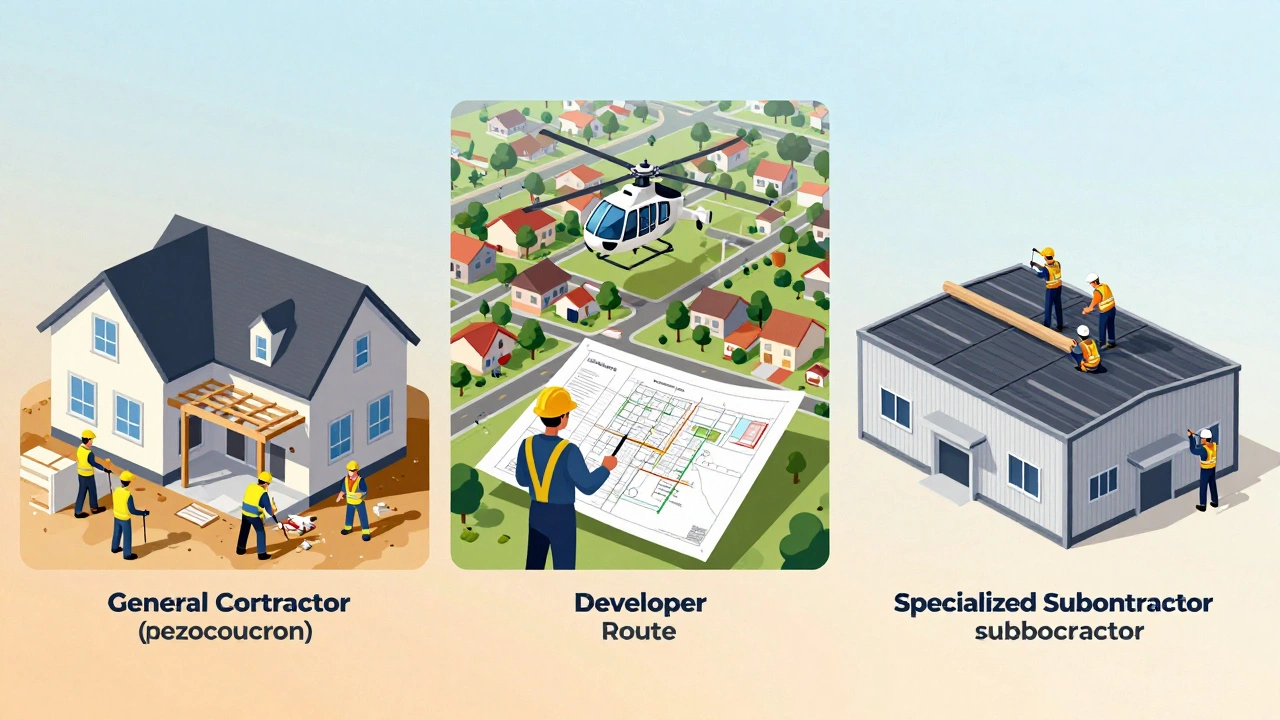
Path 3: Specialized Subcontracting
There is a middle ground that many overlook: becoming the dominant player in a specific trade. Think roofing, excavation, or concrete pouring.
Why does this work? Because general contractors always need reliable subs. If you become known as the guy who shows up on time, does quality work, and never causes headaches, you can command higher prices. More importantly, you can scale faster because your scope is narrower. A roofing company doesn’t need to worry about plumbing codes or electrical inspections. They just need trucks, tools, and crews.
A well-run subcontracting firm with $2-3 million in annual revenue can easily generate $300k-$500k in owner profit. Combine that with smart real estate investing, and you reach millionaire status without the administrative nightmare of full-scale general contracting.
| Path | Initial Capital Needed | Risk Level | Time to $1M Net Worth | Key Skill Required |
|---|---|---|---|---|
| General Contractor | Low ($10k-$50k) | Medium | 7-10 Years | Management & Sales |
| Developer | High ($200k+) | Very High | 2-5 Years | Finance & Market Analysis |
| Specialized Subcontractor | Medium ($50k-$100k) | Low-Medium | 5-8 Years | Operational Efficiency |
| Skilled Tradesperson | Very Low | Low | 15+ Years (Unlikely) | Technical Craftsmanship |
The Hidden Costs That Kill Dreams
Let’s talk about why most construction businesses fail before they hit the million-dollar mark. It’s rarely because they couldn’t find work. It’s because they couldn’t manage cash flow.
Construction is a cash-flow negative business model until the job is done. You pay for materials and labor upfront. The client pays you later, often in stages. If you take on three jobs at once and one client delays payment by 30 days, you might not have the cash to pay your workers for the other two jobs. This is called "floating" costs, and it breaks small companies.
Then there are the liabilities. In New Zealand, compliance with the Building Act and health and safety regulations (HSE) is strict. One accident on site can lead to fines, insurance hikes, or even criminal charges. Proper insurance-public liability, professional indemnity, and worker’s compensation-is non-negotiable. These premiums eat into profits, but they protect your net worth.

Leveraging Equity: The Real Secret
Being a millionaire in construction isn’t just about having $1 million in the bank. It’s about having $1 million in assets. Your company’s value is based on its earnings multiples. If your construction company generates $200,000 in seller’s discretionary earnings (SDE), it might be valued at $600,000 to $800,000 on the market.
Smart owners use this equity. They refinance their home or take out a loan against their business assets to buy investment properties or other businesses. This is how wealth compounds. You aren’t just saving salary; you are leveraging the value of the business you built.
Also, consider the tax advantages. Construction businesses have legitimate deductions: vehicles, fuel, tools, travel, and even home office expenses if structured correctly. Working with an accountant who specializes in construction is essential. They can help you minimize tax liability, keeping more money in your pocket to reinvest.
Is It Still Possible in 2026?
With rising interest rates and economic uncertainty, some wonder if the golden age of construction wealth is over. Actually, it’s shifting. The days of easy money from flipping houses during a housing boom are fading. The new era rewards efficiency, sustainability, and specialization.
Green building practices are no longer optional. Clients want energy-efficient homes. If your company can offer solar integration, passive house standards, or sustainable materials, you stand out. You can charge more. You attract better clients. This differentiation is key to maintaining high margins in a competitive market.
Technology is also a force multiplier. Using drones for site surveys, AI for estimating, and cloud-based project management tools reduces errors and saves time. Time is money. In construction, saving 10% on project duration can mean 20% more profit.
Steps to Start Your Journey
If you’re ready to pursue this path, here is your actionable checklist:
- Gain Experience: Work for a successful contractor. Learn how they estimate, bid, and manage sites. Steal their playbook (ethically).
- Start Small: Launch a side hustle. Do weekend renovations. Build a portfolio and references.
- Register Your Business: Set up a limited company. Separate your personal finances from business finances immediately.
- Get Insured: Secure public liability and professional indemnity insurance before taking your first paid job.
- Build Relationships: Network with suppliers, architects, and real estate agents. Referrals are the lifeblood of construction.
- Reinvest Profits: Don’t buy a fancy car yet. Buy better tools, hire help, and save for cash flow buffers.
Becoming a millionaire in construction is hard work. It requires grit, financial discipline, and a willingness to learn. But unlike many industries, the barrier to entry is low, and the ceiling is high. If you can solve problems efficiently and deliver quality, the market will reward you generously.
How much money do I need to start a construction company?
You can start a small renovation or subcontracting business with as little as $10,000 to $20,000 NZD. This covers vehicle registration, basic tools, insurance, and initial marketing. For larger general contracting or development, you’ll need significantly more capital, often $100,000+, to cover payroll advances and material deposits.
What is the average profit margin in construction?
Gross profit margins typically range from 20% to 30%. However, net profit margins after all expenses, taxes, and owner salaries are usually between 2% and 5%. Successful, well-managed companies aim for 5% to 10% net profit through strict cost control and efficient operations.
Do I need a degree to make money in construction?
No. While degrees in civil engineering or architecture are valuable for design roles, most construction wealth comes from practical experience, business acumen, and strong leadership skills. Many successful contractors learned on the job and developed their business skills through mentorship and trial and error.
Is construction a recession-proof industry?
Not entirely. New builds and luxury developments often slow down during recessions. However, maintenance, repairs, and essential infrastructure projects tend to remain stable. Diversifying your service offerings can help protect your business during economic downturns.
How long does it take to become a millionaire in construction?
For most entrepreneurs, it takes 5 to 10 years of consistent growth, smart reinvestment, and disciplined financial management. Developers may reach this milestone faster (2-5 years) but face higher risks. Skilled tradespeople relying solely on wages may never reach this status without aggressive external investing.