
Is a School Commercial or Industrial? The Definitive Classification Guide
 Jun, 25 2026
School Building Classification Analyzer
Project Characteristics
Select the features that apply to your building project.
Classification Result
Configure your project settings and click Analyze to see how it fits into standard building classifications.
Why this classification?
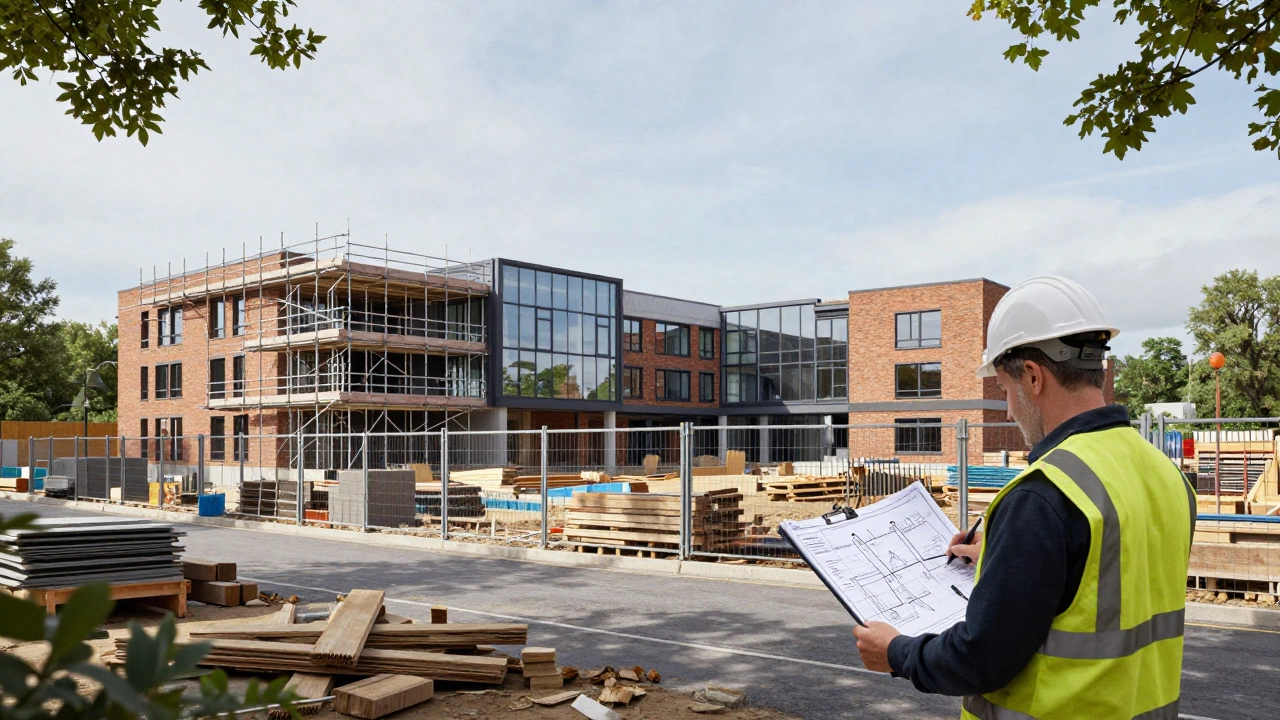
You’re standing on a vacant lot with blueprints for a new primary school. The city council asks for your permit application. Do you file under 'commercial' or 'industrial'? It sounds like a semantic game, but get it wrong, and you face fines, delayed permits, or even forced demolition. The short answer? Schools are neither purely commercial nor industrial in the traditional sense. They belong to a distinct category called institutional construction.
Understanding this distinction is critical for architects, contractors, and property developers. Misclassifying a school can lead to using the wrong building codes, hiring the wrong insurance providers, and failing to meet safety standards that save lives. Let’s break down why schools sit in their own lane and what that means for your next project.
The Three Pillars of Building Classification
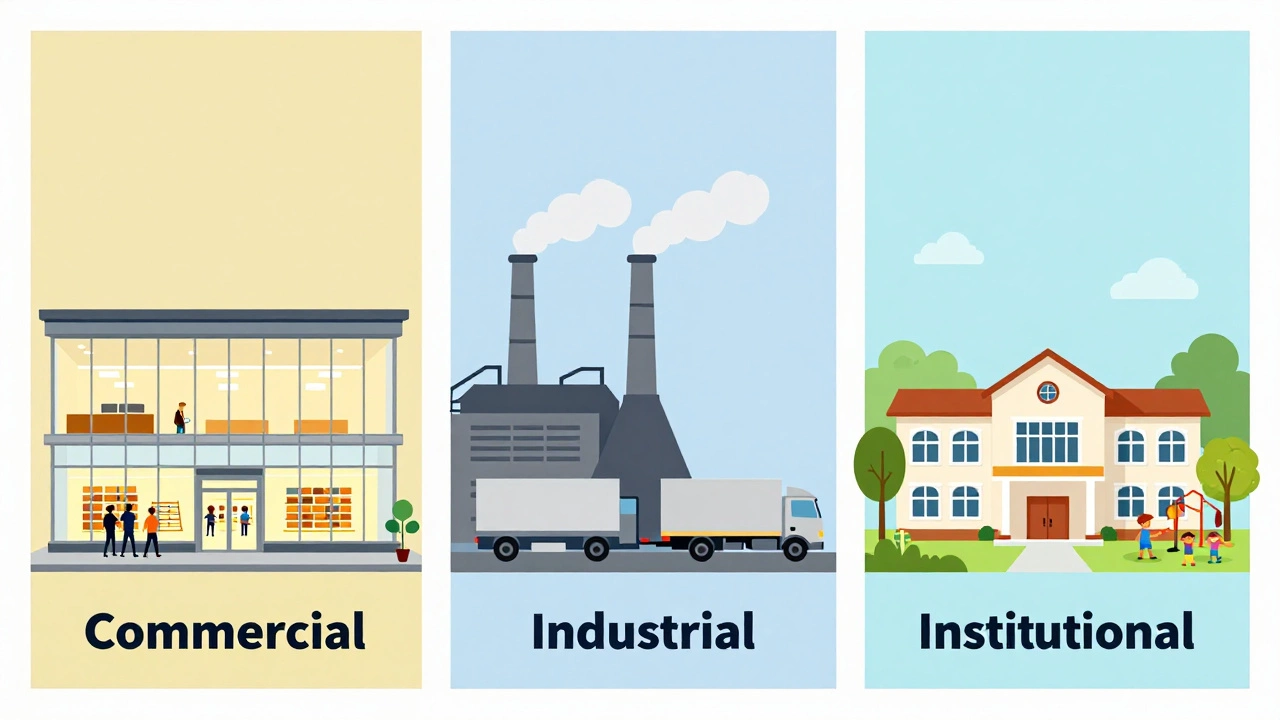
To understand where schools fit, we first need to define the buckets they don’t quite fit into. In construction and real estate, buildings are generally grouped by their occupancy type-the primary activity that happens inside them.
Commercial Construction refers to buildings designed for business activities where money changes hands directly within the space. Think retail stores, office towers, hotels, and restaurants. The goal is profit generation through sales or services. These buildings prioritize aesthetics, customer flow, and brand experience. A coffee shop is commercial because people walk in, buy coffee, and leave.
Industrial Construction involves facilities used for manufacturing, production, warehousing, or distribution. Factories, power plants, and logistics centers fall here. The focus is on functionality, heavy machinery support, and supply chain efficiency. An auto plant is industrial because raw materials enter, get assembled, and finished cars exit. Profit comes from the product made elsewhere or shipped out, not from transactions happening inside the walls.
Schools do neither. They don’t sell goods to customers inside the classrooms, nor do they manufacture products on an assembly line. Instead, they provide a public service: education. This places them in the third major pillar: Institutional Construction.
Why Schools Are Institutional Buildings
Institutional construction covers facilities built for public use, typically funded by government entities or non-profit organizations. This category includes schools, hospitals, libraries, courthouses, and fire stations. The defining characteristic is public welfare rather than private profit or industrial output.
When you build a school, you are constructing a community hub. The design priorities shift dramatically compared to commercial or industrial projects:
- Safety Over Speed: While a warehouse needs quick loading docks, a school needs secure entry points, anti-ligature fixtures, and extensive emergency egress routes.
- Durability Over Decor: Commercial offices might have delicate glass partitions. Schools need reinforced walls, impact-resistant flooring, and furniture that survives thousands of students daily.
- Accessibility as Standard: Institutional buildings must adhere to stricter accessibility guidelines (like ADA compliance in the US or NZS 4121 in New Zealand) because they serve the entire population, including those with disabilities.
This classification isn’t just academic. It dictates the building codes you must follow. For example, fire suppression systems in schools often require higher coverage densities than standard office buildings due to the high density of occupants who may be unable to evacuate quickly without assistance.
The Legal and Zoning Reality
If you look at local zoning maps, you won’t find a zone labeled 'Institutional.' Instead, you’ll see categories like 'Public Use,' 'Educational,' or 'Civic.' However, when applying for financing or insurance, lenders often group schools under 'Commercial Real Estate' simply because they are non-residential. This creates confusion.
Let’s clarify the difference between construction type and real estate classification:
| Feature | Commercial | Industrial | Institutional (Schools) |
|---|---|---|---|
| Primary Purpose | Profit/Sales | Production/Warehousing | Public Service/Education |
| Funding Source | Private Investors | Private/Corporate | Government/Public Bonds |
| Occupancy Load | Moderate/Variable | Low/Moderate | High/Dense |
| Building Code Focus | Aesthetics/Flow | Structural Load/Hazmat | Safety/Egress/Accessibility |
| Typical Tenants | Retailers, Offices | Manufacturers, Logistics | School Districts, Non-Profits |
From a legal standpoint, if you lease land for a school, you are likely engaging in a long-term ground lease with a municipal entity, not a standard commercial triple-net lease. This affects how you structure contracts with general contractors. You aren’t negotiating for ROI in the same way; you’re negotiating for lifecycle cost and community impact.
Construction Challenges Unique to Schools
Because schools are institutional, they face unique hurdles that commercial developers rarely encounter. Here is what you need to prepare for:
1. Phased Construction During Operation
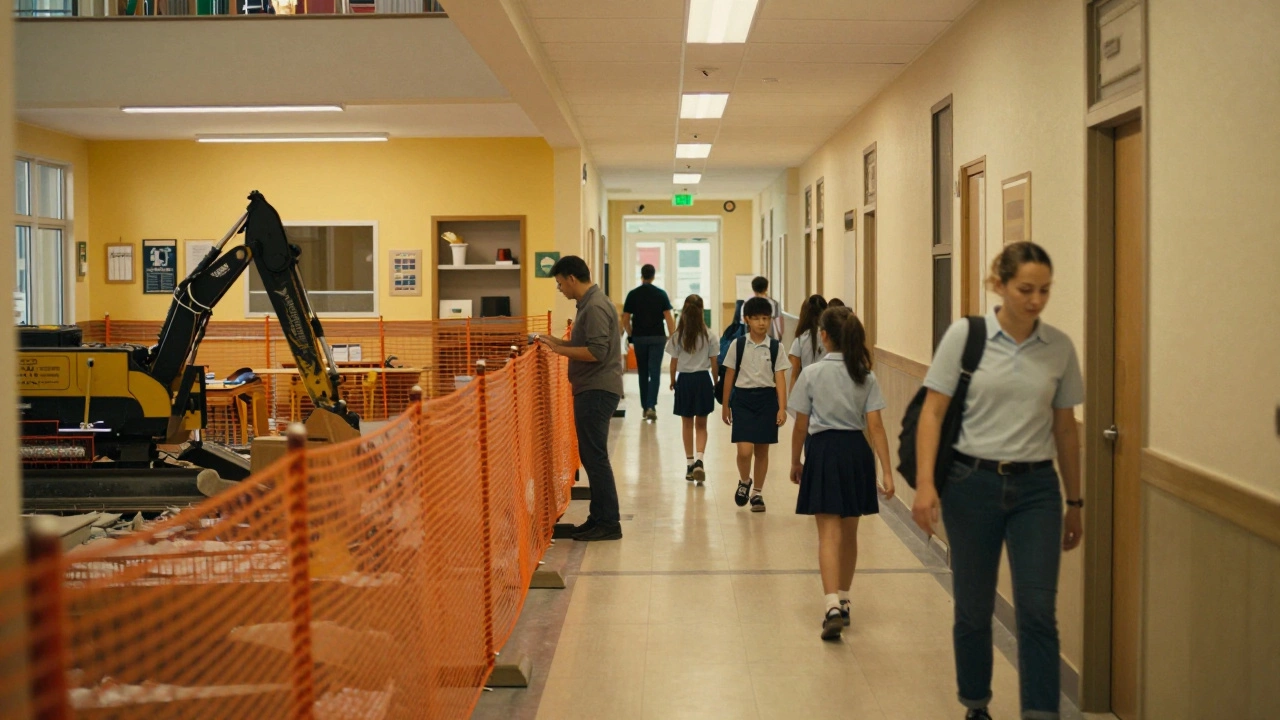
Schools rarely shut down for months to rebuild. Most projects happen during summer breaks or while half the campus remains open. This requires complex logistics planning. You can’t just block off a street like you would in an industrial park. You need safe pedestrian corridors for children, noise restrictions during exam periods, and strict security protocols to keep construction zones separate from student areas.
2. Strict Material Standards
>In industrial settings, you might use concrete floors and steel beams exposed to the elements. In schools, health and safety regulations dictate low-VOC (Volatile Organic Compounds) paints, formaldehyde-free adhesives, and acoustic treatments to ensure learning environments are healthy. The Indoor Air Quality (IAQ) standards are significantly tighter. If you cut corners here, you risk failing final inspections and endangering student health.3. Community Stakeholder Management
>A commercial office tower has one client: the developer. A school has hundreds: parents, teachers, local residents, city planners, and state officials. Change orders are common because community feedback loops are active. A parent group might demand more playground fencing; the city might require additional bike racks. Your project management plan must account for this level of scrutiny and adaptability.Why the Distinction Matters for Contractors
If you are a contractor bidding on a school project, treating it like a standard commercial strip mall job is a recipe for disaster. Here is why:
- Insurance Requirements: Institutional projects often require higher liability coverage limits due to the presence of minors. Standard commercial policies may exclude 'educational facilities' or charge premium rates. Ensure your policy explicitly covers K-12 or higher education environments.
- Bidding Processes: Public schools usually go through a transparent, competitive bidding process mandated by law. You cannot negotiate privately like you might with a private commercial developer. Your bid must be compliant with every specification, or it gets rejected outright.
- Payment Schedules: Government-funded projects often have slower payment cycles tied to milestone approvals and audits. Cash flow management must be robust. You might wait 60-90 days for progress payments, unlike some private commercial deals that pay faster.
Furthermore, the labor requirements differ. Union agreements often play a larger role in public institutional projects than in private commercial ones. Knowing which unions hold jurisdiction in your area is essential before breaking ground.
Common Misconceptions About School Construction
Many newcomers to the industry make these errors:
Misconception 1: "It’s just a big office building." Reality: No. Office buildings have cubicles and meeting rooms. Schools have science labs with gas lines, art rooms with specialized ventilation, gyms with high ceilings, and cafeterias with commercial-grade kitchens. The MEP (Mechanical, Electrical, Plumbing) complexity is far higher.
Misconception 2: "I can use cheaper materials since it’s public money." Reality: Absolutely not. Public projects are subject to intense audit. Using substandard materials can lead to personal liability for contractors and architects. Plus, schools need longevity. A carpet that lasts five years in an office might last two in a hallway with 500 kids running through it daily. Durability is cost-effective in the long run.
Misconception 3: "Zoning doesn’t matter if I have the land." Reality: Even if a district owns the land, you still need building permits based on occupancy classification. Mislabeling a school as 'commercial' on permit applications can void insurance claims in case of accidents. Always classify correctly from day one.
Next Steps for Your Project
If you are planning a school construction project, take these steps immediately:
- Verify Local Zoning Codes: Contact your city’s planning department. Ask specifically about 'Institutional' or 'Educational' zoning requirements. Do not assume 'Commercial' covers it.
- Engage an Architect Specializing in Education: Generalist architects may miss critical pedagogical design elements. Look for firms with portfolios in K-12 or higher ed.
- Review Insurance Policies: Confirm with your broker that your general liability and builder’s risk policies cover educational facilities and minor occupancies.
- Plan for Phasing: If the school is operational, create a detailed phasing plan that prioritizes student safety and minimizes disruption to classes.
- Budget for Contingencies: Institutional projects often face unforeseen site conditions (old infrastructure, asbestos abatement). Keep a 10-15% contingency fund.
Classifying a school correctly isn’t just paperwork. It’s the foundation of a safe, functional, and legally compliant building. By recognizing schools as institutional structures, you align your team, budget, and expectations with the true nature of the project.
Can a school be classified as commercial real estate?
Yes, in financial and lending contexts, schools are often grouped under 'Commercial Real Estate' because they are non-residential properties. However, for construction, zoning, and building code purposes, they are classified as 'Institutional' or 'Educational' facilities. This distinction affects permitting, safety standards, and insurance requirements.
What building codes apply to schools?
Schools typically follow the International Building Code (IBC) with specific amendments for 'Assembly' and 'Educational' occupancies. Key focuses include enhanced fire resistance ratings, wider egress corridors, secure entry vestibules, and stricter indoor air quality standards. Local jurisdictions may have additional requirements for seismic safety or accessibility.
Is building a school more expensive than a commercial office?
Generally, yes. Per-square-foot costs for schools are often higher due to complex MEP systems (labs, kitchens), durable finishes, enhanced security features, and strict accessibility mandates. While commercial offices prioritize aesthetics, schools prioritize longevity and safety, which drives up material and labor costs.
Who funds school construction projects?
Most public school construction is funded through government sources, including local property taxes, state education budgets, and municipal bonds. Private schools rely on tuition, donations, and private investment. This funding structure influences the bidding process, which is often public and regulated for transparency.
Do I need special insurance to build a school?
Yes. Standard commercial general liability policies may exclude educational facilities or limit coverage for incidents involving minors. Contractors should verify that their policies explicitly cover 'K-12' or 'Higher Education' projects and consider higher liability limits due to the high occupancy density and vulnerability of the occupants.