
What is Classified as Commercial Construction: A Complete Guide for Owners and Developers
 Jun, 15 2026
Commercial vs. Residential Construction Classifier
Classification Result
Loading...Key Implications:
Have you ever looked at a sleek office tower and wondered why the rules for building it are so different from those for your neighbor’s new garage? The line between what counts as a home and what counts as a business property isn't always drawn in sand. It's drawn in law, insurance policies, and building codes. Understanding what is classified as commercial construction is the first step to avoiding costly fines, delays, or denied insurance claims.
If you are planning a project, knowing whether your build falls under commercial or residential regulations changes everything. It affects who can pull the permits, what materials you must use, and how much you will pay in taxes. Let’s break down exactly where that line is drawn and why it matters for your wallet and your timeline.
The Core Definition: Intent Over Structure
At its simplest level, commercial construction refers to any structure built for business purposes rather than personal living. But "business" is a broad term. It doesn't just mean skyscrapers with glass facades. A small bakery, a standalone medical clinic, and a massive warehouse all fall into this bucket. The key factor is the intended use of the space.
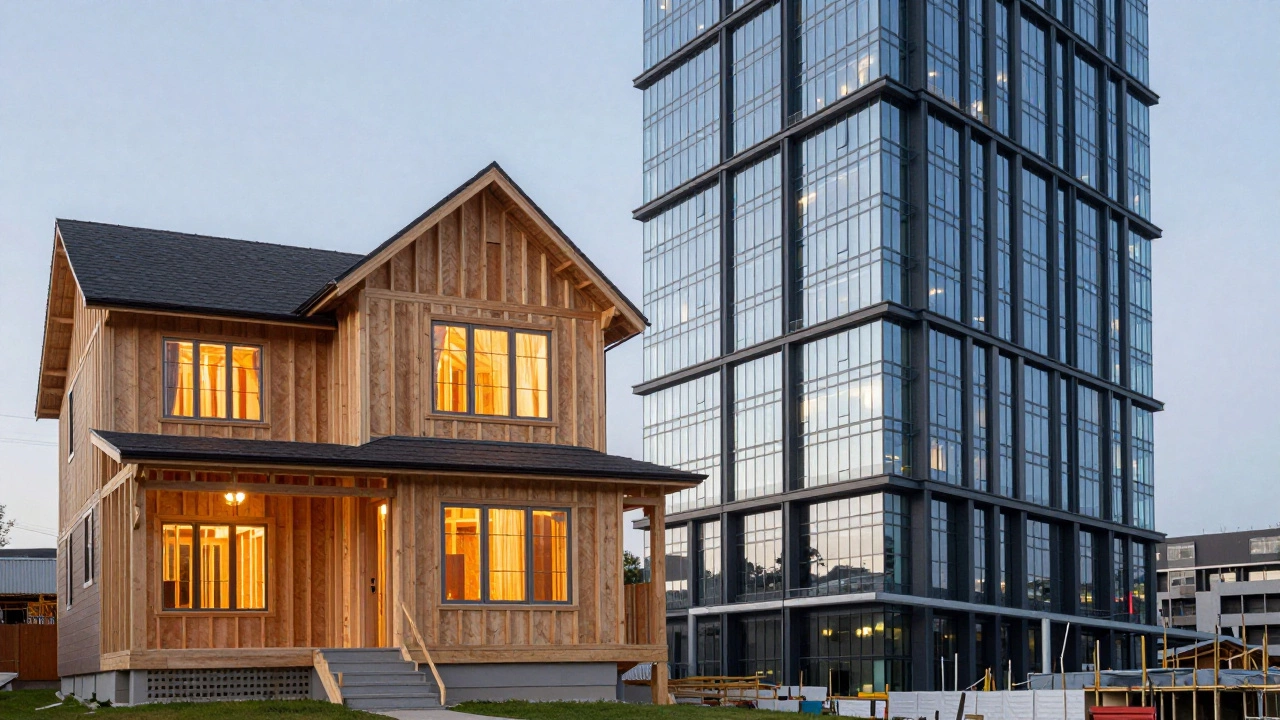
Residential construction is designed for people to sleep, cook, and live in long-term. Commercial construction is designed for people to work, shop, or visit temporarily. This distinction drives every other rule in the book. Because commercial spaces have higher foot traffic, stricter safety standards apply. You need wider exits, more robust fire suppression systems, and accessible ramps for people with disabilities.
Think about a strip mall versus an apartment complex. Both might be made of concrete and steel. But the mall is a place of commerce; the apartments are places of residence. Even if the apartments are rented out by a business entity, the structure itself is still classified as residential because its primary function is housing.
Common Types of Commercial Projects
To see if your project fits the bill, look at these common categories. If your idea matches one of these, you are likely dealing with commercial classification.
- Retail Spaces: Stores, shopping centers, and malls where goods are sold directly to consumers.
- Office Buildings: Corporate headquarters, co-working spaces, and professional suites for lawyers, doctors, or consultants.
- Industrial Facilities: Warehouses, factories, distribution centers, and manufacturing plants.
- Hospitality Venues: Hotels, motels, restaurants, and bars. Note that while guests sleep here, it is not their permanent residence, so it remains commercial.
- Institutional Buildings: Schools, hospitals, libraries, and government buildings.
These structures share common traits: they require heavy-duty electrical systems, complex HVAC setups to handle large crowds, and compliance with the Americans with Disabilities Act (ADA) or local equivalent accessibility laws.
The Gray Area: Mixed-Use and Multi-Family Properties
Things get tricky when properties blur the lines. What about a building with shops on the ground floor and apartments above? Or a large house with four separate rental units?
In many jurisdictions, including parts of New Zealand and the United States, the threshold often sits at four units. A duplex or triplex is frequently treated as residential. Once you hit four or more units, the building is often reclassified as multi-family commercial. This shift triggers different lending requirements, zoning approvals, and maintenance standards.
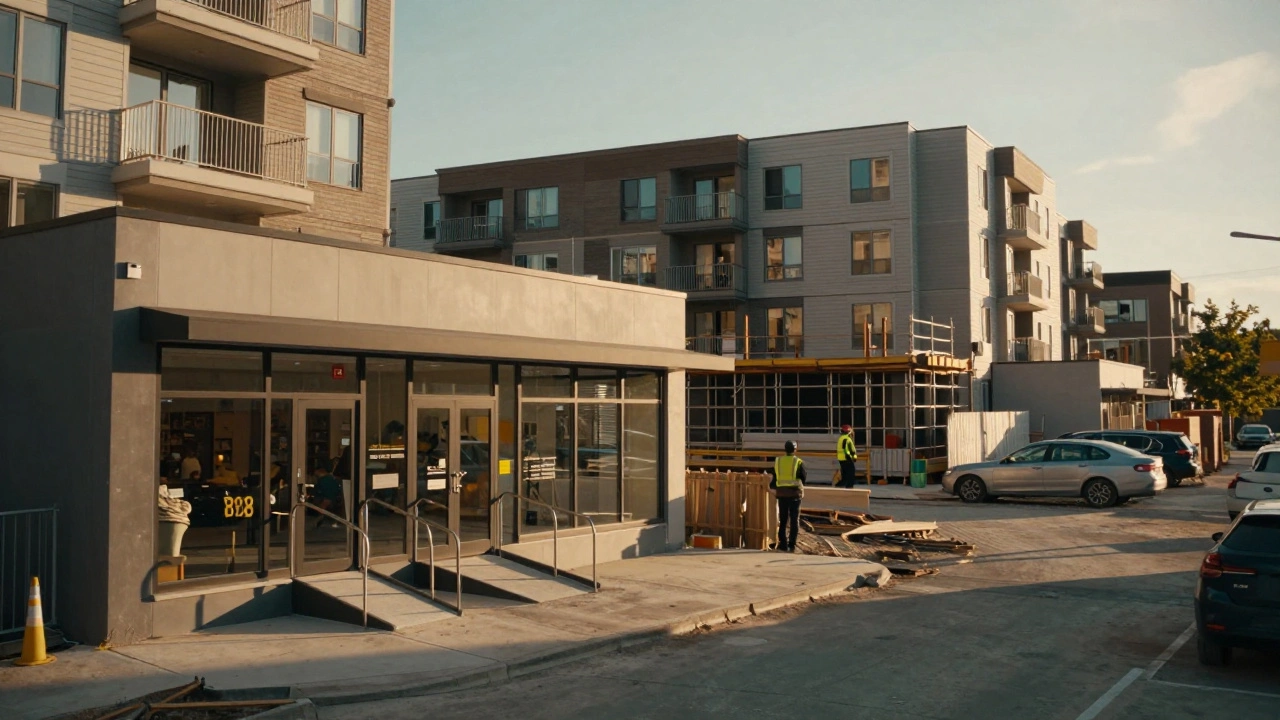
Mixed-use developments are another hybrid. These projects combine retail, office, and residential spaces in one footprint. For the builder, this means navigating two sets of codes simultaneously. The lobby might need commercial-grade security and flooring, while the upstairs apartments need residential soundproofing and plumbing fixtures. Managing this duality requires a contractor who understands both worlds.
| Feature | Residential | Commercial |
|---|---|---|
| Purpose | Living/Housing | Business/Work/Retail |
| Building Codes | IRC (International Residential Code) | IBC (International Building Code) |
| Materials | Wood framing, drywall, vinyl | Steel, concrete, masonry, fire-rated assemblies |
| Lifespan Expectancy | 30-50 years | 50-100+ years |
| Permit Process | Simpler, faster | Complex, requires multiple inspections |
| Accessibility | Minimal requirements | Strict ADA/local accessibility compliance |
Why Classification Changes Your Budget
So why does this label matter so much? Money. Commercial construction is almost always more expensive per square foot than residential builds. Here is why:
Materials: Homes are often built with wood frames. Commercial buildings usually require steel or reinforced concrete to support heavier loads and meet fire resistance ratings. Steel costs more upfront but lasts longer and resists pests and rot better.
Systems: A home needs a simple furnace and a few outlets. A commercial office needs industrial HVAC zones, backup generators, high-capacity elevators, and extensive data cabling. These systems require specialized engineers to design and licensed technicians to install.
Insurance and Liability: Insuring a commercial site is pricier. The risk of injury is higher due to public access. Contractors need higher liability coverage, which gets passed on to the owner. Plus, if you misclassify a commercial project as residential, your insurer might deny a claim entirely if a fire breaks out.
Zoning Laws: The Local Gatekeepers
Even if you think your project is commercial, your local council might disagree. Zoning laws dictate what can be built where. In Wellington, for example, strict heritage overlays and density restrictions can change how a building is classified.
You cannot simply decide to turn your suburban garage into a daycare center without checking the zoning map. If the land is zoned R-1 (Single-Family Residential), running a business there might be illegal or require a special variance. Getting this wrong can lead to stop-work orders, forcing you to tear down completed work. Always consult your local planning department before breaking ground.
How to Confirm Your Project's Status
Don't guess. Follow these steps to ensure you are on the right side of the law:
- Check the Deed and Zoning Map: Look up your property address on your city or council’s GIS portal. See what zone it falls under (e.g., C-1 Commercial, R-4 Multi-Family).
- Consult a Local Architect: Professionals know the nuances of local codes. They can tell you if your design triggers commercial requirements.
- Talk to Your Contractor: Ask them explicitly: "Will this permit be pulled as residential or commercial?" Their answer should align with your intent.
- Review Insurance Policies: Call your broker. Ask if your current policy covers business activities in the structure. If not, you may need a commercial policy regardless of the building code classification.
Frequently Asked Questions
Is a home office considered commercial construction?
Generally, no. If you are working from home in a detached house or apartment, the structure remains residential. However, if you significantly alter the layout to accommodate clients, install heavy machinery, or increase foot traffic beyond normal residential levels, some insurers or local councils may view it differently. Minor renovations like adding a desk or soundproofing a room do not change the classification.
What happens if I build a commercial building using residential codes?
This is a major risk. You could face failed inspections, inability to obtain a certificate of occupancy, and voided insurance policies. If a fire occurs, the insurance company may deny the claim because the building was not constructed to the required commercial fire-resistance standards. Additionally, you could be fined heavily by local authorities and forced to retrofit or demolish parts of the structure.
Are hotels considered residential or commercial?
Hotels are strictly commercial. Even though people sleep there, they are not permanent residents. Therefore, hotels must comply with commercial building codes, which include stricter fire safety measures, larger hallways for evacuation, and commercial-grade kitchen facilities if food service is provided.
Does the size of the building determine if it is commercial?
Not necessarily. A small shed used for storing business inventory is commercial. A massive mansion used only for living is residential. Size plays a role in some specific code thresholds (like requiring sprinklers over a certain square footage), but the primary driver is the intended use and occupancy type.
Can I convert a residential building to commercial use?
Yes, but it requires a process called "change of use." You must apply for new permits, update the building plans to meet commercial codes, and potentially upgrade electrical, plumbing, and structural systems. Zoning approval is also critical; if the area is not zoned for business, you may need to request a rezoning, which can be time-consuming and uncertain.