
What Is Included in a New Build? The Complete Buyer’s Guide for 2026
 Jun, 1 2026
New Build Cost Estimator
Build Configuration
Estimated Total Cost
Buying a brand-new home feels like stepping into the future. You get modern energy efficiency, fresh materials, and that satisfying lack of hidden plumbing disasters. But here is the catch: the glossy brochure showing marble countertops and smart-home integration often hides a very different reality. In the world of new builds, houses constructed from the ground up by developers or builders, often sold before completion, what you see is rarely exactly what you get without careful negotiation.
The gap between marketing promises and the actual handover keys is where most buyers lose money-or sanity. Understanding exactly what is included in your contract versus what costs extra is the single most important skill you can develop before signing anything. This guide breaks down the physical components, legal protections, and financial structures of new construction in New Zealand and similar markets as of 2026.
The Physical Structure: What Actually Gets Built?
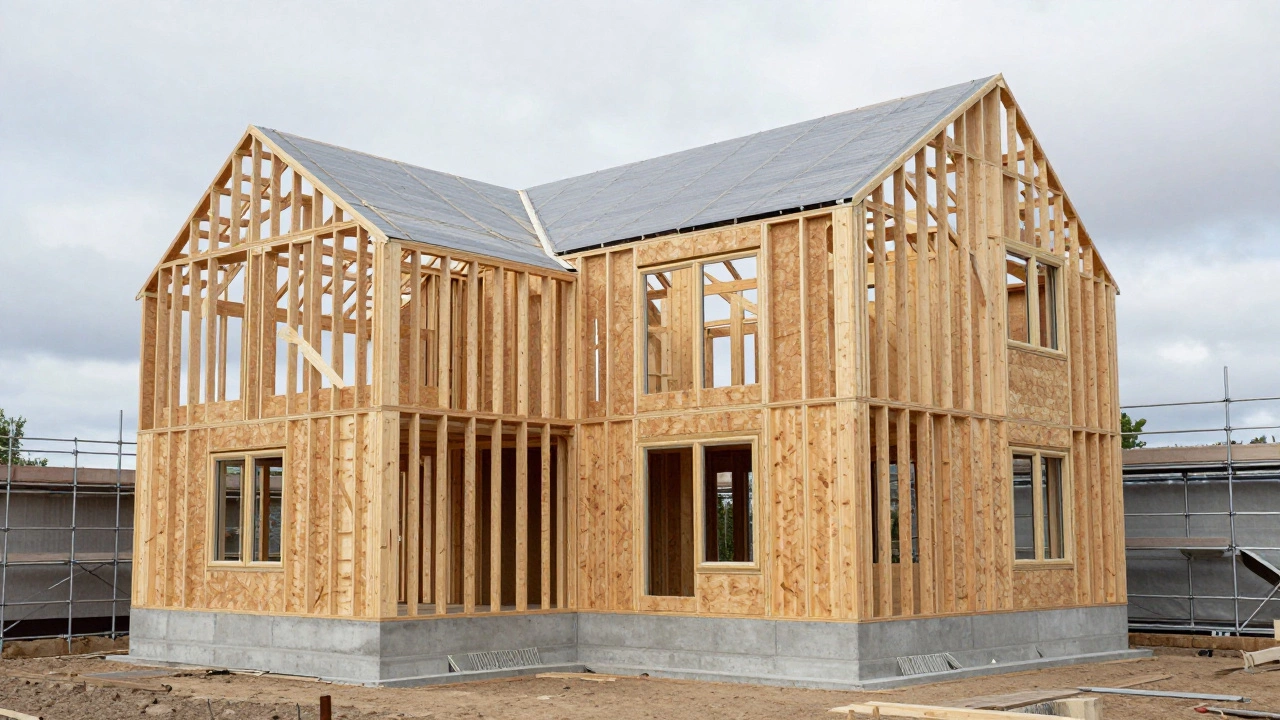
When you buy a new build, you are primarily purchasing a shell and its core systems. The builder’s obligation is to deliver a weather-tight, structurally sound dwelling that meets local council regulations. This baseline includes the foundation, framing, roofing, windows, and external cladding. These elements are non-negotiable because they define the integrity of the home.
In New Zealand, this means compliance with the Building Code, the set of technical standards required for all construction projects to ensure safety and health. Specifically, you need to look for compliance with Clause E2 (External Moisture) and Clause B2 (Durability). A proper new build will include high-performance insulation in walls, ceilings, and floors-typically R2.9 for ceilings and R1.3 for walls in most climate zones. Without this, your heating bills will skyrocket within six months.
- Foundation: Concrete slab-on-ground or suspended timber floor system, depending on site topography.
- Framing: Treated pine or steel stud framing, spaced at 450mm or 600mm centers.
- Roofing: Colorsteel sheeting or tile, including underlay and flashing.
- Windows & Doors: Double-glazed units meeting minimum U-value requirements.
- Cladding: Weatherboards, brick veneer, or fiber cement panels, fully sealed.
These structural elements are usually covered by a 10-year latent defects insurance policy if the builder goes insolvent. However, cosmetic issues like paint scratches or grout haze are not structural-they fall under a shorter maintenance period, usually 12 to 24 months.
The "Standard Finish" Trap: Fixtures vs. Fittings
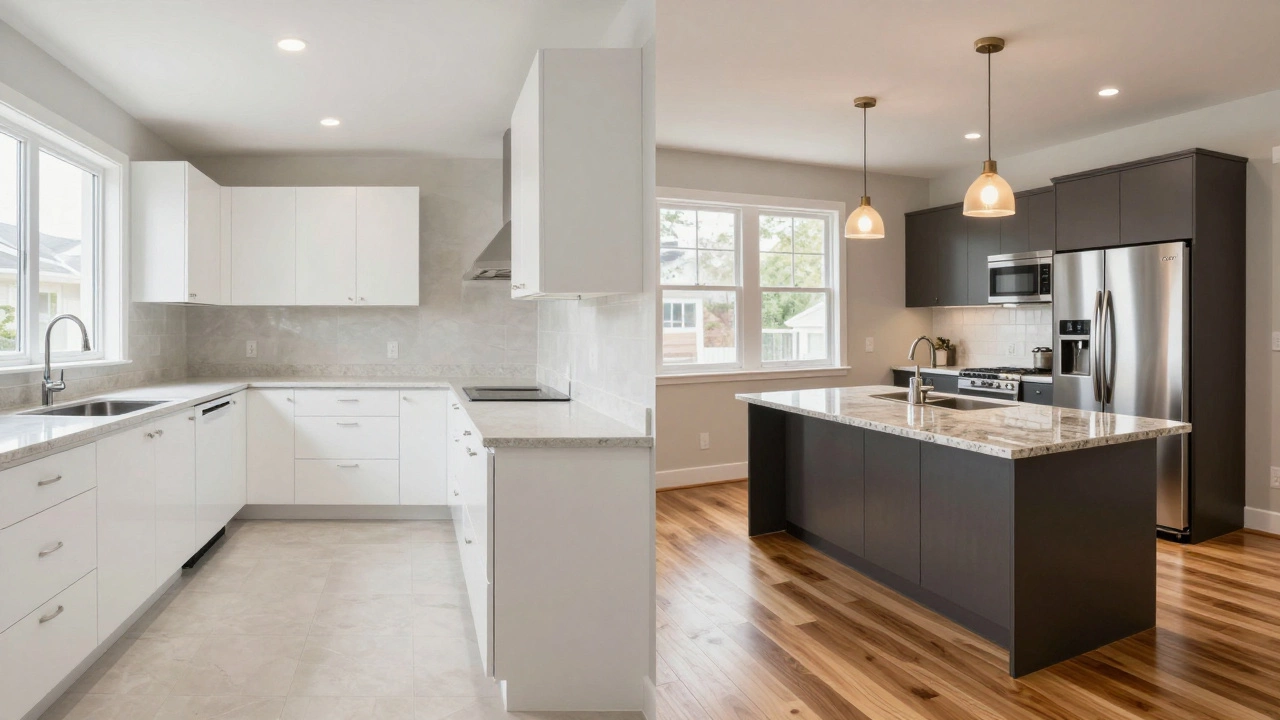
This is where confusion breeds. Developers love the term "standard finish." It sounds comprehensive, but it often means "basic." In 2026, a standard finish typically includes functional, mass-produced items rather than premium brands. You might get a working kitchen, but it could feature laminate benchtops instead of stone, and basic whitegoods that are energy-efficient but noisy.
You must distinguish between fixtures and fittings. Fixtures are attached to the property (light fittings, built-in wardrobes, bathroom vanities) and generally stay with the house. Fittings are removable (freestanding fridges, washing machines, curtains) and often do not unless explicitly stated in the contract. Always ask for a written schedule of finishes. If it isn’t written down, assume it isn’t included.
| Component | Standard Finish (Included) | Premium Upgrade (Extra Cost) |
|---|---|---|
| Kitchen Benchtop | Laminate or engineered quartz | Natural stone (granite/marble) |
| Flooring | Vinyl plank or carpet in bedrooms | Solid hardwood or polished concrete |
| Bathroom Tiles | Ceramic wall tiles, vinyl shower tray | Porcelain floor-to-ceiling tiling |
| Lighting | Basic LED downlights | Designer pendants and dimmable switches |
| Appliances | Entry-level branded models | High-end integrated appliances |
Upgrading these elements during the design phase is significantly cheaper than renovating after move-in. Labor costs for retrofitting a stone benchtop later can double the initial upgrade price. Plan your aesthetic preferences early.
Legal Protections: Warranties and Insurance
A new build is not just a physical product; it is a legal package. In New Zealand, residential buildings over $20,000 in value require a Code Compliance Certificate (CCC), a final document issued by the local council confirming the building work complies with the Building Code. Never pay the final balance until you have seen the CCC. Without it, you cannot legally sell the home later, and banks will refuse mortgages.
Additionally, check for Latent Defects Insurance, insurance covering major structural failures that appear years after construction. This protects you if the builder disappears. In Australia, this is mandatory; in NZ, it is increasingly common for larger developments. Ask specifically: "Is this project insured against builder insolvency?"
Your contract should also outline the defect liability period. Typically, this is 12 months for general workmanship and 24 months for waterproofing. During this time, the builder must fix any issues at no cost. Document every flaw with photos and written requests. Verbal agreements vanish quickly.
Financial Structures: Fixed Price vs. Cost Plus
How you pay matters as much as what you build. Most new builds offer two pricing models: fixed price and cost-plus.
Fixed Price Contracts lock in the total cost upfront. This provides budget certainty. However, builders often pad these prices to cover their risk. If material costs drop, you don’t benefit. If they rise, the builder absorbs the hit-but may cut corners on unspecified items. Scrutinize the exclusions list. Does "fixed price" include site preparation? Driveways? Landscaping? Often, no.
Cost-Plus Contracts charge you for actual materials and labor plus a percentage fee (usually 15-20%) for the builder’s profit. This offers transparency and flexibility for changes. But it lacks a ceiling. A simple change order can balloon the final bill. Use this only if you have a trusted quantity surveyor reviewing invoices monthly.
In 2026, with supply chain volatility still affecting timber and steel prices, fixed-price contracts are safer for most buyers. Just ensure the contract specifies exact brands and model numbers for all appliances and fixtures. Vague terms like "equivalent quality" give the builder leverage to swap in cheaper alternatives.
Landscaping and External Works
The brochure shows a lush garden. The contract mentions "basic lawn establishment." This discrepancy is classic. New build contracts rarely include mature landscaping. You will likely receive bare earth, a sprinkler system, and perhaps some grass seed or turf.
Check if the following are included:
- Driveway paving (concrete vs. gravel)
- Pathways to the front door
- Reticulation system (underground irrigation)
- Retaining walls for sloping sites
- Garage flooring and internal doors
If you want a finished outdoor living area, budget an additional 10-15% of the build cost for post-completion landscaping. Soil quality on new builds is often poor fill dirt, requiring topsoil replacement before planting gardens.

Energy Efficiency and Smart Home Features
Modern new builds must meet higher energy standards. In NZ, this aligns with the Healthy Homes Standards and voluntary Homestar ratings. Look for homes rated 6-star or higher. This ensures adequate ventilation, thermal performance, and moisture management.
Smart home technology is becoming standard, but definitions vary. A "smart home" might mean pre-wired conduits for internet cables, or it could include installed thermostats and security cameras. Clarify this early. Pre-wiring is cheap and essential for future-proofing. Installed devices add convenience but become obsolete quickly. Prioritize infrastructure over gadgets.
Heat pumps are now standard inclusions in most regions. Check the capacity (kW rating) matches the square meterage of each zone. An undersized unit will run constantly, wasting electricity. An oversized one will short-cycle, failing to dehumidify properly.
Common Pitfalls to Avoid
Even experienced buyers make mistakes. Here are the top three traps in new build transactions:
- Ignoring Site Conditions: The quoted price assumes flat, stable ground. If your section has clay soil, steep slopes, or rock, excavation costs can exceed $10,000 extra. Get a geotechnical report before signing.
- Skipping the Final Inspection: Builders expect defects. They won’t notice every scratched window or misaligned door. Hire an independent building inspector for the pre-settlement walk-through. Their fee ($500-$800) saves thousands in repairs.
- Assuming "Off-the-Plan" Means Instant Move-In: Construction delays are common due to weather, labor shortages, or consent issues. Ensure your financing bridge covers potential 3-6 month delays.
New builds offer peace of mind, but only if you understand the fine print. By focusing on structural integrity, clarifying finish schedules, and securing legal warranties, you transform a risky purchase into a solid long-term investment. Don’t let the shiny brochure blind you to the details that matter.
What is the difference between a new build and a renovation?
A new build starts from empty land or demolition, involving full foundation, framing, and services installation. Renovations modify existing structures. New builds offer better energy efficiency and fewer legacy issues, while renovations preserve character and avoid land acquisition costs.
Do I need a lawyer for a new build contract?
Yes. New build contracts are complex and heavily favor the builder. A lawyer can identify unfair clauses, clarify payment schedules, and ensure your deposit is held in trust. The cost is minor compared to the risk of losing tens of thousands in disputes.
What happens if the builder goes bankrupt?
If you have Latent Defects Insurance or Builder’s Risk Insurance, the insurer covers completion costs. Without it, you may face significant out-of-pocket expenses to find a new contractor. Always verify insurance status before paying large milestones.
Are appliances included in the purchase price?
It depends on the contract. Some developers include basic whitegoods (oven, cooktop, dishwasher) as part of the "kitchen package." Others exclude them entirely. Always request a detailed schedule of appliances with brand and model numbers.
How long does it take to build a new house?
Typically 6 to 12 months from consent approval to Code Compliance Certificate. Delays occur due to weather, material shortages, or council inspections. Factor in an additional 1-2 months for contingency planning.