
What Makes a Building Commercial? Definitions, Codes, and Zoning Rules
 Jun, 28 2026
Commercial vs. Residential Property Classifier
Answer 3 simple questions about your property to determine its likely classification and understand the associated regulations.
1. What is the primary intended use of this property?
2. How is the land currently zoned by your local municipality?
3. Does the building have specialized commercial features?
Classification Complete!
Likely Classification
Typical Construction Cost
Depreciation Schedule
Valuation Method
Key Regulatory Requirements
Comparison Overview
| Feature | Your Property | Alternative Type |
|---|
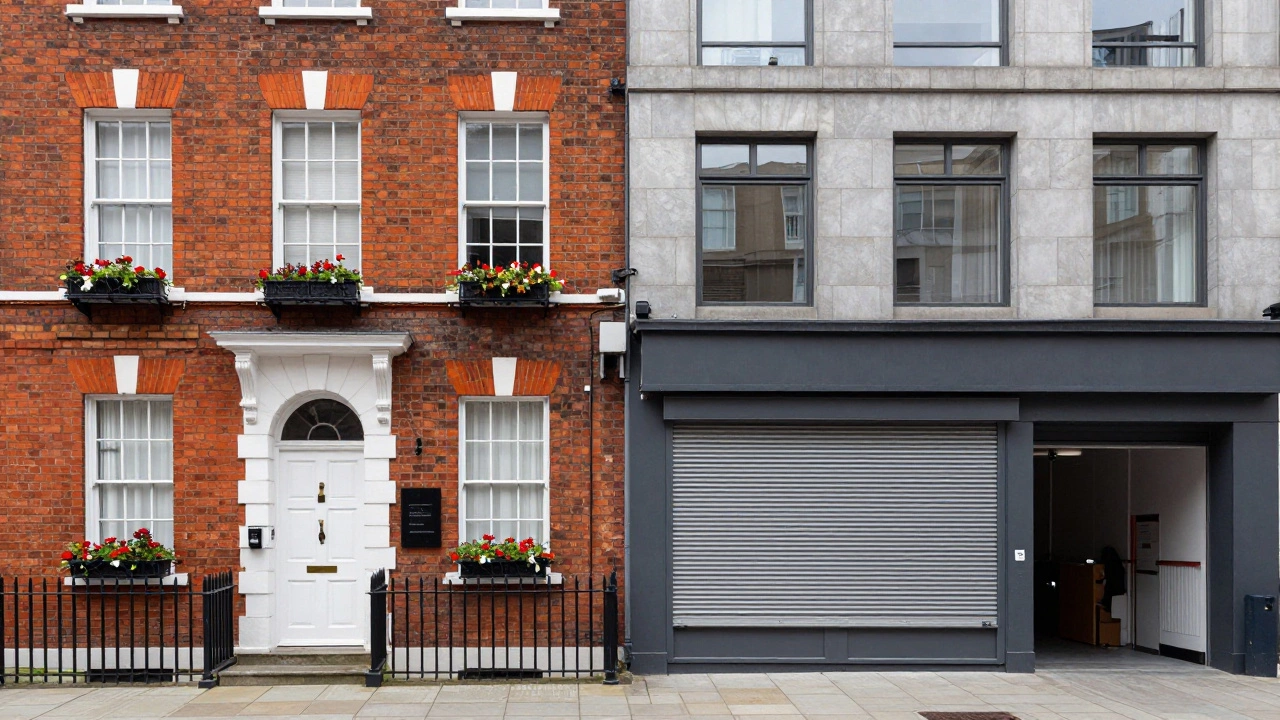
You walk down the street and see two structures side by side. One has a front porch with flower boxes; the other has a glass storefront and a loading dock behind it. Most people instinctively know which is for living and which is for business. But that gut feeling doesn't hold up in court, before a bank loan officer, or when you're talking to a city planner.
The line between residential and commercial building is a structure designed primarily for business activities, retail, office work, or industrial use rather than dwelling purposes isn't just about what's inside the walls. It’s about how the land is zoned, what safety codes apply, and how the property generates value. If you’re looking to buy, build, or convert a property, misunderstanding this distinction can cost you thousands in fines, failed inspections, or denied permits.
The Core Definition: Use Over Structure
At its simplest level, a building is classified as commercial based on its intended use. The International Building Code (IBC), which serves as the model for most building codes in the United States, categorizes buildings by "occupancy." This means the classification depends on who is using the space and what they are doing there.
If the primary purpose of the space is to generate income through business operations, it falls under commercial classification. This includes:
- Retail spaces: Stores, restaurants, and showrooms where goods are sold directly to consumers.
- Office buildings: Spaces used for administrative work, professional services, or corporate headquarters.
- Industrial facilities: Warehouses, factories, and distribution centers focused on production or storage.
- Institutional buildings: Schools, hospitals, and government offices that serve the public.
Conversely, residential buildings are those where people live. This includes single-family homes, apartments, condominiums, and dormitories. The key differentiator is permanence of residence versus temporary occupancy for work or commerce.
Zoning Laws: The Legal Boundary
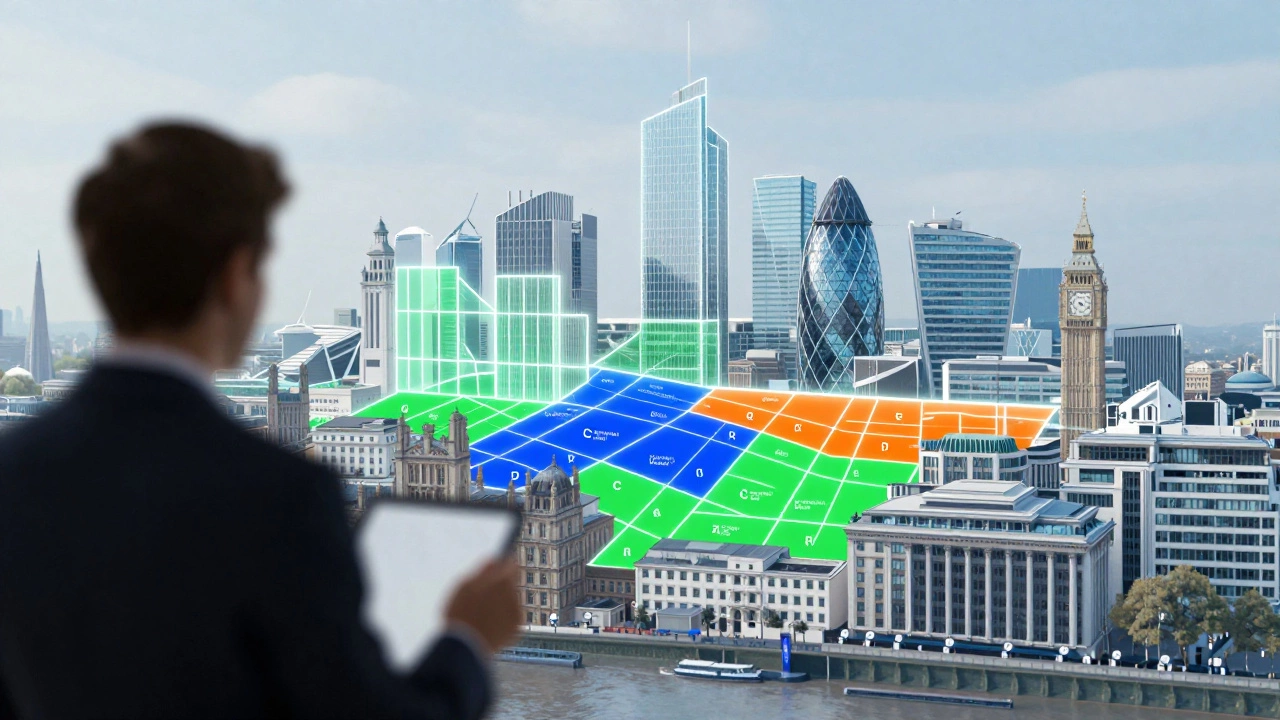
Before you even think about construction, local zoning ordinances dictate whether a building can be commercial. Zoning maps divide cities into districts-Residential (R), Commercial (C), Industrial (I), and Mixed-Use (MU). A building located in an R-1 zone, for example, is legally restricted to single-family dwellings. You cannot simply decide to turn your suburban home into a boutique hotel without changing the zoning designation, which often requires a lengthy variance process from the city council.
Commercial zoning allows for higher density, greater traffic volume, and specific infrastructure needs like wider roads and larger parking lots. When a developer purchases land, the first step is verifying the zoning code. If the land is zoned C-2 (General Commercial), it permits a wide range of businesses but may restrict heavy manufacturing. Understanding these local regulations is crucial because they define not just what you can build, but how much you can charge for rent or sales.
Building Codes and Safety Standards
Once the zoning is approved, the building must comply with specific safety codes. Commercial buildings face stricter scrutiny than residential ones due to higher occupant loads and public access. The International Building Code (IBC) sets minimum standards for structural integrity, fire safety, and accessibility.
Consider fire suppression systems. In many residential buildings, smoke detectors are sufficient. In commercial spaces, especially those over a certain square footage or height, automatic sprinkler systems are mandatory. Exit requirements also differ significantly. A commercial office tower needs multiple emergency exits, clearly marked evacuation routes, and stairwells rated for high-volume egress. A single-family home typically only needs one primary exit and one secondary window escape route.
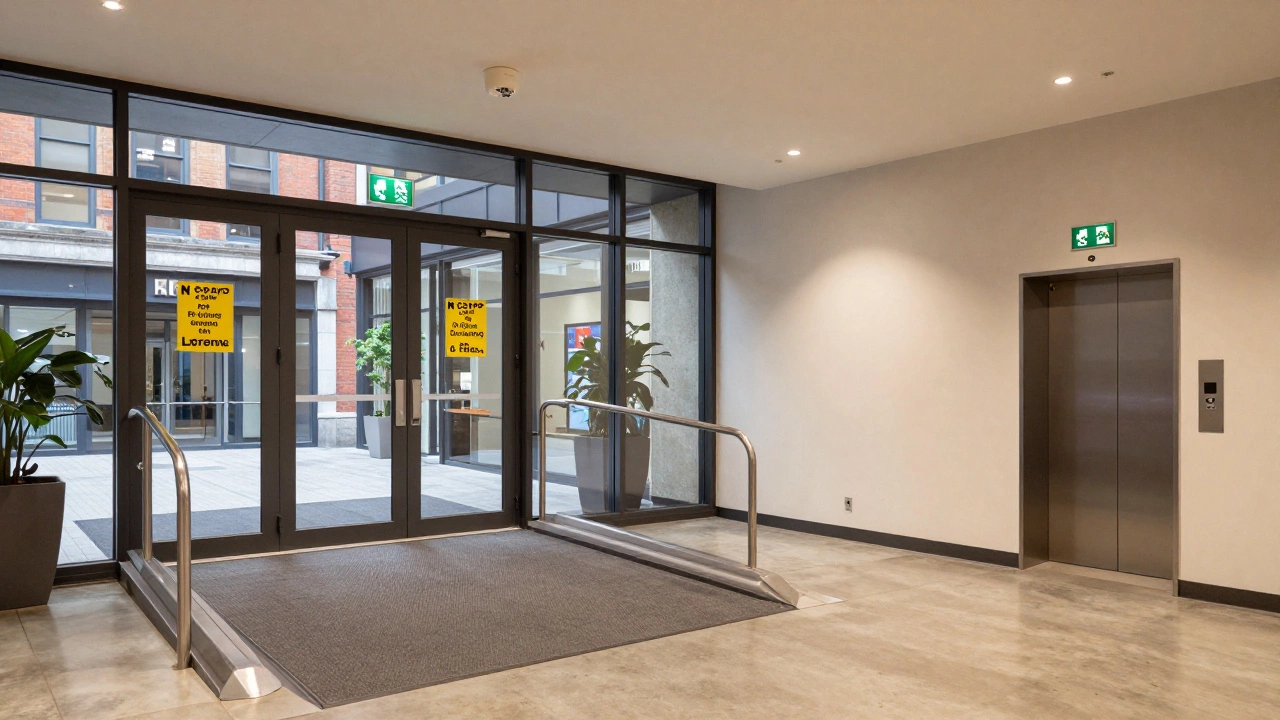
Accessibility is another major factor. The Americans with Disabilities Act (ADA) requires commercial buildings to be accessible to people with disabilities. This means ramps, wider doorways, accessible restrooms, and elevators in multi-story buildings. Residential buildings, particularly private single-family homes, are largely exempt from these strict ADA requirements unless they are converted into multifamily housing or public accommodations.
| Feature | Commercial Building | Residential Building |
|---|---|---|
| Primary Purpose | Business, Retail, Office, Industrial | Dwelling, Living |
| Zoning District | C (Commercial), I (Industrial), MU (Mixed-Use) | R (Residential) |
| Fire Safety | Sprinklers, complex egress paths required | Smoke detectors, basic egress |
| Accessibility | Full ADA compliance mandatory | Limited or no ADA requirements |
| Construction Cost | $150-$400+ per sq ft | $100-$200 per sq ft |
| Lease Type | Gross, Net (NNN), Percentage | Fixed monthly rent |
Mixed-Use Buildings: Blurring the Lines
In recent years, urban planning has shifted toward mixed-use developments. These buildings combine residential units on upper floors with commercial spaces on the ground level. Think of a coffee shop with apartments above it. Legally, these structures are treated as hybrid entities. Each portion of the building must meet the code requirements for its specific use. The ground floor follows commercial IBC standards for fire safety and accessibility, while the upper floors follow residential codes.
This approach maximizes land efficiency in dense cities. However, it complicates construction and management. Developers must coordinate separate mechanical systems, distinct entry points, and different insurance policies for each section. For investors, mixed-use properties offer diversification-rental income from both tenants and residents-but they require more active management to handle the differing needs of business owners and homeowners.
Financial and Tax Implications
The classification of a building heavily influences its financial treatment. Commercial properties are valued differently than residential ones. Appraisers use the Income Approach for commercial real estate, focusing on the property’s ability to generate revenue. They look at capitalization rates (cap rates) and net operating income (NOI). Residential properties, on the other hand, are often valued using the Sales Comparison Approach, looking at what similar homes sold for recently.
Taxation also differs. Commercial buildings typically have shorter depreciation schedules. Under current U.S. tax law, non-residential real property is depreciated over 39 years, while residential rental property is depreciated over 27.5 years. This affects cash flow and investment returns. Additionally, commercial property taxes are often assessed at higher rates than residential taxes, reflecting the greater impact of commercial activity on local infrastructure and services.
How to Verify a Building’s Classification
If you’re unsure whether a property is commercial, don’t guess. Start by checking the county assessor’s website. Property records will list the zoning designation and the assessed use. Next, review the deed and any existing leases. Commercial leases contain clauses about maintenance responsibilities, insurance requirements, and permitted uses that are absent in residential agreements.
Finally, consult with a local building inspector or a real estate attorney. They can review the building’s permit history and confirm if it meets current commercial code requirements. Converting a residential building to commercial use often requires significant renovations to meet fire, electrical, and accessibility standards. Skipping this verification step can lead to costly surprises during renovation or sale.
Can I run a business from my residential home?
Yes, but with limitations. Many cities allow "home occupations" such as consulting, tutoring, or online businesses that do not bring excessive foot traffic or change the character of the neighborhood. However, you cannot operate a retail store, restaurant, or factory in a strictly residential zone without obtaining a special use permit or changing the zoning, which is often difficult.
What is the difference between Class A, B, and C commercial buildings?
These classes refer to quality and desirability, not legal zoning. Class A buildings are new or recently renovated, with high-end finishes, prime locations, and top-tier amenities. Class B buildings are older or in less desirable locations but still functional. Class C buildings are older, may need significant updates, and are often found in declining areas. Investors target different classes based on risk tolerance and return expectations.
Does a building become commercial if I rent out an Airbnb?
Generally, no. Short-term rentals like Airbnbs are still considered residential use because guests are living in the space temporarily. However, some cities have specific regulations for short-term rentals, requiring licenses or limiting the number of nights rented. Long-term rentals (leases over 30 days) also remain residential unless the property is part of a larger multifamily complex managed as a business entity.
Why are commercial buildings more expensive to insure?
Commercial buildings pose higher risks. They have more people coming and going, increasing liability exposure. They may house hazardous materials, heavy machinery, or valuable inventory. Fire risks are higher due to complex electrical systems and cooking equipment in restaurants. Insurers charge higher premiums to cover these increased probabilities of claims related to property damage, business interruption, and personal injury.
Can I convert a warehouse into apartments?
Yes, this is called adaptive reuse. It’s becoming popular in urban areas. However, it requires rezoning from Industrial (I) to Residential (R) or Mixed-Use (MU). The building must also be upgraded to meet residential building codes, including adding windows for natural light, installing proper plumbing and HVAC systems, and ensuring fire safety compliance. It’s a complex process but can yield high returns if done correctly.