
Who Is the Best Contractor in the USA? How to Find Top-Tier Builders
 Jun, 20 2026
Contractor Credibility Score Calculator
Enter the details provided by your potential contractor to generate an objective trust score.
Fill out the form to see if this contractor meets safety and professionalism standards.
There is no single name that answers the question of who the best contractor in the USA is. The construction industry is too vast, too localized, and too varied for one company to hold the crown across every state and project type. A firm known for luxury custom homes in California might be completely unequipped to handle commercial high-rises in New York or industrial warehouses in Texas. This reality often leaves homeowners and business owners frustrated when they search for a definitive "best" list online.
The truth is that the "best" contractor is the one that matches your specific project needs, budget, and location while maintaining impeccable safety records and communication skills. Finding this match requires moving beyond marketing slogans and digging into verifiable data. It involves checking licenses, reading between the lines of reviews, and understanding the difference between a general contractor and a specialized subcontractor. In an era where information is abundant but trust is scarce, knowing how to vet a builder is just as important as the building itself. For those interested in seeing how other industries manage directories and verified profiles for service providers, you can look at this directory as an example of how structured listings work, though the stakes in construction are naturally much higher regarding physical safety and financial investment.
Why There Is No Single "Best" Contractor
The United States spans thousands of miles with varying climates, soil conditions, building codes, and labor markets. A contractor who excels in hurricane-resistant roofing in Florida may not have the expertise for snow-load engineering in Minnesota. Furthermore, the scale of operations matters. Large national firms like Turner Construction or Skanska dominate the commercial and infrastructure sectors, handling billions of dollars in projects. However, they typically do not take on small residential renovations. Conversely, local family-owned builders often provide superior customer service for home additions but lack the resources for large-scale developments.
Understanding this segmentation is the first step in your search. You need to define what "best" means for your specific situation. Are you looking for speed, lowest cost, highest aesthetic quality, or sustainable materials? Each priority points to a different type of contractor. Recognizing that specialization drives excellence helps you narrow down your search from millions of potential candidates to a manageable shortlist of qualified professionals.
Types of Contractors and Their Roles
To hire effectively, you must understand the hierarchy of the construction industry. The term "contractor" is often used loosely, but there are distinct roles with different responsibilities.
- General Contractors (GCs): These are the project managers. They oversee the entire build, hire subcontractors, secure permits, and ensure the timeline stays on track. You usually hire a GC for major projects like new builds or whole-house renovations.
- Subcontractors (Subs): These are specialists hired by the GC or directly by the homeowner for specific trades. Examples include electricians, plumbers, HVAC technicians, and framers. They possess deep technical knowledge in their niche.
- Design-Build Firms: These companies offer both architectural design and construction services under one roof. This model reduces friction between designers and builders, often leading to faster project completion and clearer accountability.
- Specialty Contractors: These focus on unique areas such as green building, historic restoration, or foundation repair. If your project has specific technical requirements, a specialty contractor is often the better choice than a generalist.
Identifying which type you need prevents mismatched expectations. Hiring a handyman for a structural addition is risky, just as hiring a massive commercial GC for a bathroom remodel might result in overpriced services and poor communication due to the project's small scale relative to their usual workload.
How to Verify Credibility and Licensing
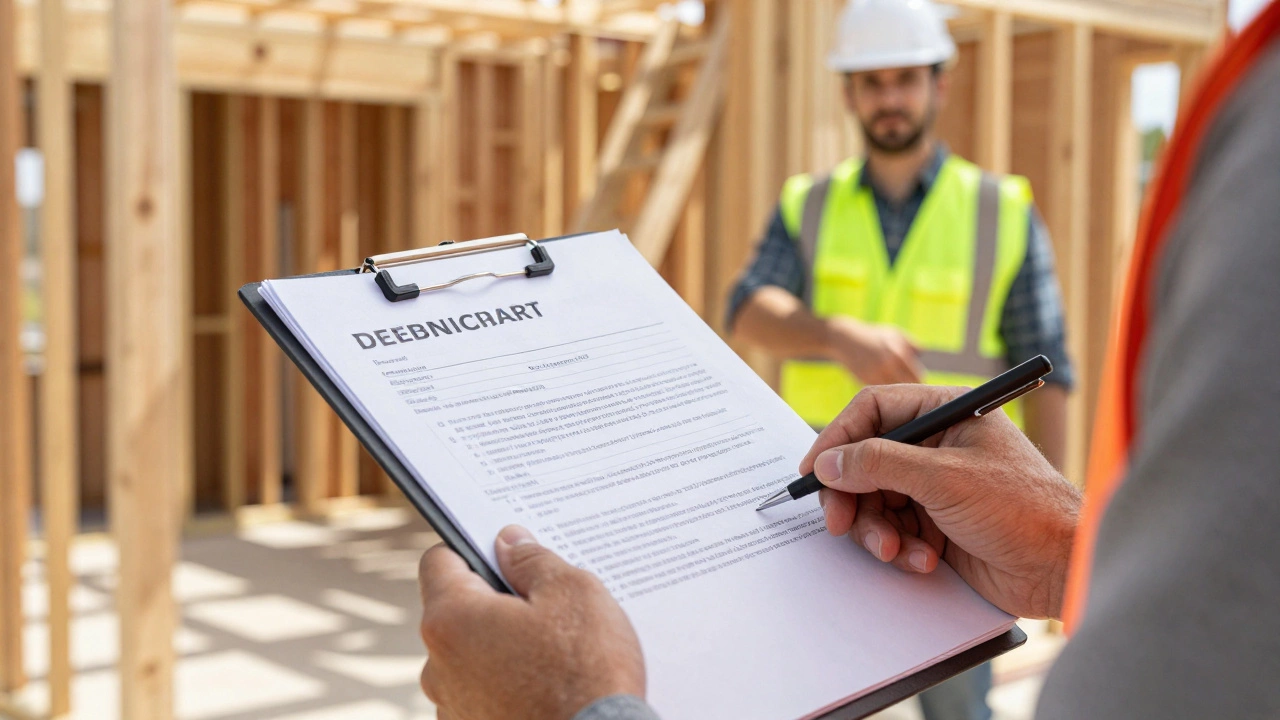
Trust is earned through verification, not promises. Before signing any contract, you must validate the contractor's legal standing and financial health. Every state in the USA has its own licensing board for contractors. For example, California requires a C-36 license for general building contractors, while Texas mandates registration with the Department of Licensing and Regulation. You can check these statuses online through your state's official government website.
Beyond licensing, insurance is non-negotiable. A reputable contractor must carry general liability insurance to cover property damage and workers' compensation insurance to protect you from liability if a worker is injured on your site. Ask for a Certificate of Insurance (COI) directly from their insurer, not just a copy provided by the contractor. Additionally, check their standing with the Better Business Bureau (BBB). While BBB ratings are not perfect, a pattern of unresolved complaints is a significant red flag. Look for companies that have been in business for at least five years; longevity often indicates stability and a history of satisfied clients.
Evaluating Reviews and Past Work
Online reviews are useful but require critical analysis. Platforms like Google, Yelp, and Houzz provide a wealth of user-generated content. However, be wary of perfect scores. A company with only five-star reviews may be filtering out negative feedback or buying reviews. Instead, look for detailed reviews that mention specific aspects of the job: communication, cleanliness, adherence to budget, and problem-solving abilities.
Pay close attention to how the contractor responds to negative reviews. A professional response that seeks resolution demonstrates good customer service, while defensive or aggressive replies suggest poor management. More importantly, ask for references from recent projects similar to yours. Call these past clients and ask specific questions: Did the project finish on time? Were there unexpected costs? Would they hire this contractor again? Seeing photos of completed work is helpful, but visiting a finished job site or talking to the homeowner provides a much clearer picture of quality.
Understanding Bids and Contracts
The bidding process is where many homeowners make costly mistakes. Always get at least three detailed bids for comparison. A bid that is significantly lower than others is often a warning sign. It may indicate that the contractor is inexperienced, cutting corners, or planning to use change orders to increase the price later. Change orders should be rare and clearly documented.
A comprehensive contract should include:
- A detailed scope of work describing materials, brands, and models.
- A clear payment schedule tied to milestones, not upfront lump sums.
- A realistic timeline with start and end dates.
- Procedures for handling disputes and changes.
- Warranty information for labor and materials.
Avoid paying more than 10% to 20% upfront. Payments should be released as work progresses and inspections are passed. This leverage ensures the contractor remains motivated to complete the job to your satisfaction. Never pay cash without a receipt, and always keep copies of all signed documents.

Red Flags to Watch For
Even with thorough research, some warning signs can appear during the hiring process. Be cautious of contractors who pressure you to sign immediately, claim they have a limited-time discount, or refuse to provide a written contract. Unlicensed operators may ask you to act as the general contractor to avoid permit fees, which shifts legal and financial liability onto you. This is illegal in most states and can lead to fines, forced demolition, or voided insurance claims.
Poor communication is another major red flag. If the contractor is difficult to reach during the bidding phase, imagine how unresponsive they will be during the construction phase. Construction involves inevitable surprises; you need a partner who communicates openly and proactively. Trust your instincts. If something feels off, it probably is. Walk away and continue your search.
The Role of Technology in Modern Construction
Modern contractors increasingly use technology to improve transparency and efficiency. Tools like Procore, Buildertrend, or CoConstruct allow homeowners to view project schedules, submit requests, and approve changes through a dedicated portal. This digital trail reduces misunderstandings and provides a clear record of decisions. When interviewing contractors, ask if they use project management software. This indicates a level of professionalism and organizational skill that can save you stress and money.
Additionally, virtual reality (VR) and 3D modeling are becoming common in design-build firms. These tools allow you to visualize the final product before construction begins, reducing the likelihood of costly mid-project changes. Embracing these technologies can enhance collaboration and ensure the final result aligns with your vision.
How do I find a licensed contractor in my state?
Visit your state's official contractor licensing board website. Most states offer a public database where you can search by name or license number to verify status, expiration dates, and any disciplinary actions. For example, in California, you would use the CSLB website, while in Texas, you would check the DLR database.
What is the average cost of hiring a general contractor?
Costs vary widely based on location and project scope. Generally, general contractors charge 10% to 20% of the total project cost as their fee, plus the cost of materials and subcontractors. For a full kitchen renovation, this could range from $25,000 to $75,000 or more. Always request a detailed breakdown of costs in the bid.
Should I hire a design-build firm or separate architect and contractor?
Design-build firms offer streamlined communication and faster timelines since one entity handles both phases. Traditional separate hires can provide more checks and balances but may lead to conflicts between design intent and construction feasibility. Choose design-build for efficiency and integrated responsibility, or separate hires for greater control over each stage.
What insurance should a contractor have?
A contractor must have general liability insurance to cover property damage and workers' compensation insurance to cover employee injuries. Request a Certificate of Insurance (COI) directly from their provider. Do not rely on verbal assurances. Verify the policy is active and covers the scope of your project.
Is it legal to act as my own general contractor?
In many jurisdictions, homeowners can act as owner-builders for their primary residence. However, this shifts all liability, permitting, and management responsibilities to you. You must still pull permits and pass inspections. Consult local building codes and consider the risk before opting out of hiring a licensed GC.