
Who Is the Biggest Construction Company? Top Global Giants Ranked by Revenue
 Jul, 9 2026
Global Construction Giant Analyzer
Top Global Giants (2026 Estimates)
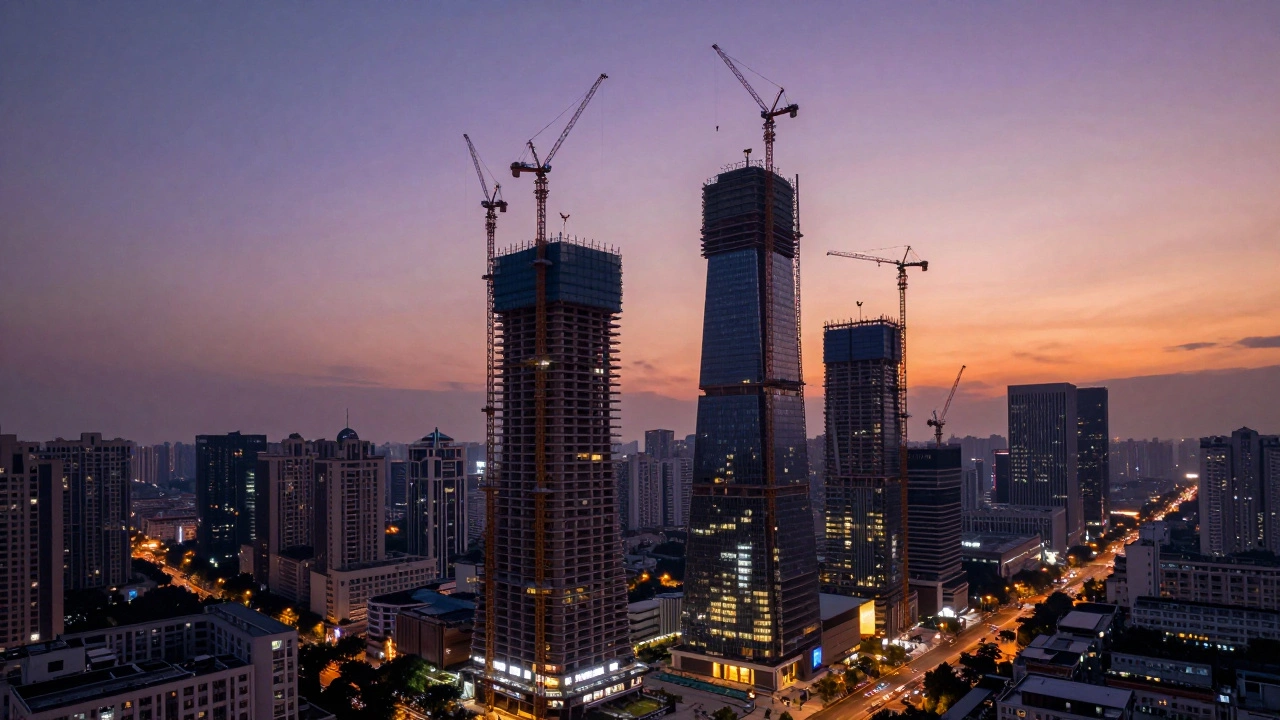
When you look up at a skyscraper in Dubai or drive across a massive bridge in Europe, you might wonder who actually built it. The answer usually points to a handful of colossal corporations that move more money and material than some small nations. But if you ask who is the biggest construction company, the answer isn't as simple as naming just one firm. It depends entirely on how you measure size: by total revenue, by the number of employees, or by the sheer scale of projects completed.
In the global landscape of 2026, the title of "biggest" shifts between state-owned Chinese giants and diversified European conglomerates. These companies don't just pour concrete; they manage complex ecosystems involving engineering, infrastructure maintenance, and even urban planning. Understanding which firms dominate this sector gives you insight into where global capital is flowing and how modern cities are being shaped.
The Revenue Champions: Who Tops the List?
If we define "biggest" by annual revenue-the total amount of money generated from sales-two names consistently fight for the top spot: Vinci SA and China State Construction Engineering Corporation (CSCEC). According to the latest data from ENR (Engineering News-Record) and Statista, these firms generate revenues exceeding $150 billion annually.
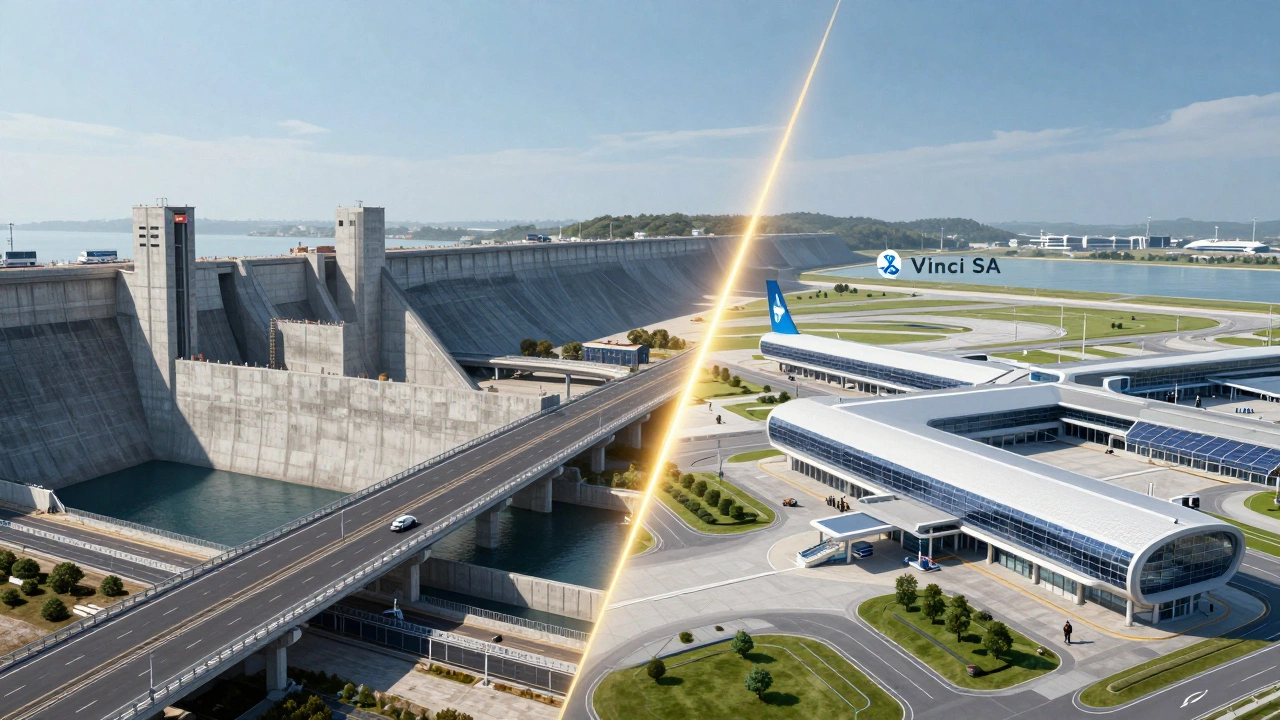
Vinci SA, headquartered in France, has transformed itself from a traditional builder into a service giant. While they still build airports, highways, and stadiums, a significant portion of their revenue now comes from managing and maintaining those assets. This shift to long-term service contracts provides stable cash flow that pure-play builders often lack. In recent years, Vinci has leveraged acquisitions to expand its footprint in North America and Asia, solidifying its position as a revenue leader.
On the other side of the globe, CSCEC remains the powerhouse of physical construction. As a subsidiary of China State Construction, CSCEC builds everything from residential complexes in Beijing to international landmarks like the Burj Khalifa's structural elements. Their model relies on massive volume and state-backed financing, allowing them to bid on projects that private competitors simply cannot afford to risk.
| Rank | Company Name | Headquarters | Primary Focus | Estimated Annual Revenue |
|---|---|---|---|---|
| 1 | Vinci SA | France | Infrastructure & Services | $158 Billion |
| 2 | China State Construction (CSCEC) | China | General Building & Infrastructure | $145 Billion |
| 3 | Samsung C&T | South Korea | EPC & Petrochemicals | $92 Billion |
| 4 | Bechtel | United States | Mining & Heavy Civil | $28 Billion |
| 5 | Skanska | Sweden | Sustainable Building | $24 Billion |
Beyond Revenue: Employee Count and Project Scale
Revenue tells only half the story. If you measure size by headcount, the hierarchy changes dramatically. CSCEC employs over 300,000 people worldwide, making it one of the largest employers in the world outside of government sectors. This massive workforce allows them to mobilize quickly on mega-projects, such as new city developments or high-speed rail networks.
In contrast, Western firms like Bechtel or Kiewit operate with leaner teams but command higher margins per employee. They focus on highly specialized, technically difficult projects like nuclear plants, deep-sea oil rigs, or advanced semiconductor facilities. For example, Bechtel’s involvement in the U.S. Department of Energy’s national labs requires a level of technical expertise that outweighs raw labor volume.
Then there is the metric of project value. Some companies may not have the highest annual revenue, but they win the most expensive single contracts. Larsen & Toubro (L&T) from India frequently secures multi-billion dollar defense and infrastructure deals within South Asia and the Middle East. Their ability to execute large-scale public-private partnerships (PPPs) makes them a dominant force in emerging markets, even if their global brand recognition lags behind Vinci or Samsung.
The Rise of Asian Powerhouses
You cannot discuss the biggest construction companies without acknowledging the shift in power toward Asia. Over the last decade, firms from China, South Korea, and Japan have expanded aggressively beyond their home borders. This expansion is driven by domestic market saturation and the need for new growth avenues.
Samsung C&T stands out as a prime example. Originally known for building the Lotte World Tower, Samsung C&T has pivoted heavily toward EPC (Engineering, Procurement, and Construction) contracts in the energy sector. They build massive petrochemical plants and LNG terminals globally. Their integration with the broader Samsung Group ecosystem gives them access to cutting-edge technology and financing that standalone construction firms lack.
Similarly, Japanese firms like Obayashi Corporation and Taisei Corporation are leaders in disaster-resilient infrastructure and tunneling technology. As climate change increases the frequency of extreme weather events, the demand for resilient infrastructure is driving growth for these specialized players. They are not just building structures; they are engineering safety nets for entire regions.
Western Giants: Specialization Over Volume
While Asian firms dominate in volume, Western companies often lead in specialization and innovation. Skanska, based in Sweden, has positioned itself as the leader in sustainable construction. With strict environmental regulations in Europe, Skanska has developed proprietary methods for reducing carbon emissions during the building process. They offer green certifications and lifecycle analysis services that appeal to eco-conscious developers and governments.
In the United States, the landscape is fragmented. There is no single American equivalent to CSCEC in terms of pure scale. Instead, you have regional powerhouses like Turner Construction and Clark Construction. Turner, part of the Brookfield family of companies, dominates the commercial real estate sector, particularly in healthcare and life sciences. Their reputation for speed and quality allows them to charge premium prices, even if their total revenue doesn’t match the global giants.
AECOM represents another model: the design-build integrator. Rather than just swinging hammers, AECOM focuses on the planning, design, and engineering phases. They often partner with smaller general contractors to execute the physical work. This model allows them to capture value early in the project lifecycle and maintain influence over the final outcome without bearing the full risk of construction delays.

Key Trends Shaping the Industry in 2026
The definition of a "big" construction company is evolving. Today, size isn't just about how many tons of steel you can move; it's about digital capability and supply chain resilience. The biggest firms are investing heavily in Building Information Modeling (BIM), artificial intelligence for project scheduling, and modular construction techniques.
Modular construction, where building components are manufactured off-site and assembled on location, is gaining traction among top firms. Companies like Laing O'Rourke in the UK have pioneered this approach, using factories to produce hotel rooms or hospital wards with precision and speed. This method reduces waste, improves safety, and mitigates labor shortages-a critical advantage in tight labor markets.
Supply chain volatility remains a major challenge. The biggest companies have responded by verticalizing their operations. Instead of relying solely on third-party suppliers, firms like Vinci and CSCEC own their material production facilities, from cement plants to steel mills. This control ensures consistent pricing and availability, giving them a competitive edge when smaller rivals face material shortages.
How to Choose a Partner Based on Size
Understanding who the biggest companies are helps you make better decisions if you're looking to hire a contractor. However, bigger isn't always better for every project. Here’s a quick guide:
- Mega-Projects ($1B+): Go with global giants like Vinci, CSCEC, or Samsung C&T. They have the financial backing to absorb unexpected costs and the experience to manage complex logistics.
- Specialized Industrial Facilities: Look for firms like Bechtel or Fluor. Their expertise in hazardous materials and high-tech environments is unmatched.
- Commercial Real Estate: Regional leaders like Turner or Skanska often provide better local knowledge and relationships with municipal authorities.
- Sustainability-Focused Builds: Prioritize firms with strong ESG (Environmental, Social, and Governance) records, such as Skanska or Laing O'Rourke.
For smaller projects, hiring a massive global firm might mean your project gets lost in the bureaucracy. Mid-sized regional contractors often offer more personalized attention and flexibility. Always evaluate the specific team assigned to your project, not just the corporate brand name.
Who is the biggest construction company in the world by revenue?
As of 2026, Vinci SA from France is generally considered the biggest construction company by total revenue, generating over $150 billion annually. This includes both construction services and long-term infrastructure management contracts. China State Construction Engineering Corporation (CSCEC) is a close second, dominating in pure construction volume.
What is the largest US-based construction company?
The largest US-based construction company by revenue is typically Bechtel, followed closely by AECOM (which is primarily an engineering and design firm). In the realm of general contracting for buildings, Turner Construction and Clark Construction are among the largest and most influential.
Why do Chinese construction companies rank so high?
Chinese companies like CSCEC and China Communications Construction Company (CCCC) benefit from massive domestic infrastructure spending and state-backed financing. They also employ hundreds of thousands of workers, allowing them to take on huge projects simultaneously. Their aggressive expansion into Belt and Road Initiative countries further boosts their global revenue figures.
Is Vinci SA a construction company or a service provider?
Vinci SA is both. While it started as a traditional builder, it has evolved into a hybrid model. It constructs infrastructure like airports and roads, but then operates and maintains them for decades under concession agreements. This dual model provides steady, predictable revenue streams that pure construction firms lack.
Which construction company is best for sustainable building?
Skanska is widely recognized as a leader in sustainable construction, particularly in Europe. They have rigorous standards for carbon reduction and use innovative materials to minimize environmental impact. Other notable mentions include Laing O'Rourke for their modular construction techniques that reduce waste.