
How Big Can You Extend Your House Without Planning Permission? A Guide to Permitted Development
 May, 4 2026
Permitted Development Extension Calculator
Limits Applied
Your extension exceeds standard limits but may be approved via the Neighbour Consultation Scheme. This involves a 56-day process where neighbors can object.
This tool provides estimates based on general UK Permitted Development Rights. It does not constitute legal advice. Always check with your local planning authority and consider obtaining a Lawful Development Certificate.
Imagine wanting to knock down that wall between your kitchen and dining room to create a spacious open-plan living area. It’s the dream upgrade for most homeowners. But before you pick up a sledgehammer or call a builder, there is one massive hurdle: planning permission. The thought of filling out forms, waiting months for council approval, and potentially facing rejection is enough to make anyone sweat. Fortunately, in the United Kingdom, you might not need it at all.
If you fall under what the government calls Permitted Development (PD), you can extend your home significantly without ever submitting an application to your local planning authority. This right is built into the law, allowing minor changes to be made quickly and cheaply. However, these rights come with strict boundaries. Go too big, ignore the rules, or live in the wrong type of property, and you could face enforcement action, fines, or being forced to tear down your new extension.
Navigating this gray area requires understanding exactly how much space you are allowed to claim. Let’s break down the specific measurements, restrictions, and hidden traps that determine whether your project is a quick DIY job or a bureaucratic nightmare.
The Golden Rules of Permitted Development
Permitted Development Rights are not a free-for-all. They are a set of national laws that apply to most houses but exclude flats, maisonettes, and commercial buildings. If you own a standard detached, semi-detached, or terraced house, you have certain privileges granted by default. These rights allow you to build extensions, add conservatories, and even erect sheds within defined limits.
The core principle is that your extension must remain "permitted"-meaning it doesn’t impact neighbors negatively or alter the character of the area drastically. To keep your project within these safe zones, you must adhere to strict volume and height limits. For instance, if you are building a single-storey rear extension, the depth you can build depends entirely on your property type. Detached homes get more leeway than terraced ones. Ignoring these distinctions is the most common mistake homeowners make.
- Detached Houses: You can extend up to 8 meters beyond the original rear wall.
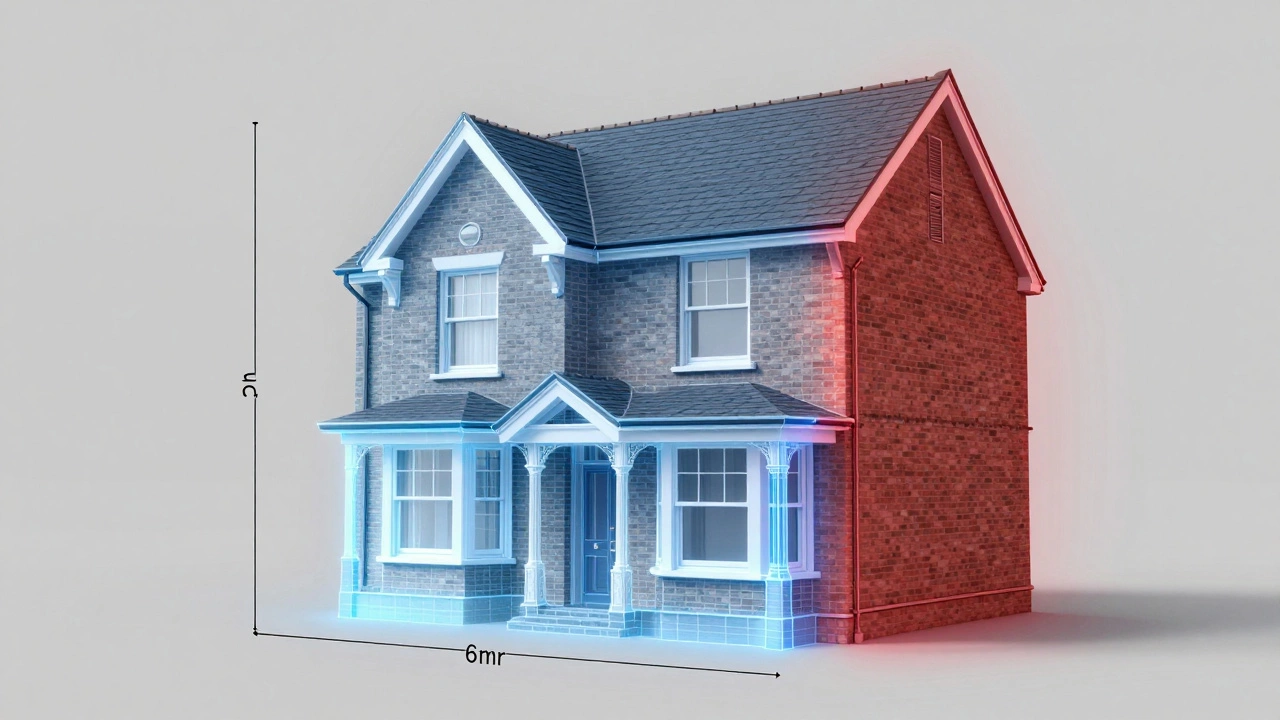
- Semi-Detached and Terraced Houses: You can extend up to 6 meters beyond the original rear wall.
These figures assume you haven’t used any of your permitted development allowance previously. If you’ve already built a small porch or added roof space, your remaining allowance shrinks. Always check your title deeds first.
Defining the "Original" House: Why Dates Matter
One of the trickiest parts of calculating your extension size is defining what counts as the "original" house. You might think the house as it stands today is the baseline, but the law looks further back. In the context of permitted development, the "original" house is typically defined as the dwelling as it was first built or as it existed on 1 July 1948, whichever is later.
This distinction matters because many Victorian and Edwardian homes have had multiple extensions over the decades. If your neighbor added a kitchen extension in 1970, that becomes part of the original footprint for calculation purposes. However, if you bought a house in 1990 and added a sunroom in 1995, that sunroom might count against your current permitted development allowance if it wasn’t approved properly.
To avoid disputes, it is wise to obtain a Lawful Development Certificate (LDC). While not strictly required to start work, an LDC from your local council provides legal proof that your proposed works fall under permitted development. It saves you from headaches when selling the house later, as buyers often ask for proof that previous works were legal.
Height, Materials, and Side Extensions
Size isn’t just about how far back you go; it’s also about how high you build. For single-storey rear extensions, the eaves height cannot exceed 4 meters. If you plan a two-storey extension, the limit drops to 3 meters for the eaves, provided the extension is no closer than 7 meters to the rear boundary. Anything closer requires planning permission.
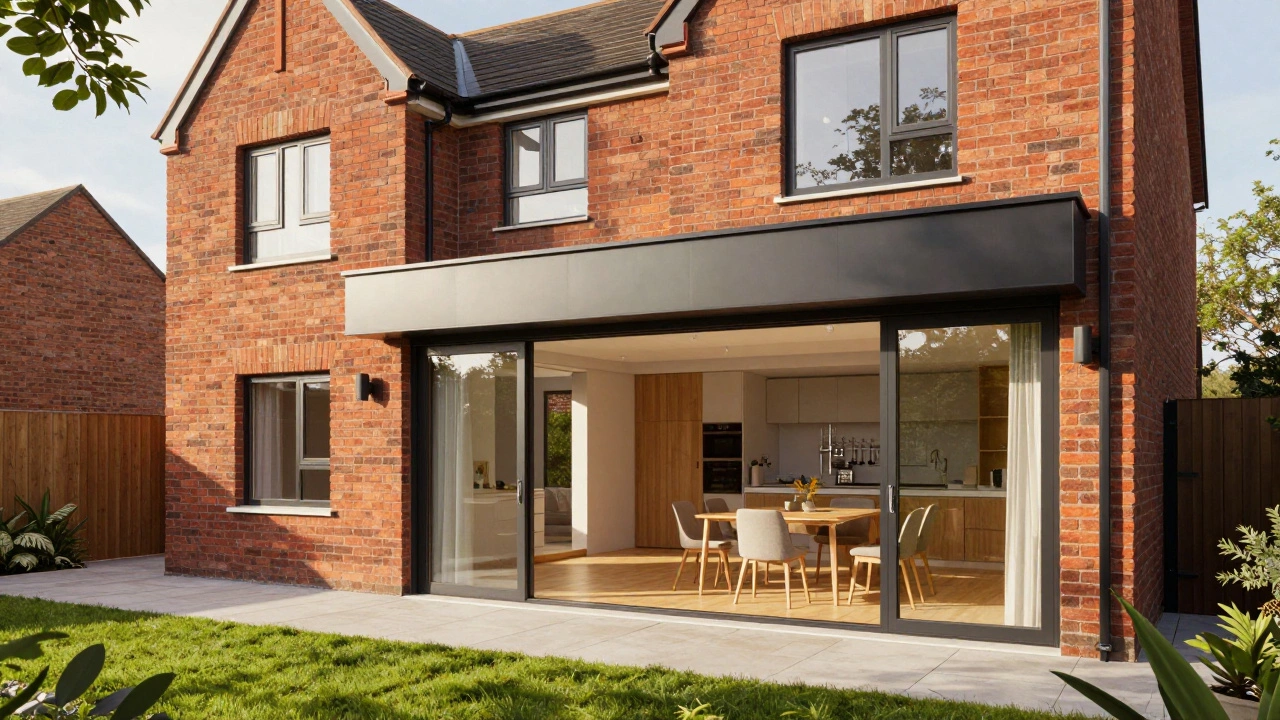
The materials you use also play a role. Your extension should be sympathetic to the existing house. If your home has red brick walls and slate roofing, using bright white render and plastic windows might trigger objections. While PD rights don’t explicitly ban modern materials, they do require that the development does not materially affect the amenity of the neighborhood. Using matching bricks and tiles keeps you safely within the spirit of the law.
Side extensions are another common request. Under permitted development, you can build side extensions up to 4 meters in length and 3 meters in height, provided they are single-storey. Crucially, the width of the extension cannot exceed half the width of the original house. This rule prevents narrow terraced houses from becoming wide blocks that dominate the street scene.
| Property Type | Rear Extension Depth (Single Storey) | Max Height (Eaves) | Land Coverage Limit |
|---|---|---|---|
| Detached | 8 meters | 4 meters | 50% of garden |
| Semi-Detached / Terraced | 6 meters | 4 meters | 50% of garden |
| Side Extensions | 4 meters max length | 3 meters | Half width of original house |
When Permitted Development Doesn't Apply
Not every homeowner gets a free pass. There are several scenarios where your permitted development rights are removed or restricted. If you live in a Conservation Area, a National Park, the Broads, an Area of Outstanding Natural Beauty (AONB), or a World Heritage Site, your rights are significantly curtailed. In these areas, you generally cannot build at the rear of the property without planning permission, regardless of size.
Listed buildings are even stricter. If your home is Grade I, II*, or II listed, you lose almost all permitted development rights for external alterations. Any change, no matter how small, usually requires Listed Building Consent. Similarly, if you live in a flat or maisonette, you have zero permitted development rights for extensions. You must always apply for planning permission.
Another critical restriction involves land coverage. You cannot cover more than 50% of the total curtilage (the land around your house) with buildings. This includes your existing house, garage, shed, and any new extensions. If your driveway and patio already take up most of your garden, adding a large extension might push you over this 50% threshold, requiring full planning approval.
The Neighbour Consultation Scheme: A Safety Net
For larger single-storey rear extensions (between 4-8 meters for detached, 4-6 meters for others), you can use the Neighbour Consultation Scheme. This process allows you to bypass traditional planning permission while still involving your neighbors. You submit plans to your local council, who then notify your immediate neighbors.
Your neighbors have 21 days to object. If they do, the council will refer the application to the planning committee, and you’ll need to go through the formal planning process. If they don’t object, or if only one neighbor objects and you choose to proceed, you can build after a second 10-day consultation period. This scheme is slower than standard PD but faster than full planning applications, offering a middle ground for slightly larger projects.
It’s worth noting that this scheme only applies to residential properties and excludes conservation areas and listed buildings. Also, ensure your neighbors are correctly identified as those sharing a boundary with your property. Misidentifying them can invalidate the entire process.
Building Regulations vs. Planning Permission
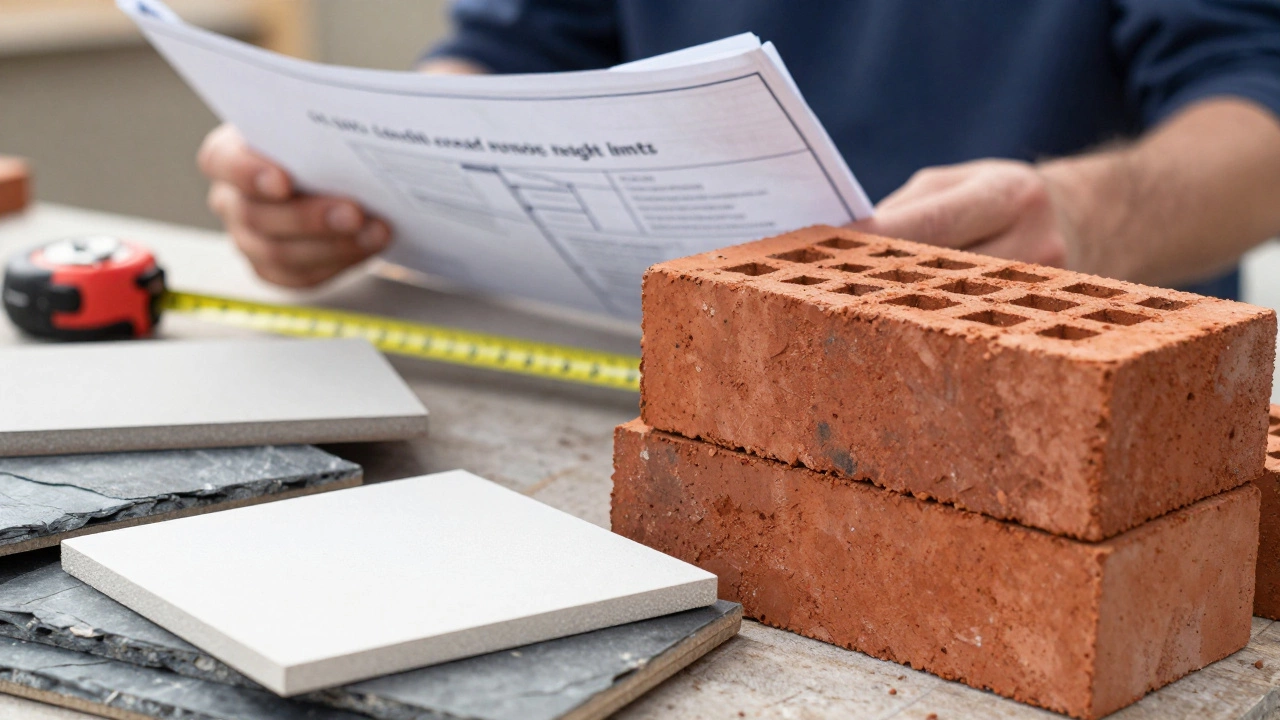
A crucial distinction many people miss is that Building Regulations are separate from planning permission. Even if your extension falls under permitted development and needs no planning consent, it must still comply with building codes. These regulations focus on safety, energy efficiency, structural integrity, and fire protection.
You will need to submit a Building Notice or Full Plans Application to your local building control department. Inspectors will visit during construction to check foundations, insulation, drainage, electrical wiring, and fire doors. Failing to meet these standards can lead to serious safety issues and legal penalties. Never assume that because you don’t need planning permission, you can skip building control checks.
Common Pitfalls and How to Avoid Them
Many homeowners fall into traps simply because they misunderstand the rules. One common error is assuming that previous unapproved works don’t count. If your predecessor built an illegal extension, it may eat into your permitted development allowance. Another pitfall is ignoring the 50% land coverage rule. Adding a double garage plus a large extension might exceed this limit unexpectedly.
To protect yourself, always start by checking your property’s history. Request a copy of the title deeds and search for any past planning permissions or lawful development certificates. If unsure, hire a professional architect or planning consultant to assess your site. Their fee is minimal compared to the cost of demolishing an illegal structure or facing fines.
Finally, communicate with your neighbors early. Even if you legally don’t need their permission, good relationships prevent complaints that could complicate future sales. Transparency builds trust and reduces the risk of disputes.
Can I extend my house forward?
Generally, no. Permitted development rights for extensions primarily apply to the rear and sides of the property. Front-facing extensions usually require planning permission because they affect the street appearance and character of the neighborhood.
What happens if I build without permission?
If your extension exceeds permitted development limits, you are in breach of planning control. The local council can issue an enforcement notice requiring you to remove the extension. You may also face difficulties selling the property, as solicitors will flag unauthorized works.
Do I need planning permission for a conservatory?
Small conservatories often fall under permitted development if they are single-storey, at the rear, and cover less than 50% of the garden. However, if the conservatory is enclosed and integrated into the main heating system, it may affect EPC ratings and require building regulation approval.
How long does the Neighbour Consultation Scheme take?
The scheme typically takes around 56 days from submission to final decision. This includes the initial 21-day objection period and a subsequent 10-day consultation phase if needed. It is faster than full planning applications but slower than standard permitted development.
Is a Lawful Development Certificate necessary?
While not legally required to start work, an LDC is highly recommended. It provides definitive proof that your extension is legal, which simplifies property sales and prevents future disputes with councils or buyers.