
Is a House Extension Worth It? Costs vs. Property Value
 Apr, 4 2026
House Extension ROI Estimator
Financial Projection
Quick Takeaways for Your Budget
- Kitchens and Master Suites: These usually offer the highest return on investment (ROI).
- The "Ceiling Price": If your extension makes your house the most expensive one on the street, you might struggle to recover the costs.
- Living Area vs. Utility: Adding a bedroom generally adds more value than adding a large hobby room or a sunroom.
- Planning Permission: Ignoring local zoning laws can turn a value-adding project into a legal nightmare.
The Math Behind the Value
To figure out if an extension is worth it, you need to look at the "price per square meter" in your neighborhood. If the average house in your area sells for $4,000 per square meter, and your extension costs $2,500 per square meter to build, you've theoretically made a profit. But it's rarely that simple.
Let's say you add a 20-square-meter extension. If the cost of materials and labor is $50,000, but the market value of your home only goes up by $30,000, you've lost $20,000 in equity. However, if that space allows you to stay in your home for another decade instead of moving and paying a 3% real estate agent commission and thousands in stamp duty, the "lifestyle value" far outweighs the financial loss.
What Actually Adds Value?
Not all rooms are created equal. A Master Suite-combining a bedroom, walk-in closet, and ensuite bathroom-is a high-demand feature for buyers. It transforms a standard family home into a luxury option.
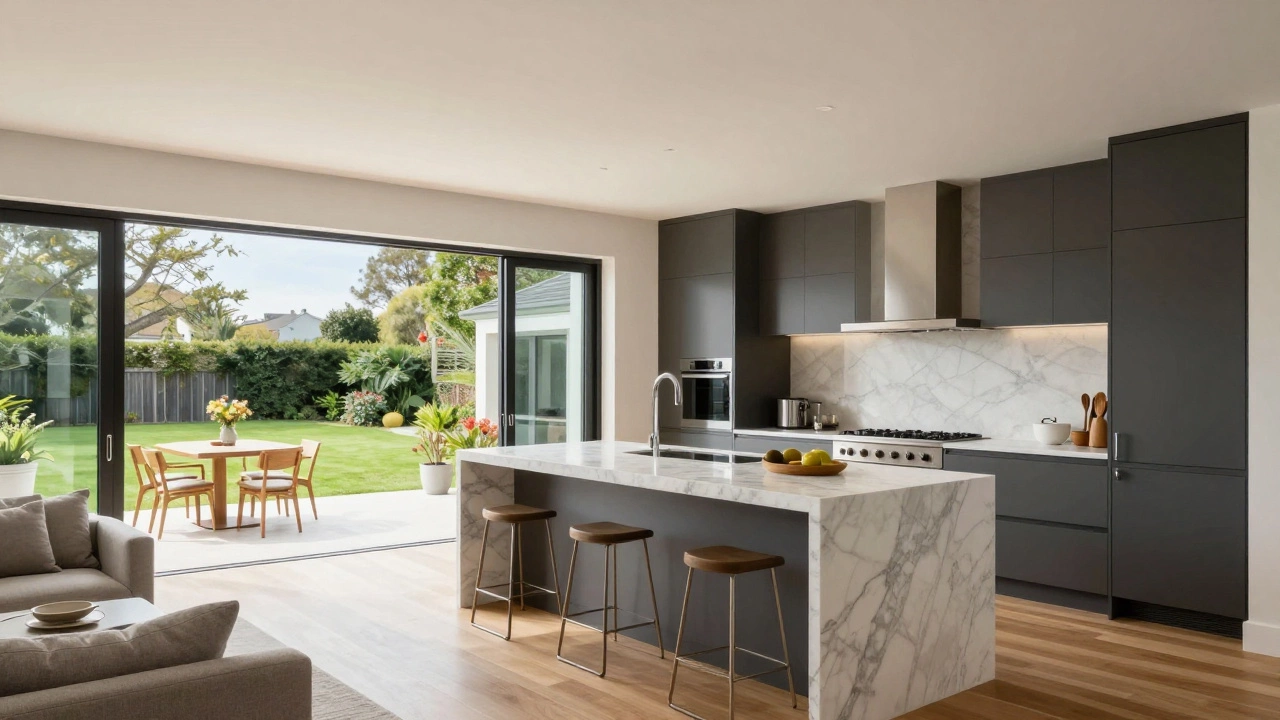
Kitchen extensions are another winner. Modern buyers love open-plan living. By knocking down a wall and extending the kitchen area, you're not just adding square footage; you're changing how the house functions. This creates a perceived value that often exceeds the actual cost of the bricks and mortar.
On the flip side, be careful with "specialty" rooms. A dedicated cinema room or a massive indoor gym might be great for you, but a future buyer might just see a room they have to spend money to convert back into a bedroom. Keep the design flexible to ensure the broadest appeal.
| Extension Type | Demand Level | Estimated Value Return | Risk Level |
|---|---|---|---|
| Kitchen/Dining | Very High | High (70-100%) | Low |
| Master Bedroom/Ensuite | High | High (60-90%) | Low |
| Home Office | Medium-High | Moderate (50-70%) | Medium |
| Sunroom/Conservatory | Medium | Low-Moderate (40-60%) | High (Heating issues) |
| Garage Conversion | Medium | Moderate (50-80%) | Medium (Loss of parking) |
The Danger of the "Over-Improvement" Trap
One of the biggest mistakes homeowners make is ignoring the neighborhood average. Imagine you live in a street where most houses are worth $600,000. You spend $200,000 on a stunning, high-end extension that makes your home objectively better than any other on the block. You might think your house is now worth $800,000.
In reality, buyers often have a psychological cap based on the surrounding properties. If no one else in the area is paying $800,000, your house becomes the "expensive" option, and you may have to drop your price just to get a bite. This is known as over-improvement. To avoid this, talk to a local agent before you even draw the first set of plans.
Hidden Costs That Eat Your Profit
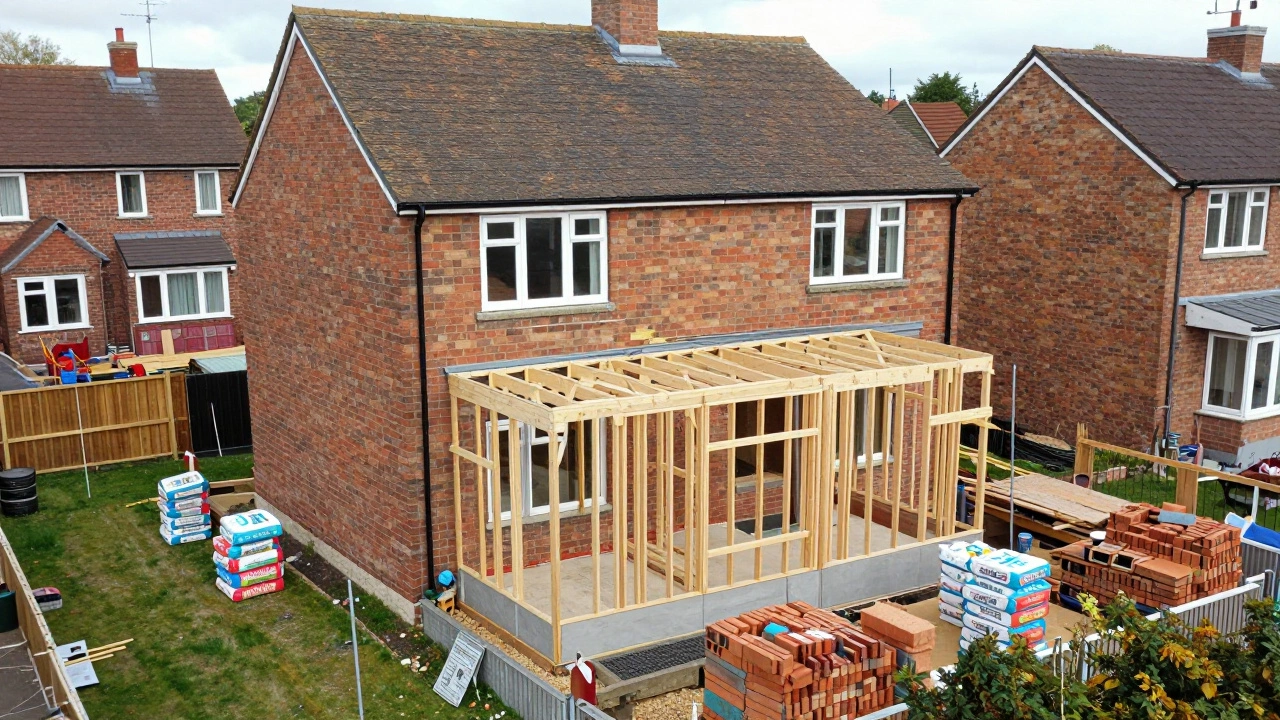
The quote you get from a builder is rarely the final price. When calculating if an extension is worth it, you have to account for the "invisible' expenses. For example, adding a significant amount of weight to your house might require Underpinning, which is the process of strengthening the existing foundation. This can add thousands to your budget without adding a single square inch of visible living space.
Then there's the utility upgrade. Your current electrical panel might not be able to handle the load of a new kitchen and three extra power outlets. Replacing an old fuse box or upgrading the plumbing to handle another bathroom can be a costly surprise. Don't forget the "soft costs" like Architectural Services and council permit fees, which can easily take up 5-10% of your total budget before a single nail is driven.

Planning and Legal Hurdles
Before you start digging, you need to understand Zoning Laws. These are the local government rules that dictate how much of your lot can be covered by buildings. If you exceed the allowable "site coverage" percentage, the city can force you to tear the extension down or pay massive fines.
In many areas, you'll need to deal with "easements"-strips of land where utility companies have the right to access pipes or cables. If you build an extension over a sewer line, you're in for a world of pain. Always get a professional survey to mark these boundaries. A few hundred dollars for a survey now can save you ten thousand dollars in demolition later.
The Lifestyle Equation: When Money Doesn't Matter
If the math doesn't add up, does that mean you shouldn't do it? Not necessarily. There is a huge difference between financial ROI and lifestyle ROI. If you have a growing family and the alternative is moving to a new suburb, losing your school catchment area, and paying a massive deposit on a new mortgage, then an extension is almost always the better move.
Staying in a home you already love, but simply making it fit your current needs, provides a quality-of-life boost that isn't reflected in a valuation report. If you plan to live in the house for the next 15 years, the fact that you might not recoup 100% of the cost at sale is irrelevant. You're paying for comfort, not for a flip.
How long does a typical house extension take?
Depending on the size and complexity, a standard room extension usually takes between 3 to 6 months. This includes the build time, but not the planning and permit phase, which can add another 2 to 6 months of waiting depending on your local council's efficiency.
Is it cheaper to extend or to move?
Usually, extending is cheaper than moving when you factor in the hidden costs of buying and selling: real estate agent fees, legal costs, moving trucks, and potential tax increases. However, if the extension requires massive structural work like underpinning, moving might actually be more cost-effective.
Does a conservatory add as much value as a brick extension?
Generally, no. Traditional brick-and-mortar extensions are seen as permanent living spaces and are valued higher. Conservatories or glass rooms are often viewed as "seasonal" spaces because they are harder to heat in winter and cool in summer, making them less desirable to a wide range of buyers.
What is the most valuable room to add?
An extra bedroom with an attached bathroom (ensuite) or a larger, modernized kitchen/dining area typically provides the highest return. These are the two most sought-after features for families and upscale buyers.
Can I build an extension without a permit?
While some very small sheds or porches might fall under "permitted development" rules, almost any significant structural extension requires a permit. Building without one can lead to forced demolition, issues with home insurance, and a nightmare when you try to sell the property, as buyers' lawyers will check for compliance.
Next Steps and Troubleshooting
If you're still unsure, start with a "feasibility study." Hire a local architect for a few hours of consulting to see if your dream plan is actually legal on your lot. If the answer is yes, get three separate quotes from builders-not to find the cheapest, but to find the most realistic price.
If you find that the cost of a full extension is too high, consider a loft conversion or basement excavation. These options increase your square footage without eating into your backyard or triggering the same zoning restrictions as a footprint extension. If you're on a tight budget, focus on "internal reconfiguration"-moving a non-load-bearing wall to create an open-concept feel often mimics the value of a small extension without the massive price tag.