
Understanding Commercial Buildings: Types, Uses, and Construction Basics
 Apr, 23 2026
Commercial Project Estimator & Guide
Choose the type of project you are considering to see specific requirements.
Please select a building type from the left to unlock the calculator and guide.
Construction Essentials for -:
- -
- -
- -
Critical Standard: ADA Accessibility Compliance Required
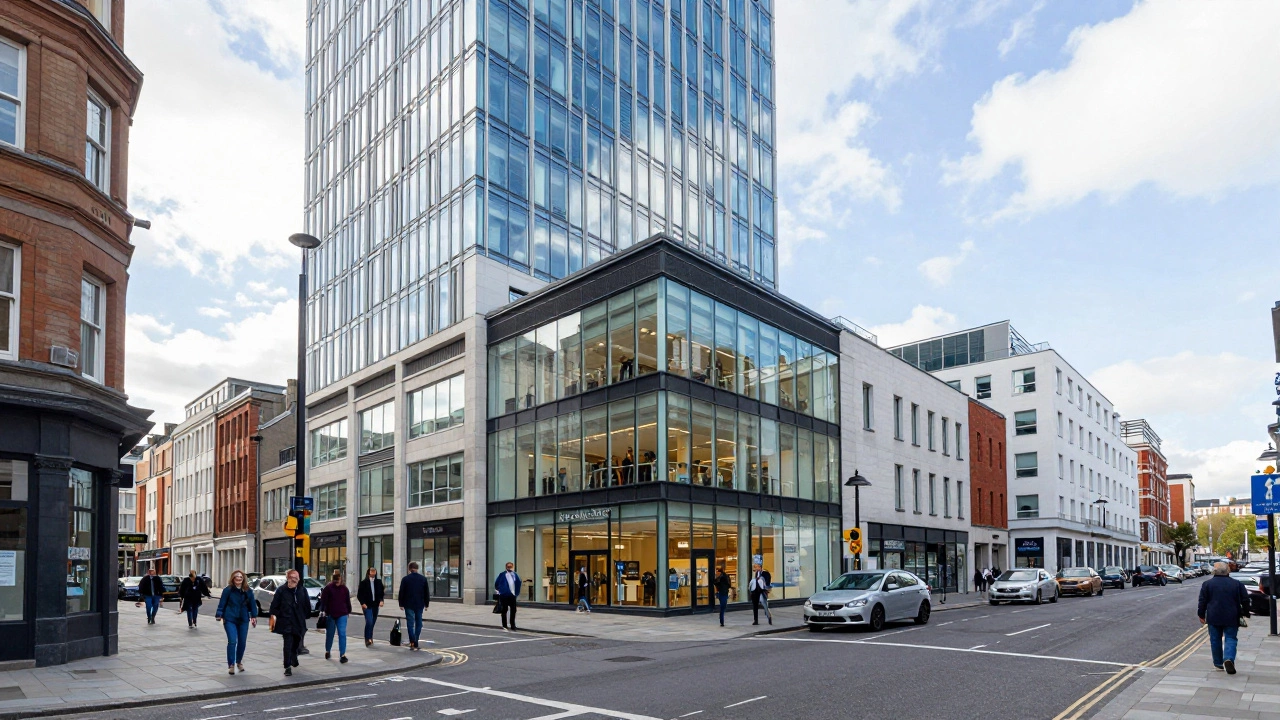
Imagine walking down a busy city street. You see a towering glass office, a sprawling shopping mall, and a local clinic. None of these are where someone sleeps at night, yet they are the engines of the local economy. That is the essence of a commercial building. Unlike residential homes, these structures are designed specifically to house businesses and generate profit.
If you are looking to invest, build, or simply understand the landscape of urban development, you need to know that commercial building construction is a completely different beast than building a house. It involves stricter safety rules, complex zoning laws, and a scale of engineering that can make a standard home look like a Lego set. This guide breaks down what these buildings actually are and how they get made.
Quick Facts about Commercial Buildings
- Purpose: Designed for business operations, trade, and professional services.
- Regulations: Subject to strict commercial building codes and ADA accessibility standards.
- Scale: Often involves larger footprints and higher verticality than residential projects.
- Value: Generally valued based on the income they generate (ROI) rather than just comparable sales.
What Exactly Qualifies as a Commercial Building?
At its simplest, a commercial building is any structure used for business purposes. However, in the construction world, we define it by its intent and its legal classification. While a home is meant for private living, a commercial space is meant for public or semi-public access to facilitate commerce.
The most critical distinction lies in Zoning Laws is a set of municipal regulations that dictate how a particular piece of land can be used . You cannot simply decide to open a warehouse in the middle of a quiet suburban cul-de-sac because the zoning for that area is residential, not commercial. Commercial zones are specifically designated for business activity to keep noise, traffic, and pollution away from living areas.
Common Types of Commercial Structures
Not all commercial buildings are created equal. A warehouse has very different needs than a high-end hotel. Usually, these fall into a few primary buckets based on how they are used.
Office Buildings
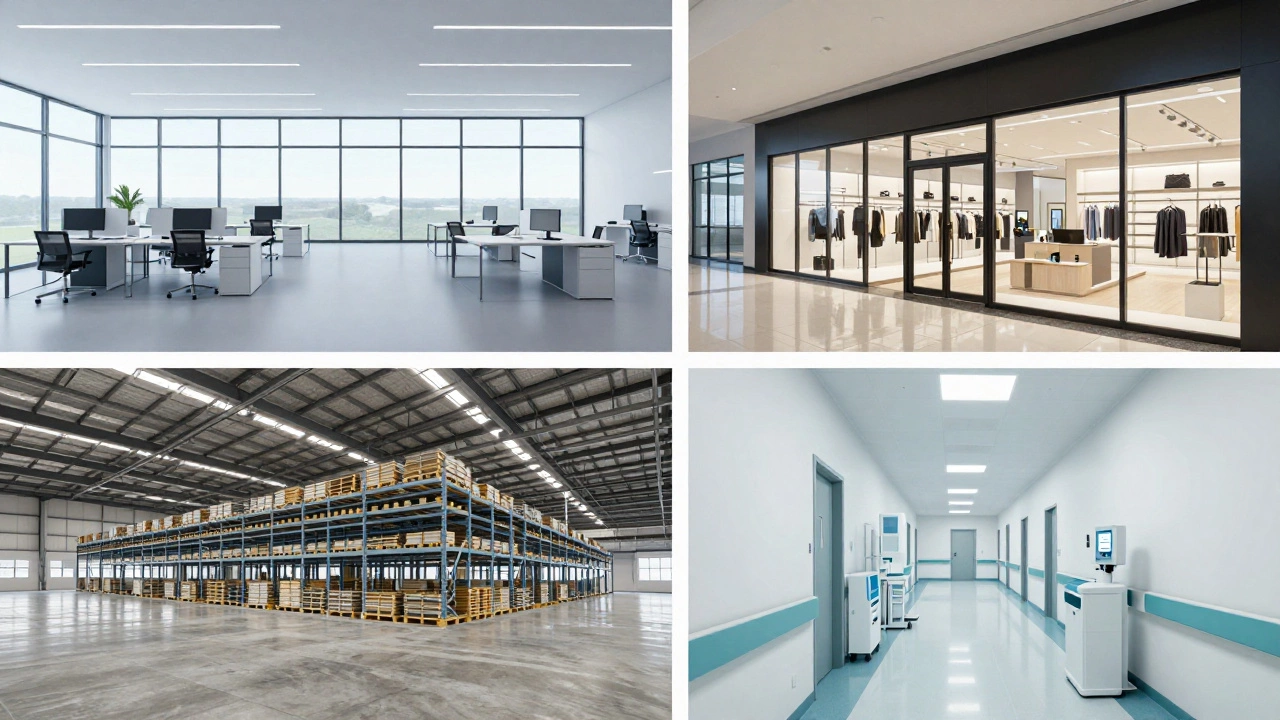
These range from small professional suites for accountants to massive skyscrapers. The focus here is on flexibility. Most modern offices use a "core and shell" approach, where the exterior is finished, but the interior layout can be changed as the company grows or shrinks.
Retail Spaces
Think of shopping malls, strip centers, and standalone boutiques. Retail construction prioritizes visibility and foot traffic. This means larger windows, accessible parking lots, and high-durability flooring that can handle thousands of people walking over it every day.
Industrial Buildings
This category includes
Warehouses, which are
large, open structures used for storing goods and raw materials
, and manufacturing plants. These buildings focus on utility. You will see reinforced concrete slabs to support heavy machinery and high ceilings to allow for pallet racking and forklifts.
Specialty Commercial
These are buildings with very specific requirements, such as hospitals, hotels, or movie theaters. A hospital, for example, requires specialized plumbing for medical gases and reinforced floors to hold MRI machines, which you would never find in a standard office build.
| Type | Primary Goal | Key Feature | Typical Zoning |
|---|---|---|---|
| Office | Productivity | Open floor plans | Commercial/Mixed-Use |
| Retail | Sales/Traffic | Storefronts/Parking | Commercial/Retail |
| Industrial | Storage/Production | Loading docks/High bays | Industrial/Heavy Commercial |
| Hospitality | Guest Experience | Guest rooms/Dining | Commercial/Tourism |
The Construction Process: How it Differs from Residential
If you have ever renovated a kitchen, you know it can be stressful. Now imagine doing that for a 50,000 square foot building with a budget of several million dollars. The process is vastly different.
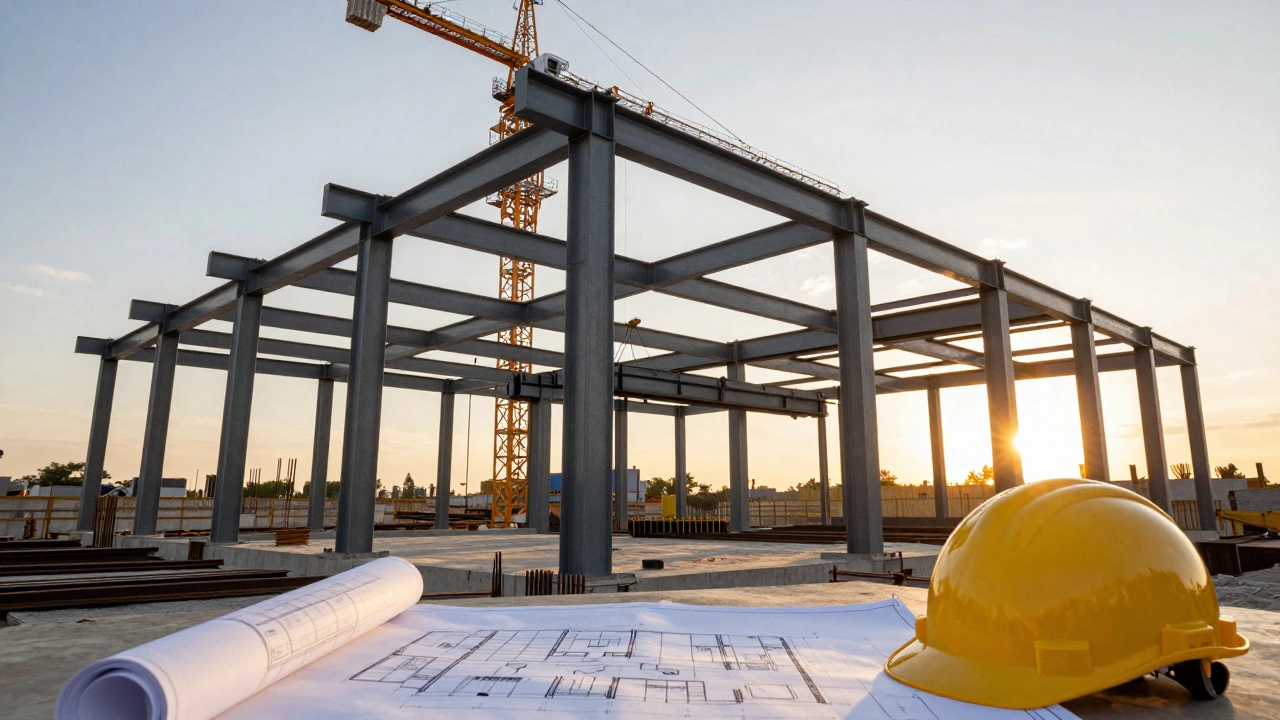
First, the materials change. While houses use wood framing, most commercial buildings rely on Steel Framing, which is a method of using structural steel beams and columns to support the weight of a building . Steel is preferred because it is fire-resistant and can support the massive loads of multiple floors without needing thick walls every few feet.
Second, the legal requirements are much higher. In the US, for example, the ADA (Americans with Disabilities Act) is a civil rights law that prohibits discrimination based on disability, requiring public spaces to be accessible . This means every commercial building must have specific ramp slopes, door widths, and restroom configurations. If you miss one detail, the city won't grant you a certificate of occupancy.
The management side is also more complex. Instead of just a homeowner and a contractor, you have a whole ecosystem: the owner, the architect, the general contractor, and the subcontractors. They often use Project Management Software to track thousands of tasks and ensure the project doesn't go over budget.
Key Challenges in Commercial Construction
Building for business isn't without its headaches. The biggest hurdle is usually the Permitting Process, which is the official approval from local government agencies to begin construction . Getting a permit for a house takes a few weeks; getting one for a shopping center can take months or even years of negotiations with city planners.
Then there is the issue of environmental impact. Large commercial projects often require an environmental impact study to ensure they aren't destroying local wetlands or creating unbearable traffic congestion. This adds time and cost to the laest stages of planning.
Finally, there is the "tenant improvement" (TI) phase. This is where the shell of the building is customized for the specific business moving in. A gym needs rubber flooring and heavy-duty ventilation, while a law firm needs soundproof walls and mahogany desks. Managing these changes without delaying the overall opening is a constant balancing act.
Budgeting and ROI in Commercial Projects
In residential building, the value is often emotional. In commercial construction, it is purely mathematical. Developers look at the Capitalization Rate (Cap Rate) to determine if a project is worth it. They calculate the potential rental income minus the operating expenses to see how long it will take to make their money back.
Because of this, commercial buildings are often built with a focus on "efficiency per square foot." Every inch of the floor plan is analyzed to maximize the amount of rentable space. This is why you see so many open-concept offices-it allows the owner to fit more desks (and therefore more paying tenants) into the same area.
Frequently Asked Questions
Is a mixed-use building considered a commercial building?
Yes, but it is a hybrid. Mixed-use buildings typically combine commercial spaces (like shops or cafes) on the ground floor with residential apartments on the upper floors. From a construction standpoint, they follow both commercial and residential codes, which can make them more complex to design.
Can I convert a residential house into a commercial building?
Technically yes, but you need a zoning change. You must apply for a "conditional use permit" or a zoning variance from your local city council. Additionally, you will likely need to upgrade the electrical system, fire exits, and parking to meet commercial safety standards.
What is the difference between a commercial and industrial building?
Commercial buildings are generally for customer-facing businesses (offices, stores, hotels) and are often located in high-traffic areas. Industrial buildings are for production, logistics, and storage (factories, warehouses) and are usually located in areas with easy highway access and further away from residential zones.
What are the most common materials used in commercial construction?
The most common materials are structural steel, reinforced concrete, and glass. Steel provides the strength for height, concrete provides a fire-resistant base and floors, and glass is used for facades to let in natural light and improve the building's aesthetic appeal.
Do commercial buildings have different fire codes than houses?
Absolutely. Commercial fire codes are far more stringent. They require integrated sprinkler systems, fire-rated stairwells (concrete or steel), and clearly marked emergency exits. While a home might just need a smoke detector in each room, a commercial building needs a monitored system that alerts the fire department automatically.
Next Steps for Potential Developers
If you are planning to enter the world of commercial construction, don't start with the blueprints. Start with the land. Before you buy a plot, visit the local planning department to confirm the zoning. There is nothing worse than buying a piece of land and finding out you can only build a small shed on it because of a legacy restriction.
Next, assemble your "A-Team." You need a commercial architect who knows the local building codes and a general contractor who has a track record of finishing projects on time. In this industry, a one-month delay in opening can cost thousands of dollars in lost rent, making a reliable team your most valuable asset.