
What Is the Least Expensive Way to Roof a House?
 Feb, 9 2026
Roofing Cost Calculator
Budget Roofing Cost Estimator
Calculate your roofing costs using proven money-saving strategies from the article.
Estimated Cost:
Pro Tip:
Scheduling in winter or early spring can save 10-20% on labor costs. Always get 3 written quotes!
Roofing a house doesn’t have to break the bank. If you’re looking to save money without sacrificing durability, there are real, proven ways to cut costs-some of which homeowners use every day. The cheapest option isn’t always the most obvious, and it’s not always the one you see advertised on TV. Let’s cut through the noise and show you exactly what works right now in 2026.
Asphalt Shingles Are Still the Budget King
If you want the least expensive roof, asphalt shingles are your best bet. They make up over 80% of residential roofs in the U.S. for a reason: they’re cheap, easy to install, and widely available. A standard 3-tab asphalt shingle roof costs between $3.50 and $5.50 per square foot installed. For a typical 2,000-square-foot home, that’s roughly $7,000 to $11,000 total. That’s less than half the cost of metal, tile, or wood shake roofs.
Here’s what you get for that price:
- 15- to 30-year lifespan (depending on quality)
- Simple repair and replacement
- Good resistance to wind and rain
- Multiple color options
Don’t confuse this with premium architectural shingles. Those look nicer and last longer, but they cost $6 to $9 per square foot. Stick with 3-tab if your goal is savings. You won’t regret it.
Do-It-Yourself? Only If You Know What You’re Doing
Some people think removing the old roof and installing new shingles themselves will save thousands. And sure, labor makes up 60-70% of roofing costs. But DIY roofing is risky. One mistake-like improper underlayment, wrong nail placement, or poor flashing-and you could end up with leaks, mold, or structural damage. And guess who pays for that? You.
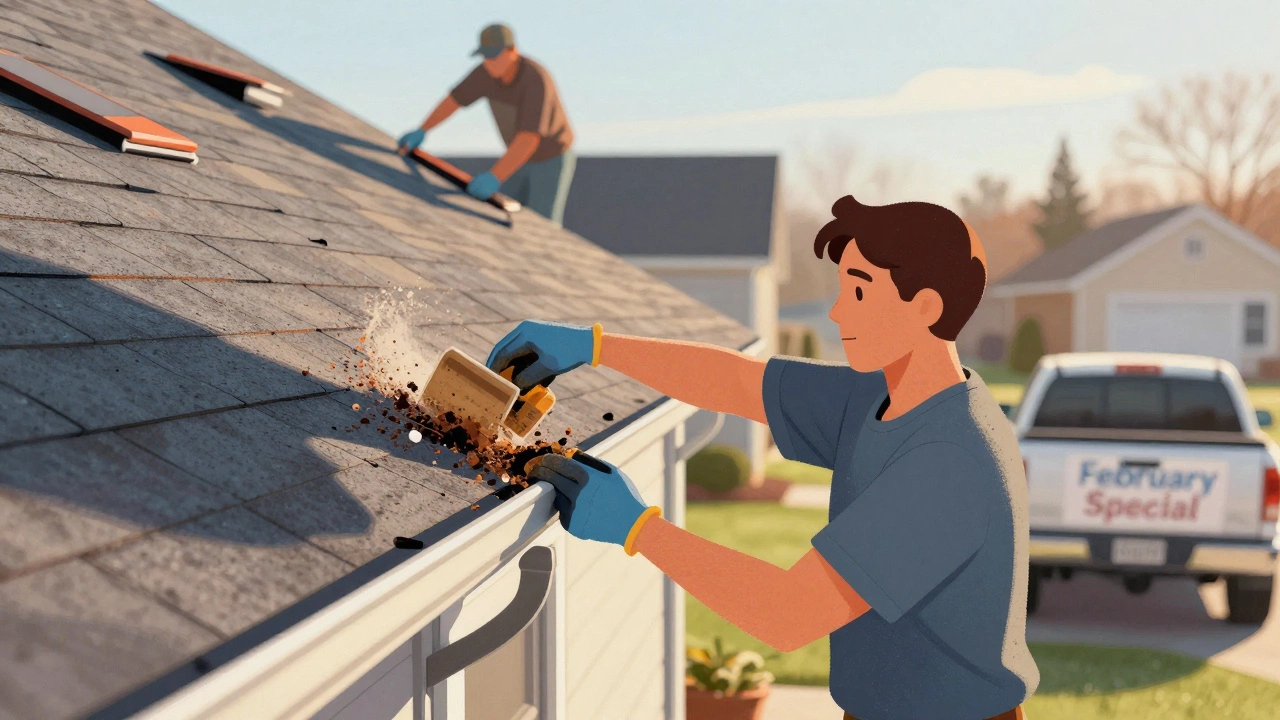
There’s a middle ground: hire a crew for the heavy lifting, but do the prep work yourself. Clear out the attic. Remove old gutters. Take down debris. Some contractors will reduce labor charges if you handle these tasks. It’s not a full DIY project, but it can cut $1,500 to $3,000 off the total.
Reuse What You Can
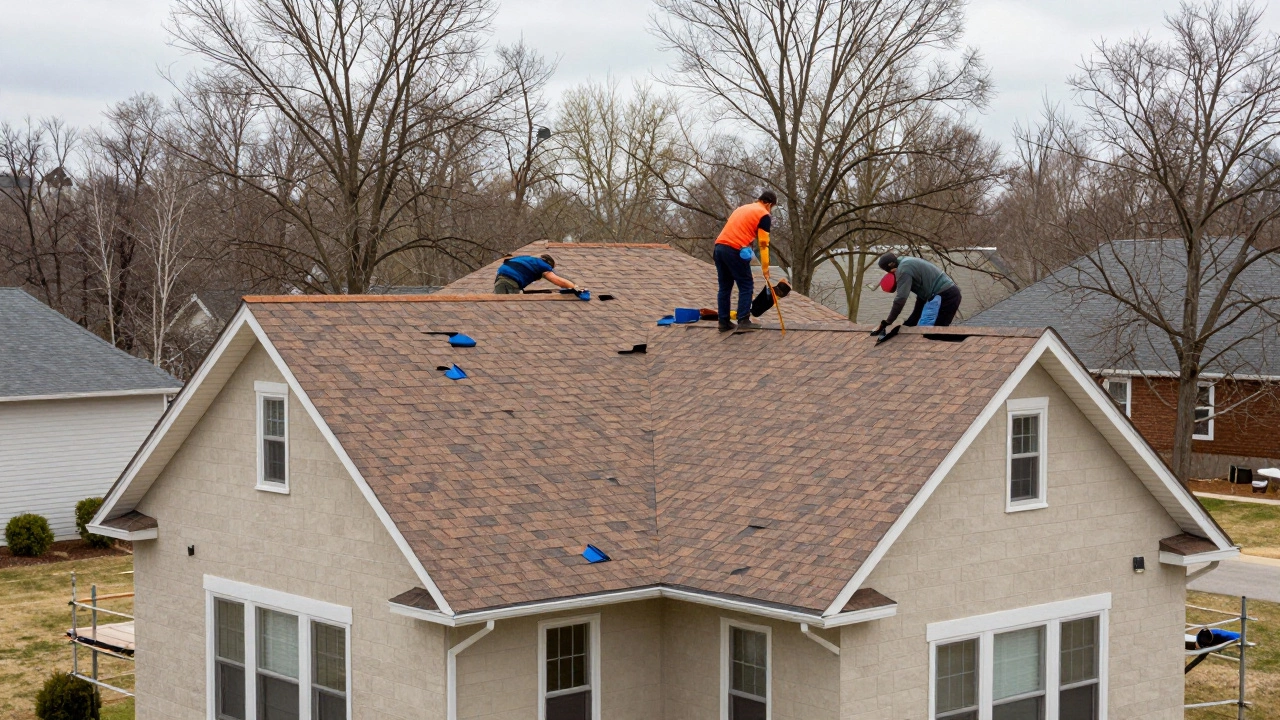
Old roofing materials don’t always need to go straight to the landfill. If your existing roof is in decent shape-no major sagging, no rot, no water damage-you might be able to install a new roof over it. This is called a roof overlay.
Most building codes allow one overlay. That means you can put new shingles right on top of the old ones, skipping the tear-off. This saves:
- Time: No need to haul away tons of old shingles
- Labor: Less work for the crew
- Disposal fees: Often $300-$600 saved
But here’s the catch: you can only do this if the existing roof has one layer, is structurally sound, and has no hidden damage. A professional inspection is worth the $100. If they say yes, you’re looking at another 10-15% off your total.
Timing Matters More Than You Think
Roofing companies aren’t busy all year. Winter is slow. Late fall and early spring are quiet. That’s when contractors offer discounts to keep crews working. You might save 10-20% if you schedule your roof during these off-peak months.
Also, watch for end-of-month promotions. Roofing crews often have monthly quotas. If they’re behind, they’ll drop prices to close deals. Call three local companies in late February or early March and ask: “Are you offering any discounts this month?” You’d be surprised how often they say yes.
Choose the Right Underlayment
Underlayment is the waterproof layer between your roof deck and shingles. Most people don’t think about it-but it’s a major cost driver.
Standard felt underlayment (15-pound) costs about $0.10 per square foot. Synthetic underlayment? $0.25-$0.40. That’s a $200-$500 difference on a 2,000-square-foot roof.
For a budget roof, 15-pound felt is perfectly fine. You don’t need the high-end synthetic unless you live in a hurricane zone or have a steep roof. Stick with the basics. Save the upgrade for when you’re replacing the roof again in 20 years.
Avoid These Cost Traps
Not every “deal” is a deal. Watch out for:
- “Free inspection” offers that lead to upsells. Many low-cost roofing companies use this tactic. They’ll say your roof is “critical” and push expensive repairs you don’t need.
- Too-good-to-be-true prices on Facebook Marketplace. These are often scams or used materials from demolished buildings. No warranty. No insurance. No recourse.
- Roofing materials sold at big-box stores for DIY. The price looks low-but you’re paying for poor quality, lack of warranty, and the cost of mistakes. A $500 roll of shingles from Home Depot might cost $1,200 to install correctly.
Always get at least three written estimates. Make sure they include: tear-off, disposal, underlayment, shingles, flashing, and labor. Compare apples to apples.
What About Metal or Tile Roofs?
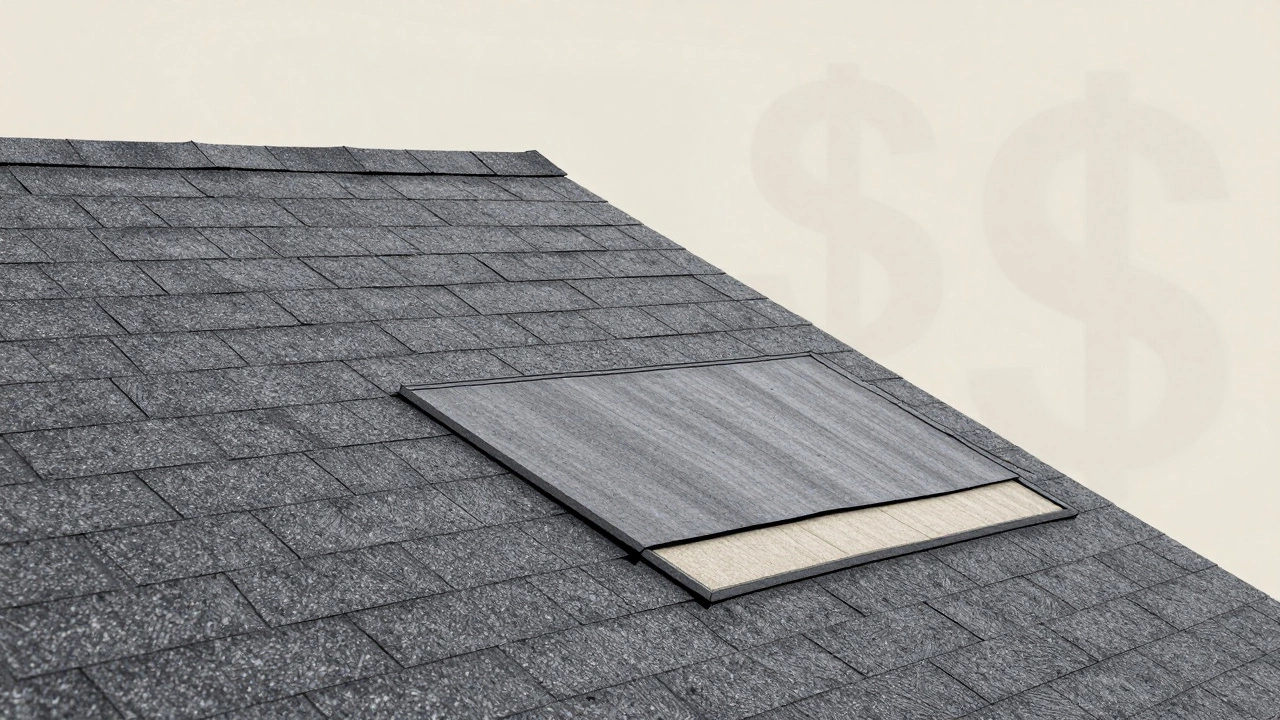
Some people say metal roofs last forever and save money long-term. True-but they cost $12 to $25 per square foot installed. That’s two to four times more than asphalt. Tile roofs? $15 to $30 per square foot. These are great for high-end homes or hot climates, but they’re not budget options.
If you’re planning to live in the house for less than 15 years, the extra cost of metal or tile won’t pay off. Stick with asphalt.
What’s the Absolute Cheapest Option?
Here’s the real answer: Asphalt shingles installed over one existing layer, during off-season, with 15-pound felt underlayment.
That combination gives you the lowest possible price while still being safe and code-compliant. In 2026, that’s still the gold standard for budget roofing.
One homeowner in Ohio did exactly this in January 2025. She removed her gutters, cleared the yard, and scheduled the install for February. Her total? $6,800 for a 2,100-square-foot roof. That’s $3.25 per square foot-well below the national average.
It’s not glamorous. It’s not fancy. But it works. And for most people, that’s all that matters.
What About Insurance?
If your roof was damaged by wind, hail, or fire, your homeowner’s insurance might cover the full cost. That’s not “cheap”-it’s free. File a claim. Get an adjuster out. If they approve, you pay nothing out of pocket. Many people miss this option because they assume their roof is “just old.” But if there’s storm damage, it’s not about age-it’s about cause.
Check your policy. Take photos. Call your agent. You might not need to pay a dime.