
Who Is Considered a Contractor in Building and Construction?
 Mar, 1 2026
Contractor Licensing Checker
In New Zealand, building work valued over $30,000 requires a contractor license. Enter your project value to check requirements.
When someone says they’re a contractor, it sounds simple-until you dig deeper. In building and construction, not every handyman or tradesperson is a contractor. And not every contractor does the same kind of work. So, who exactly counts as a contractor? The answer isn’t just about who shows up with tools. It’s about legal status, responsibility, and how they operate in the system.
Defining a Contractor in Construction
A contractor in building and construction is a person or company that signs a formal agreement to deliver a specific outcome-like building a house, installing a roof, or rewiring a commercial space. They don’t just work for wages. They take on the job as a business arrangement, often managing subcontractors, ordering materials, and being legally responsible for the final result.
This is different from an employee. A contractor doesn’t get a regular paycheck with taxes withheld. They invoice for services, handle their own insurance, and usually work for multiple clients. In New Zealand, under the Contractors’ Licensing Act 2020, anyone doing building work valued over $30,000 must hold a valid license. That’s a key line in the sand.
What Kind of Work Makes You a Contractor?
Not every trade professional is a contractor. A plumber who works for a plumbing company as a salaried employee isn’t a contractor. But if that same plumber starts their own business, takes contracts directly from homeowners, hires two apprentices, and handles permits, now they’re a contractor.
Here are common examples of people who qualify as contractors:
- A builder who signs a contract to construct a new home from the ground up
- A roofing company that bids on and wins a job to replace roofs on five apartment buildings
- A civil engineering firm hired to install stormwater systems for a subdivision
- A licensed electrician who runs their own business and hires two part-time workers
On the other hand, someone who works directly for a contractor-like a laborer, carpenter, or painter hired on an hourly basis-isn’t considered a contractor themselves. They’re a subcontractor or employee.
The Licensing Requirement
In New Zealand, the Building Act 2004 and the Contractors’ Licensing Act 2020 make it clear: if you’re doing building work worth more than $30,000 (including labor and materials), you must be licensed by the Department of Building and Housing. This applies whether you’re working on a house, apartment, or commercial building.
There are three license classes:
- Class 1: For small residential projects under $30,000 (no license required)
- Class 2: For residential work over $30,000
- Class 3: For commercial and complex building work
Unlicensed contractors can’t legally advertise, sign contracts, or start work on projects over $30,000. If caught, they face fines up to $10,000, and any work done may not be covered by insurance or warranty.

Contractor vs. Subcontractor: What’s the Difference?
This is where confusion kicks in. A subcontractor is hired by a contractor to do a specific part of the job. For example:
- A general contractor signs a contract to build a three-story office block
- The general contractor hires a plumbing subcontractor to install pipes
- The plumbing subcontractor hires two plumbers to do the actual work
In this chain:
- The general contractor is responsible for the whole project
- The plumbing subcontractor is responsible only for plumbing
- The two plumbers are employees or independent workers, not contractors
The key difference? A contractor deals directly with the client. A subcontractor deals with the contractor. Only the contractor has legal standing with the homeowner or business owner.
Why Does It Matter?
Knowing who’s a contractor isn’t just academic. It affects your rights and responsibilities.
- If you hire an unlicensed contractor, you have no legal protection if the work is poor or incomplete.
- If you’re doing work over $30,000 without a license, you can’t claim payment through the Disputes Tribunal.
- Homeowners with licensed contractors get access to the Homeowners Warranty, which covers major structural defects for up to 10 years.
- Insurance companies won’t pay out on claims involving work done by unlicensed contractors.
In Wellington, where earthquake resilience and weatherproofing are critical, using a licensed contractor isn’t just smart-it’s a safety net. Unlicensed work can lead to costly repairs, legal battles, or even building code violations that delay occupancy.
Red Flags: Who Isn’t a Real Contractor?
Not everyone who calls themselves a contractor is one. Watch out for:
- Someone who says, "I don’t need a license because I’m just doing a small job"-but the total cost is $35,000
- A person who can’t show you their license number on the DBH website
- Someone who asks for cash-only payment and refuses to provide an invoice
- A "contractor" who uses a generic business name like "FixIt Fast" with no registered company details
Always check the DBH Licensed Contractor Register. Type in their name or business. If it doesn’t show up, walk away.
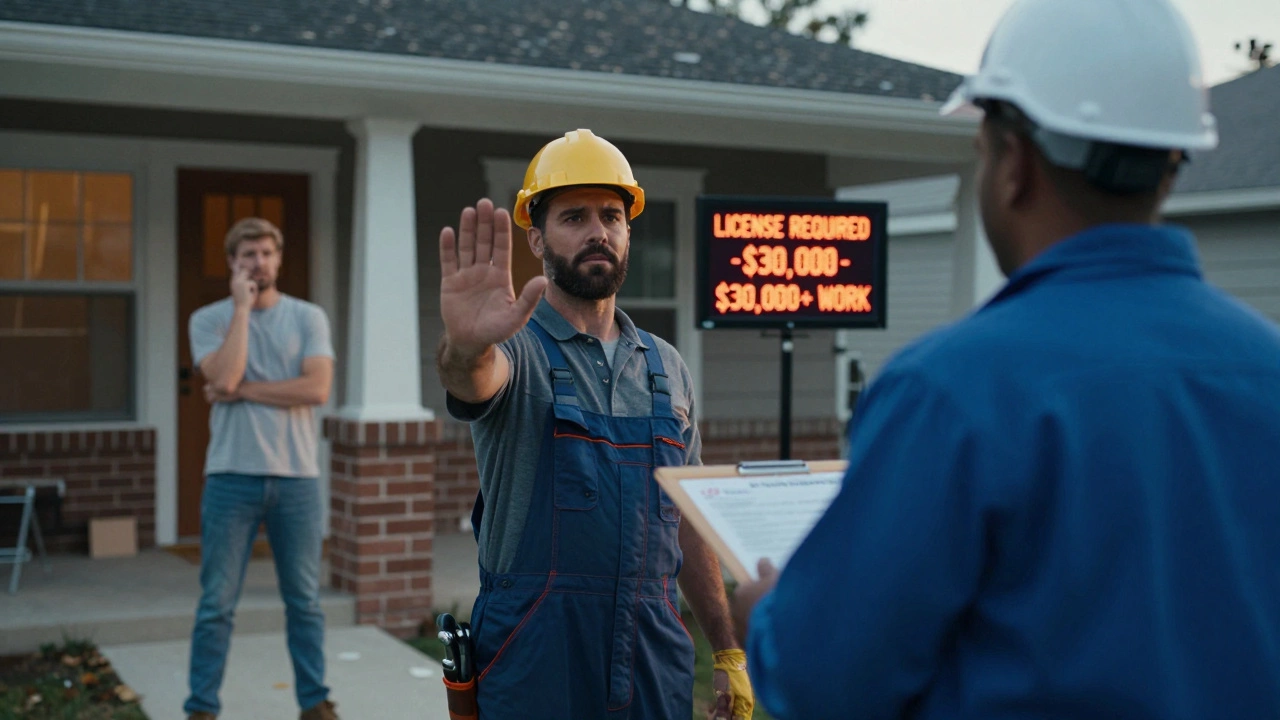
How to Become a Licensed Contractor
If you’re a tradesperson thinking about going independent, here’s what you need:
- Have at least three years of relevant building experience
- Complete a recognized qualification (like a National Certificate in Building and Construction)
- Pass a competency assessment
- Provide proof of liability insurance
- Apply through the Department of Building and Housing
- Renew your license every year
There’s also a Competency-Based Assessment for experienced workers who didn’t go through formal training. It’s not easy, but it’s doable. Around 8,000 contractors are currently licensed in New Zealand, and the number grows by about 1,200 each year.
What About Sole Traders and Companies?
It doesn’t matter if you’re a sole trader or a limited company. The license is tied to the person doing the work, not the business structure. A sole trader with a Class 2 license is just as valid as a company with five employees and a Class 3 license.
But here’s the catch: if you operate as a company, the license must be held by a director or partner who meets the experience and training requirements. The company itself can’t hold a license-it’s always a person.
Final Thought: It’s About Accountability
At its core, being a contractor isn’t about having a truck or a logo on a van. It’s about accountability. A contractor takes full responsibility for the outcome. They answer to the client. They answer to the law. They answer to the building inspector.
If you’re hiring someone to build, renovate, or repair-don’t just ask if they’re a contractor. Ask: "Can you show me your license?" And if they can’t, you’re not hiring a contractor. You’re taking a risk.
Is every builder a contractor?
No. A builder who works for a company and gets paid hourly is an employee, not a contractor. A contractor runs their own business, signs contracts directly with clients, and is responsible for the entire job. If they’re licensed and work on projects over $30,000, then yes-they’re a contractor.
Can I hire an unlicensed contractor for small jobs?
Technically, yes-if the total cost is under $30,000. But even then, there’s no guarantee of quality, insurance, or legal recourse if something goes wrong. Licensed contractors carry mandatory insurance and follow building codes. Unlicensed workers don’t. It’s not worth the risk.
What happens if I hire an unlicensed contractor?
If the work is over $30,000, the contract is unenforceable. You can’t sue them in the Disputes Tribunal, and your home insurance won’t cover damage caused by their work. If they’re caught, they can be fined up to $10,000. You could be stuck with unsafe or incomplete work.
Do I need a license if I’m doing work on my own home?
Yes-if the work is valued over $30,000. Even if you’re the homeowner, you must be licensed to do building work yourself. This rule applies to renovations, extensions, or major structural changes. The law doesn’t make exceptions for DIYers on large projects.
How do I verify a contractor’s license?
Go to the Department of Building and Housing’s official Licensed Contractor Register. Enter their name or business name. If they’re licensed, you’ll see their license number, class, expiry date, and whether they’re in good standing. Never accept a license card without verifying it online.