
The Three Main Construction Materials: Wood, Concrete, and Steel Explained
 May, 10 2026
Construction Material Selector
Select your project parameters below to find the optimal material choice.
Residential Home
Single-family house, cottage, or low-rise apartment.
Commercial / High-Rise
Office block, stadium, warehouse, or skyscraper.
Infrastructure
Bridge, dam, highway, or foundation work.
Recommended Material:
When you look at a skyline or walk through a neighborhood, you might not think about what holds those structures up. But every building relies on a specific set of heavy hitters to stay standing. While there are dozens of substances used in construction, the industry fundamentally revolves around three primary construction materials: wood, concrete, and steel. These three dominate because they offer the best balance of strength, availability, and cost for most projects.
If you are planning a build, renovating a home, or just curious about how cities are made, understanding these three pillars is crucial. They aren't just random choices; each has distinct properties that make it better suited for certain jobs than others. Let’s break down why these three materials rule the roost and when you should use them.
Wood: The Versatile Traditionalist
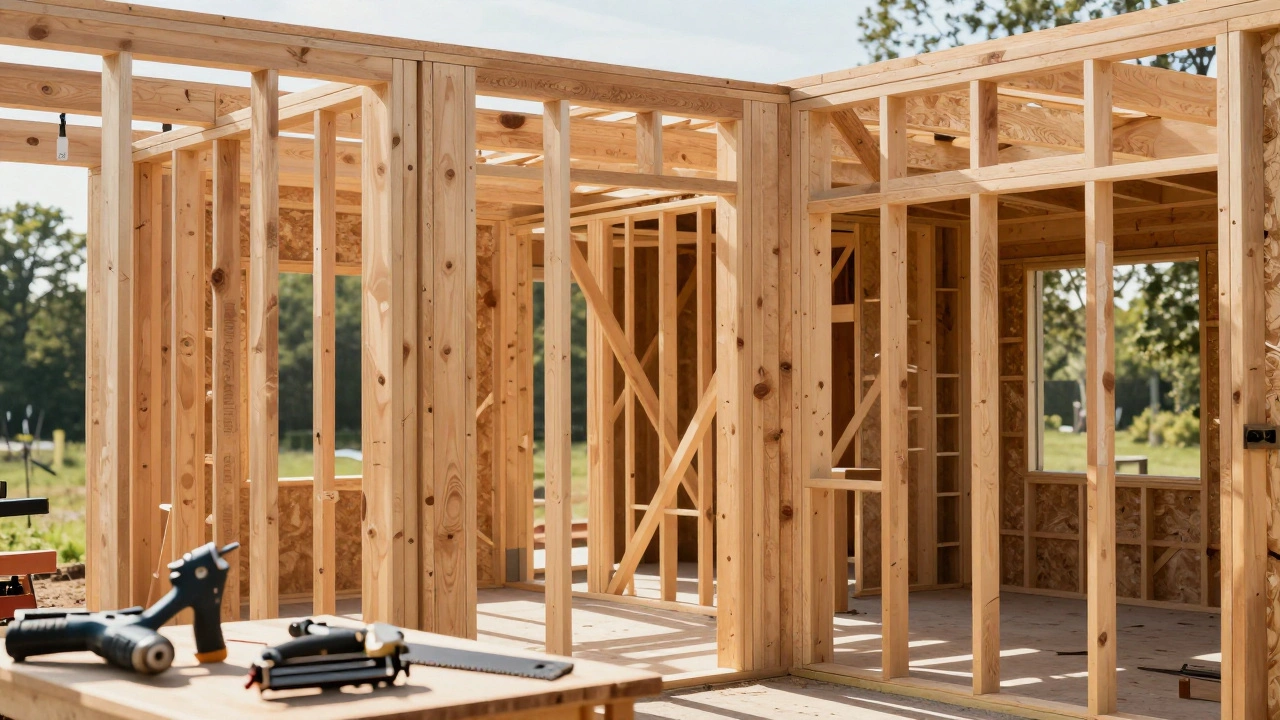
Wood is a natural organic material derived from trees, widely used in residential construction for its strength-to-weight ratio and ease of use. It has been the backbone of housing for centuries, especially in North America and parts of Europe. When we talk about wood in construction, we usually mean lumber like dimensional framing (2x4s, 2x6s) or engineered wood products like plywood and laminated veneer lumber (LVL).
Why does wood still hold up against modern synthetics? First, it’s renewable. Trees grow back. Second, it’s incredibly easy to work with. You don’t need massive cranes or specialized welding gear to frame a house with wood; a few carpenters with nail guns and saws can do it quickly. This speed translates to lower labor costs, which is a huge factor for homeowners.
However, wood isn’t perfect. It’s susceptible to moisture, which can lead to rot or mold if not properly sealed and ventilated. It’s also flammable, though modern fire-retardant treatments help mitigate this risk. For most single-family homes, garages, and low-rise apartment buildings, wood remains the go-to choice because it provides good insulation naturally and allows for flexible design changes during the building process.
- Best for: Residential homes, interior framing, decks, and furniture.
- Key Advantage: Low cost and high flexibility in design.
- Main Drawback: Vulnerability to fire, pests, and water damage.
Concrete: The Durable Foundation
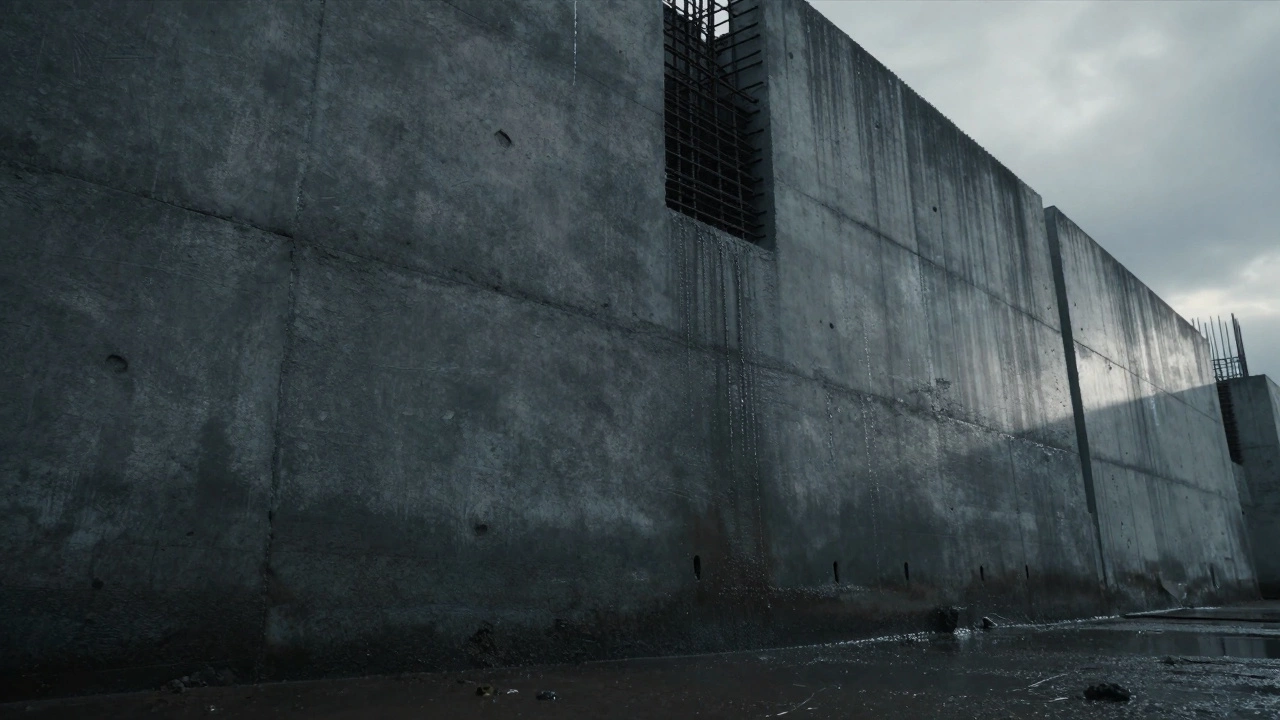
Concrete is a composite material composed of cement, aggregate (sand/gravel), and water, known for its compressive strength and durability. On its own, concrete is strong under compression but weak when pulled apart. That’s why we almost always use reinforced concrete, which embeds steel rebar inside the mix to handle tensile forces.
Concrete is the unsung hero of infrastructure. Think about bridges, highways, dams, and skyscraper foundations-they’re all concrete. In residential construction, you’ll find it in footings, slabs-on-grade, and retaining walls. Its biggest selling point is durability. Once cured, concrete can last for decades with minimal maintenance. It doesn’t rot, it doesn’t burn, and it resists pests like termites.
The downside? It’s heavy and hard to change once it’s poured. If you want to move a wall made of concrete, you’re looking at major demolition work. It also has a higher carbon footprint due to the production of Portland cement, which is a significant contributor to global CO2 emissions. Engineers are constantly working on green alternatives, like using fly ash or slag cement to reduce the environmental impact, but traditional concrete remains the standard for load-bearing structures where stability is non-negotiable.
- Best for: Foundations, driveways, high-rise cores, and industrial floors.
- Key Advantage: Extreme durability and fire resistance.
- Main Drawback: High weight and difficulty in modification after curing.
Steel: The Strength Champion
Structural Steel is an alloy primarily made of iron and carbon, valued for its high tensile strength and ability to support heavy loads over long spans. Unlike wood, steel doesn’t burn. Unlike concrete, it’s much lighter relative to its strength. This makes it the ideal choice for tall buildings, large stadiums, and warehouses where you need wide open spaces without columns cluttering the floor.
Steel comes in various forms, including I-beams, H-columns, and cold-formed steel studs. One of the coolest things about steel is its predictability. Engineers know exactly how it will behave under stress, which allows for precise calculations and safer designs. It’s also fully recyclable. At the end of a building’s life, the steel can be melted down and reused without losing its quality, making it one of the most sustainable materials available today.
The catch? Steel is expensive. Both the material itself and the specialized labor required to weld or bolt it into place add up quickly. It also requires careful protection against corrosion. If left exposed to rain and salt, steel rusts. Builders combat this with galvanization (coating it in zinc) or regular painting. For commercial projects and multi-story residential buildings, steel offers the height and span capabilities that wood simply can’t match.
- Best for: Skyscrapers, large-span roofs, industrial facilities, and bridges.
- Key Advantage: Superior strength-to-weight ratio and recyclability.
- Main Drawback: Higher initial cost and susceptibility to corrosion.
| Material | Primary Use | Cost Level | Fire Resistance | Lifespan |
|---|---|---|---|---|
| Wood | Residential Framing | Low | Moderate (with treatment) | 50-100 years |
| Concrete | Foundations & Cores | Medium | High | 70+ years |
| Steel | Commercial & High-Rise | High | High (non-combustible) | 50-100+ years |

How to Choose the Right Material for Your Project
Choosing between these three isn’t just about personal preference; it’s dictated by physics, budget, and local building codes. Here’s how to decide:
Budget Constraints: If you are building a typical suburban home, wood framing is likely your most economical option. The labor costs are lower, and the materials are readily available. Steel framing for a house can cost 10-20% more upfront, though it may save money on insurance due to its fire resistance.
Project Scale: Are you building a two-story cottage or a ten-story office block? Wood hits a limit around five to six stories due to lateral stability issues (wind and earthquake forces). Beyond that, you switch to steel or concrete. Concrete is often preferred for the core of high-rises because it adds mass, which helps stabilize the building against swaying.
Environmental Conditions: Live in a termite-prone area? Avoid ground-level wood. Live in a coastal region with salty air? Steel needs extra protective coating, while concrete performs well. In areas prone to wildfires, non-combustible materials like concrete and steel are increasingly mandated by code.
Common Misconceptions About Building Materials
There’s a lot of noise out there about what’s “best.” Let’s clear up a few myths.
Myth: Steel frames are stronger than wood frames. In reality, for a single-family home, both meet the same safety standards. Steel is stronger pound-for-pound, but wood is strong enough for the loads involved in small buildings. Using steel for a house is often overkill unless you have specific pest or fire concerns.
Myth: Concrete is indestructible. Concrete cracks. It’s part of its nature. Hairline cracks are normal and usually harmless, but structural cracks need attention. Proper curing and reinforcement prevent major issues, but calling it “indestructible” is misleading.
Myth: Wood is bad for the environment. While deforestation is a concern, sustainably sourced wood acts as a carbon sink. Trees absorb CO2 as they grow, and that carbon stays locked in the wood for the life of the building. Compared to the energy-intensive production of steel and concrete, wood can actually have a lower embodied carbon footprint if sourced responsibly.
What are the three main types of construction materials?
The three primary construction materials are wood, concrete, and steel. Wood is favored for residential framing due to its cost and ease of use. Concrete is essential for foundations and high-load structures because of its compressive strength. Steel is used for large-scale commercial projects and high-rises due to its superior tensile strength and fire resistance.
Is steel or concrete better for building foundations?
Concrete is generally better for foundations. It handles compressive loads exceptionally well and resists moisture and soil pressure. Steel is rarely used for foundation footings because it can corrode underground and is more expensive for this specific application. However, steel piles are sometimes driven deep into the ground for unstable soils.
Can you build a house entirely out of concrete?
Yes, you can. Methods like Insulated Concrete Forms (ICF) or precast concrete panels allow for entire houses to be built with concrete. These homes are extremely durable, energy-efficient, and quiet. However, they are typically more expensive and require specialized contractors compared to traditional wood-frame houses.
Which construction material is the most eco-friendly?
It depends on the context. Sustainably harvested wood has the lowest embodied carbon because trees store carbon dioxide. Steel is highly recyclable, meaning it can be reused indefinitely without loss of quality. Concrete has a high carbon footprint due to cement production, but innovations like green concrete are improving its environmental profile.
Why is wood still used so much in modern construction?
Wood remains popular because it is cost-effective, lightweight, and easy to work with. It requires less specialized labor than steel or concrete, keeping construction timelines short. Additionally, wood provides natural thermal insulation, reducing heating and cooling costs for homeowners.