
Who Is the Highest Paid Construction Worker?
 Mar, 12 2026
Construction Salary Estimator
Estimate Your Construction Salary
See how location, experience, and specialty affect pay for top construction roles. Based on current industry data.
When you think of construction workers, you might picture guys in hard hats swinging hammers or laying bricks. But the highest paid construction worker isn’t the one sweating on the ground floor. It’s the person who makes sure the whole project doesn’t fall apart - literally and financially. And yes, that person often works in a crane cab or a trailer with a laptop, not a dust-covered toolbelt.
Crane Operators Top the Pay Scale
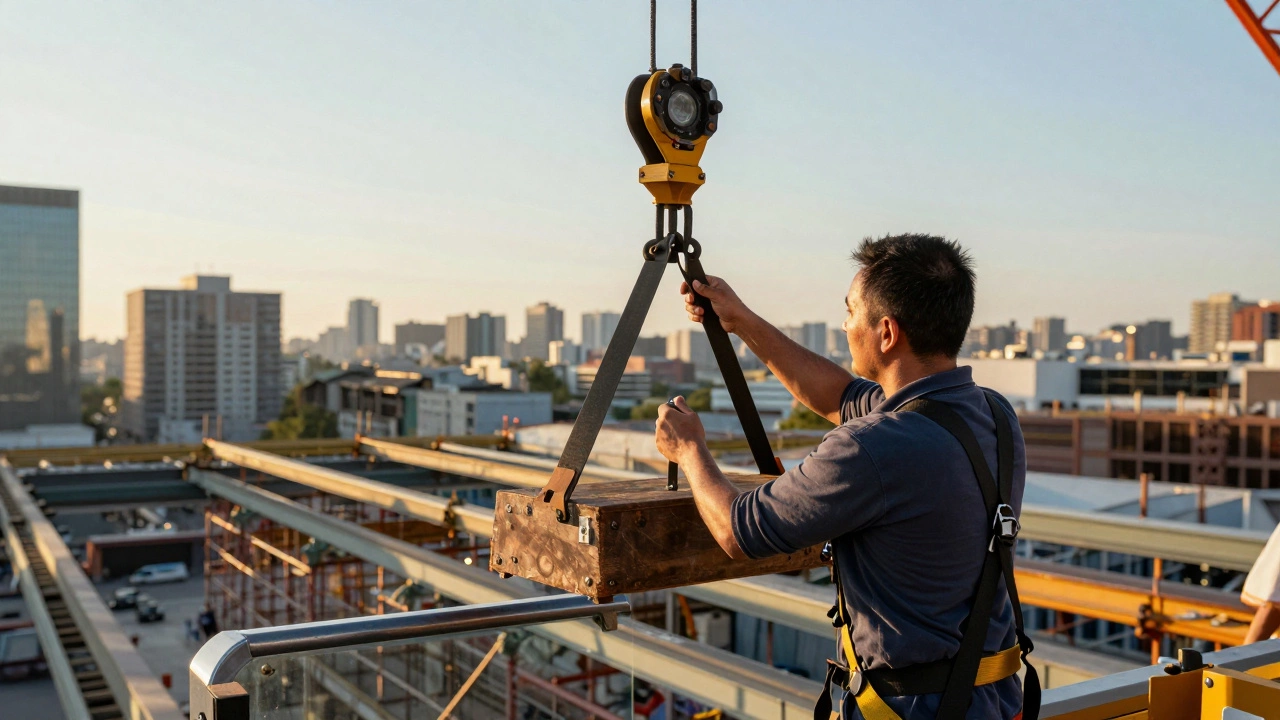
As of 2026, crane operators are the highest paid construction workers in the U.S. and many other developed countries. According to the U.S. Bureau of Labor Statistics, the median annual wage for crane operators is $63,280. But that’s just the middle. The top 10% earn over $100,000 a year - and in high-demand areas like Texas, California, or offshore oil rigs, some make $120,000 or more.
Why so much? Because one mistake can kill people, crush millions in equipment, or delay a $50 million project for months. A crane operator doesn’t just push buttons. They read wind speeds, calculate load swings, coordinate with spotters, and adjust for structural flex in real time. They’re trained for years, certified by OSHA, and often licensed by state agencies. A single slip, even a fraction of an inch, can mean disaster. That’s why companies pay premiums.
Project Managers Earn Even More - But They’re Not Always Called "Workers"
If you’re thinking, "Wait, what about project managers?" - you’re right to wonder. Construction project managers, especially those managing large commercial or infrastructure projects, often make more than crane operators. Salaries range from $85,000 to $160,000+ annually. Some senior managers on billion-dollar projects earn over $200,000.
But here’s the catch: many people don’t consider project managers "construction workers" in the traditional sense. They’re usually engineers or architects with years of experience who moved into leadership. They don’t wear steel-toe boots every day. They handle budgets, permits, schedules, subcontractors, and client demands. They’re the glue between design teams and crews on the ground.
Still, they’re part of the construction ecosystem. And if you count them as workers - which you should - they’re the top earners. The difference? Crane operators get paid for skill under pressure. Project managers get paid for solving chaos.
Other High-Paying Construction Roles
Crane operators and project managers aren’t the only ones making serious money. Here are other top-paying roles in the field:
- Heavy Equipment Operators - Think bulldozers, excavators, and pile drivers. Median pay: $58,000. Top earners: $95,000+.
- Electrical Inspectors - They verify code compliance on big builds. Median: $67,000. Top: $110,000.
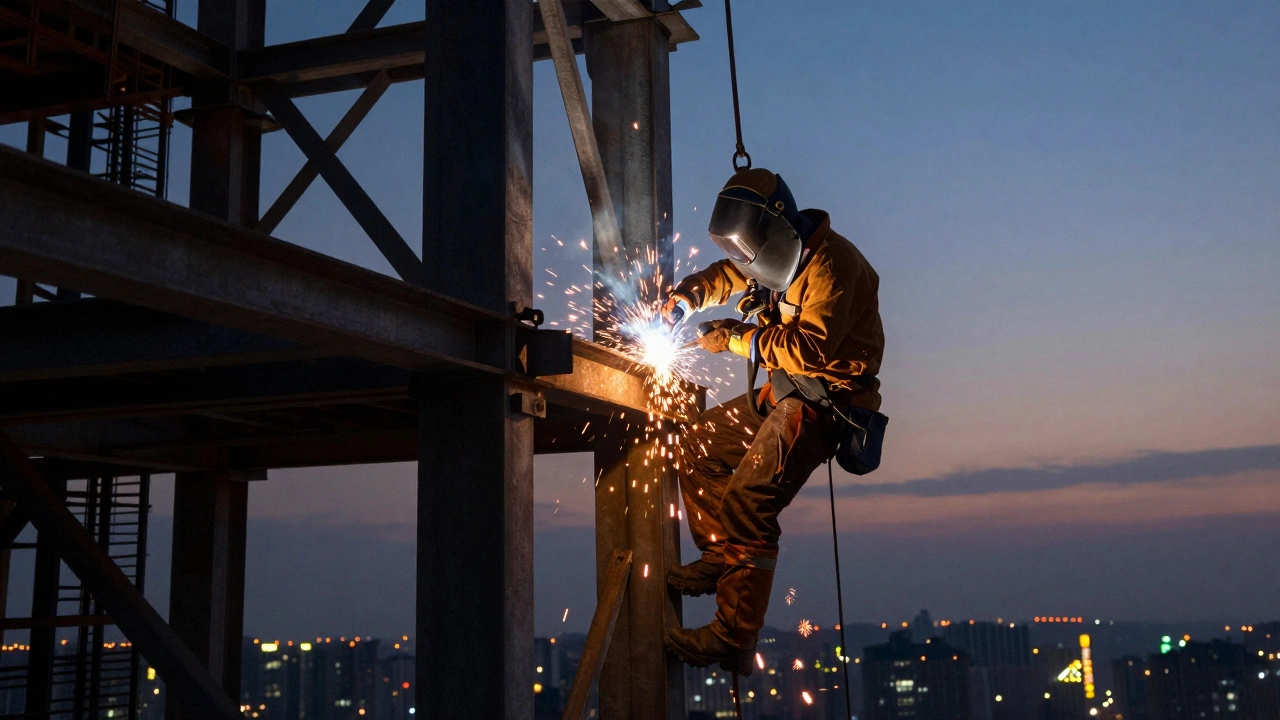
- Structural Iron and Steel Workers - The ones welding high above streets on skyscrapers. Median: $57,000. Top: $98,000.
- Construction Superintendents - On-site bosses who run daily operations. Median: $75,000. Top: $130,000.
Notice a pattern? The highest earners aren’t just strong. They’re precise. They’re accountable. And they work in environments where failure isn’t just costly - it’s deadly.

Why Location and Specialization Matter
Not all crane operators are paid the same. A crane operator in rural Iowa makes $45,000. One in New York City or Houston makes $95,000. Why? Demand. Risk. Complexity.
Offshore wind farms in the North Sea? Those operators earn $150,000+ because they work 14 days on, 14 days off, in freezing conditions, hundreds of miles from shore. Tunnel boring in Tokyo? That’s $130,000 a year. High-rise construction in Dubai? Same deal.
Specialization pays. A crane operator who can handle tower cranes on skyscrapers makes more than one who lifts lumber for single-family homes. An electrician who works on data centers or hospitals gets paid more than one who rewires kitchens. The more niche the skill, the higher the pay - because fewer people can do it.
How to Get Into These High-Paying Jobs
You don’t need a college degree. But you do need training, certification, and time.
For crane operators: Start with a trade school or apprenticeship. Get OSHA 10 and 30-hour certified. Then get NCCCO certified - that’s the industry standard. It takes 2-4 years. Pay starts at $35,000. By year five, you’re likely over $70,000.
For project managers: Most come from trades. They start as carpenters or electricians, then take on crew lead roles. They study project management, get PMP certification (Project Management Professional), and learn software like Procore or Primavera. It takes 7-10 years. But the jump from $60,000 to $120,000 is real.
The key? Don’t just show up. Learn the systems. Understand the numbers. Build relationships. The best-paid workers aren’t the loudest - they’re the ones everyone trusts when things go wrong.
What About Union vs. Non-Union?
Union workers often earn more. In the U.S., union crane operators average $75,000-$110,000. Non-union? More like $50,000-$80,000. Why? Union contracts include health insurance, pensions, and guaranteed raises. They also control job access - meaning fewer people compete for the best gigs.
But non-union workers have more flexibility. They can hop between states, take private contracts, or work for firms that pay overtime without union rules. Some make more by working 60-hour weeks. Others get stuck on lowball bids.
It’s not about being union or not. It’s about positioning yourself where the work is - and where the risk is high enough to justify the pay.
The Real Secret: Risk = Reward
Every top earner in construction works where the margin for error is zero. Crane operators. Structural steelworkers. Tunnel engineers. High-voltage electricians. They’re not paid for muscle. They’re paid for precision, judgment, and responsibility.
Compare that to a general laborer who loads trucks or cleans up debris. They’re essential. But they’re not paid $100,000 because their job doesn’t carry the same risk. One wrong move by a crane operator? A building collapses. One wrong wire by an electrician? A fire starts. One missed deadline by a project manager? A company loses millions.
That’s why the highest paid construction worker isn’t the strongest. It’s the one who knows what happens if they mess up - and still shows up every day.
Is a crane operator really the highest paid construction worker?
Yes, among traditional field workers, crane operators are consistently the highest paid. The median wage is over $63,000, with top earners making $100,000-$120,000 annually. However, construction project managers - who often start as tradespeople - typically earn more, with many making $120,000 to $200,000. Whether you count them as "workers" depends on how you define the term.
Do I need a college degree to become a crane operator?
No, you don’t need a college degree. Most crane operators start with a high school diploma and enter through an apprenticeship or trade school. You’ll need OSHA certification and NCCCO certification, which involve written and practical exams. Training usually takes 2-4 years. The real requirement isn’t a degree - it’s patience, focus, and the ability to handle pressure.
Can I make $100,000 as a construction worker without being a manager?
Absolutely. Crane operators, structural ironworkers, and electrical inspectors regularly hit six-figure salaries - especially in high-risk or high-demand areas like offshore rigs, urban high-rises, or major infrastructure projects. You don’t need to move into management. You just need to master a high-skill, high-stakes trade.
Why do some construction workers get paid so much more than others?
It comes down to risk, skill scarcity, and responsibility. Workers who operate heavy machinery, work at extreme heights, handle live electrical systems, or manage entire project timelines are paid more because their mistakes cost more - in money, time, and lives. The fewer people who can do the job safely, the higher the pay.
Are construction salaries rising in 2026?
Yes. Labor shortages, inflation, and increased infrastructure spending have pushed wages up across the board. Crane operators, electricians, and project managers saw 8-12% salary increases between 2023 and 2026. In cities with major construction booms - like Austin, Miami, or Seattle - top earners are hitting new records. The trend is expected to continue through 2027.