
How to Budget for a Roof: Real Costs, Hidden Fees, and What You Need to Know
 Feb, 12 2026
Roof Replacement Cost Calculator
Estimate Your Roof Replacement Cost
Get a realistic budget based on your specific roof details and materials
Roof Size Calculation
Material Selection
Additional Costs
Budget Breakdown
Roof size:
Materials: $
Removal & disposal: $
Labour: $
Permits: $
Additional costs: $
Replacing your roof isn’t just a home repair-it’s one of the biggest financial decisions you’ll make as a homeowner. And if you’ve ever tried to budget for it, you know how easy it is to get blindsided. One contractor says $15,000. Another says $22,000. Your neighbor paid $10,000 for the same house size. What’s going on? The truth is, roof budgets aren’t one-size-fits-all. They depend on materials, slope, access, local labor rates, and even the time of year. Here’s how to build a realistic roof budget that won’t leave you scrambling later.
Start with the size and shape of your roof
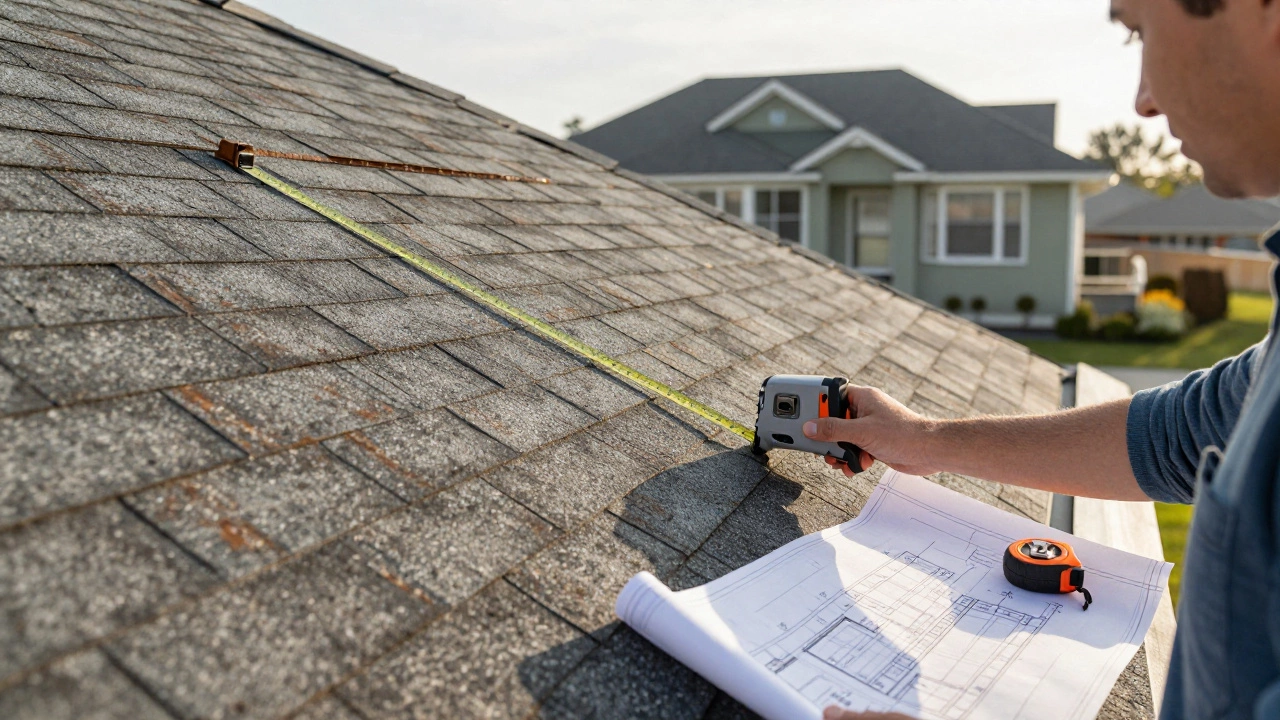
You can’t budget for a roof without knowing how big it is. Most homeowners think they know their roof size because they know their house size. But that’s not how it works. A 2,000-square-foot house doesn’t mean a 2,000-square-foot roof. Roofs have slopes, dormers, valleys, and overhangs that add surface area. A steep gable roof can be 30% larger than your floor plan. A complex roof with multiple peaks and chimneys? It could be 50% bigger.
Here’s how to get a rough estimate: Measure the length and width of each plane of your roof. Multiply length by width for each plane. Add them all up. Then multiply the total by 1.15 if your roof is medium slope (4:12 to 8:12), or 1.3 if it’s steep (9:12 or higher). That gives you the actual square footage you’ll pay for. Roofing is sold by the “square”-100 square feet. So if your roof is 2,500 square feet, you’re looking at 25 squares.
Material choices make the biggest difference
Not all roofs are created equal. The material you pick drives 60% of your total cost. In New Zealand, the most common options are:
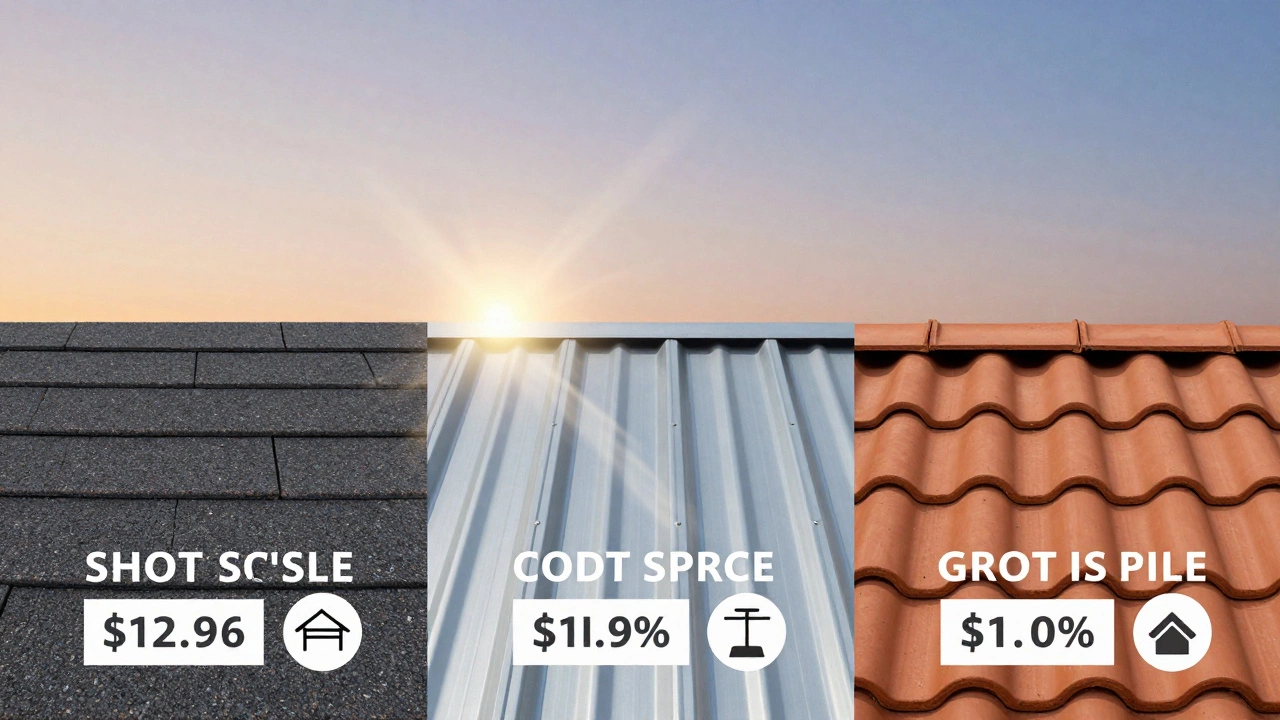
- Asphalt shingles - $40-$60 per square (installed). This is the budget option. Lasts 15-25 years. Most common in Wellington due to affordability and ease of installation.
- Metal roofing - $80-$140 per square. Lasts 40-70 years. Gets a lot of sun here, so heat reflection helps lower energy bills. Popular in coastal areas for wind resistance.
- Tile (clay or concrete) - $100-$180 per square. Heavy, needs strong framing. Lasts 50-100 years. Common in older homes and heritage zones. Installation is slower and requires specialized crews.
- Composite or synthetic shingles - $70-$120 per square. Designed to mimic wood or tile but lighter and more durable. Good for storm-prone areas.
Don’t just look at the price per square. Think long-term. Metal might cost twice as much as asphalt now, but if you plan to stay in your home for 20+ years, you could save $10,000+ in replacements. Tile lasts longer but adds weight. If your house is old, you might need structural upgrades before installing tile-that’s an extra $3,000-$8,000.
Labour and removal costs aren’t optional
Some quotes only show the cost of new materials. That’s misleading. You’re paying for:
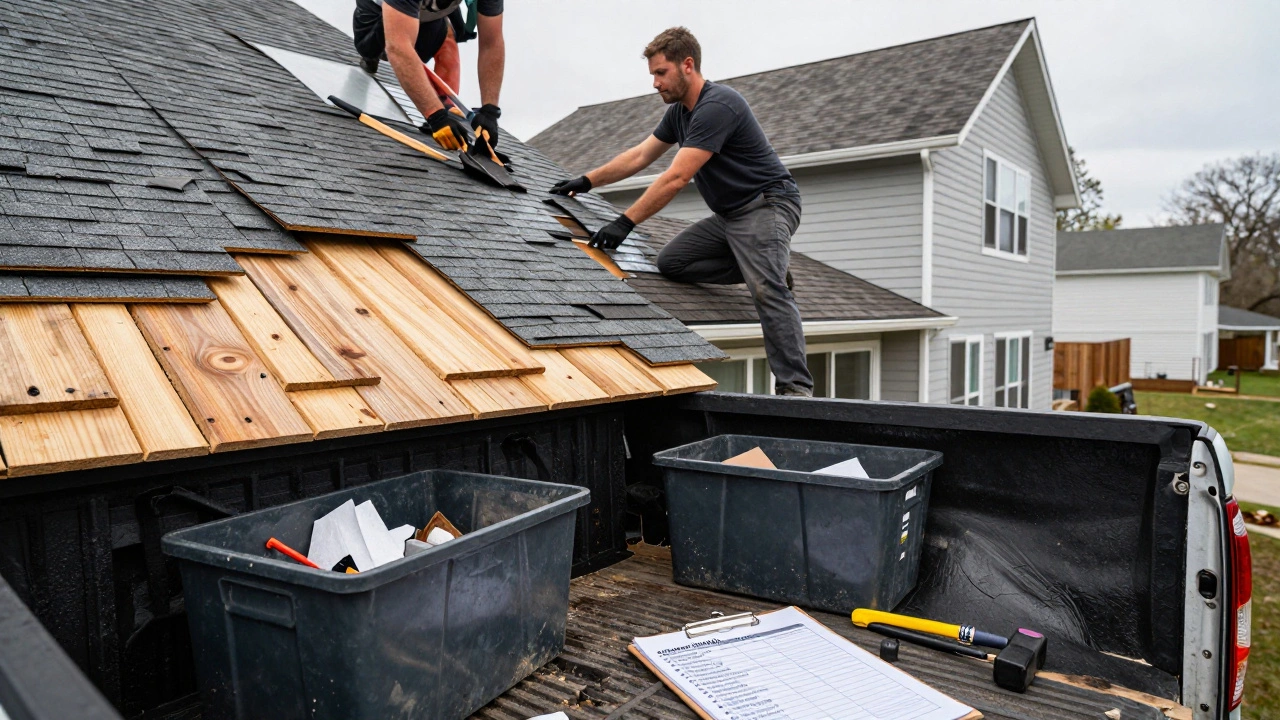
- Removing old shingles (or tiles). This is usually $15-$25 per square. If you have multiple layers, it costs more.
- Disposal fees. Landfills charge per ton. A typical roof generates 3-5 tons of debris. That’s $150-$300.
- Labour. Installers charge $25-$45 per hour. A full roof replacement takes 2-4 days for a crew of 3-4 people. That’s $1,500-$4,000 in labour alone.
- Flashing, underlayment, and drip edges. These aren’t optional. They prevent leaks. Budget $5-$15 per square for these essentials.
Always ask: “Is removal and disposal included?” If not, add it. Many contractors lowball the material cost to win the job, then tack on fees later. Get everything in writing.
Hidden costs you can’t ignore
Here’s where most budgets fail:
- Roof deck repair: If your roof has been leaking for years, the plywood underneath might be rotting. Replacing damaged decking costs $10-$20 per square foot. A 50-square-foot patch could add $500-$1,000.
- Ventilation upgrades: Modern codes require ridge vents and soffit vents. If your roof is old, you might need to add them. That’s $800-$2,000.
- Chimney flashing: If your chimney is older than your roof, the flashing will need replacement. It’s a separate job, often $800-$1,500.
- Permits: In Wellington, you need a building consent for roof replacement. Fees range from $500-$1,200 depending on complexity. Don’t assume the contractor handles this. Confirm it’s included.
- Weather delays: Rain can delay installation. Some contractors charge storage fees if materials sit on-site. Ask about their policy.
These aren’t rare surprises-they’re common. A 2024 survey by the New Zealand Building Industry Association found that 68% of homeowners went over budget because they didn’t account for hidden repairs.
Get multiple quotes-but know what to compare
Never go with the lowest bid. Go with the most detailed one. Ask each contractor for:
- Breakdown of materials (brand, type, warranty)
- Labour hours and crew size
- Removal and disposal fees
- Permit responsibility
- Warranty on workmanship (not just materials)
A $12,000 quote that includes everything-removal, disposal, permits, 10-year workmanship warranty-is better than a $9,000 quote that leaves out disposal and has a 1-year warranty. Compare apples to apples. If one quote doesn’t list something, ask. If they dodge the question, walk away.
Timing affects price
Roofing isn’t like buying a car. It’s seasonal. In Wellington, the busiest months are September to November-after winter damage shows up and before the wet season hits. That’s when prices rise 10-15% and wait times stretch to 6-8 weeks.
Best time to book? February to April. Contractors are slower after the holiday rush. You’ll get better availability, faster service, and sometimes discounts. Plus, you’ll avoid the spring rain delays.
Financing options
If you can’t pay cash, you have options:
- Home equity loan: Lower interest rates, tax-deductible (in NZ, up to $20,000 for home improvements). Best if you have equity.
- Personal loan: Faster approval, no property risk. Rates from 8-15% depending on credit.
- Roofing company financing: Some offer 0% for 12-24 months. Read the fine print. If you miss a payment, interest back-charges apply.
- Government grants: In Wellington, the Home Repair Assistance Scheme offers up to $5,000 for low-income homeowners over 65. Check with your local council.
Never use high-interest credit cards. Roof repairs are long-term investments. Don’t pay 20% interest on them.
What a realistic budget looks like
Here’s a real example from a 180-square-meter home (about 1,900 sq ft) in Wellington:
| Item | Cost |
|---|---|
| Asphalt shingles (22 squares) | $1,100 |
| Removal and disposal (22 squares) | $550 |
| Underlayment and flashing | $400 |
| Labour (3 days, 4 workers) | $3,200 |
| Permit and council fees | $800 |
| Chimney flashing replacement | $1,200 |
| Roof vent upgrade | $900 |
| Total | $8,150 |
This homeowner didn’t go with metal or tile because they planned to move in 7 years. Asphalt was the smart choice. They also found a contractor who had a slow month in March and got a 5% discount for paying upfront.
Final tip: Always have a 10-15% buffer
Even the most detailed budget will have surprises. That’s why you need a buffer. If your estimate is $10,000, plan for $11,500. That cushion covers hidden rot, unexpected permits, or a sudden price hike on materials. It’s not waste-it’s risk management.
Roofing isn’t about spending the least. It’s about spending wisely. A well-budgeted roof lasts longer, protects your home better, and saves you from stress down the road. Take the time now. Get the details. Know what you’re paying for. Your future self will thank you.