
Civil vs. Commercial Construction: Key Differences Explained
 Apr, 9 2026
Construction Type Identifier
Not sure which contractor to hire? Select the characteristics that best describe your project to identify the construction category.
1. Primary Purpose
2. Funding Source
3. Key Priorities
Ever wondered why some crews are paving a massive highway while others are putting up a shiny new glass office tower? On the surface, they're both just "construction," but the reality is that these two worlds operate on completely different scales, rules, and goals. If you're planning a project or trying to get into the industry, confusing the two can lead to massive budgeting errors or hiring the wrong team. One is about the skeleton of a city, and the other is about the organs that make the city function.
| Feature | Civil Construction | Commercial Construction |
|---|---|---|
| Primary Goal | Public Infrastructure | Business/Retail Space |
| Funding | Mostly Government | Private Investors/Companies |
| Key Materials | Concrete, Steel, Asphalt | Glass, Drywall, HVAC, Wood |
| Typical Scale | Massive (Kilometers) | Local (Building Footprint) |
Breaking Down Civil Construction
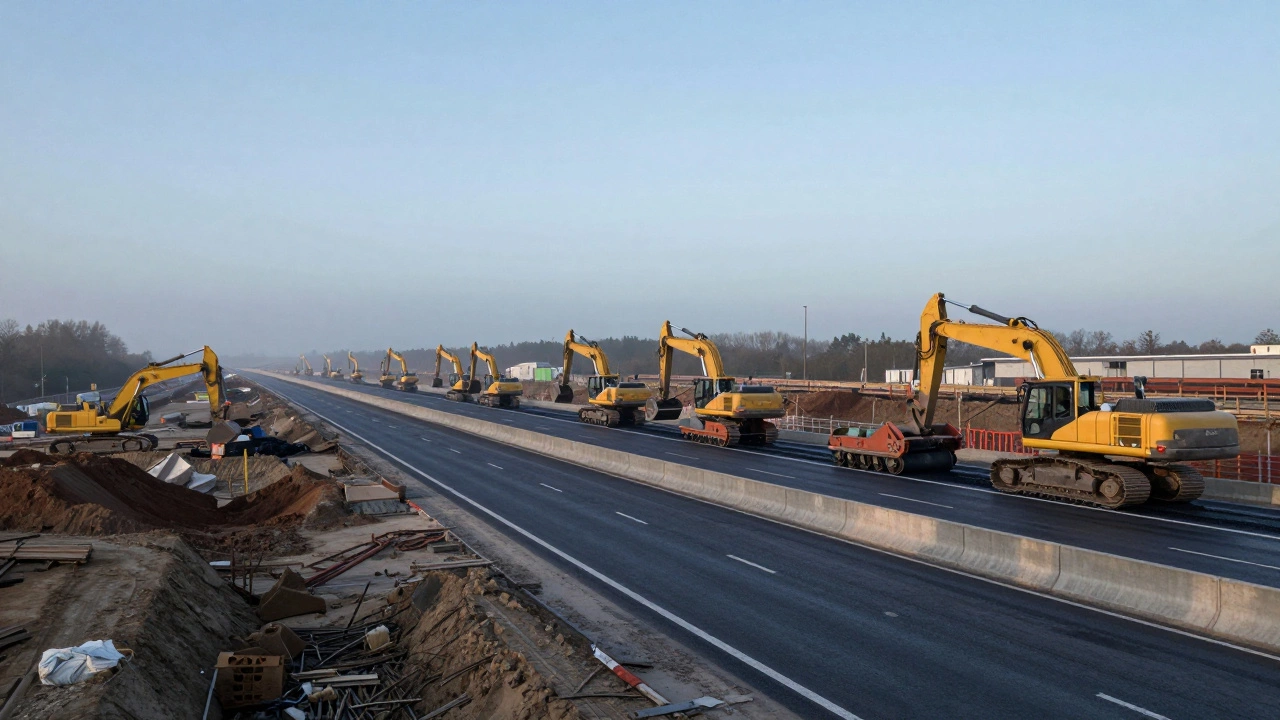
When we talk about civil construction is the process of designing and building large-scale infrastructure that supports the general public. It's basically the foundation of a society. If it's something that everyone uses regardless of who owns the land, it's likely a civil project. Think about the bridge you cross every morning or the sewer system that keeps your street from flooding during a storm.
Civil projects are often managed by government bodies or public agencies. Because the goals are public safety and utility, these projects follow incredibly strict standards. You can't just "wing it" with a dam or a highway overpass; a failure there doesn't just mean a leaky roof, it means a potential catastrophe. This is why Civil Engineering focuses heavily on physics, hydrology, and materials science to ensure structures can withstand environmental pressures for 50 to 100 years.
Common examples of civil work include:
- Water treatment plants and sewage systems.
- Airports, railway tracks, and harbor docks.
- Highways, tunnels, and urban bridges.
- Large-scale irrigation systems for agriculture.
Understanding Commercial Construction
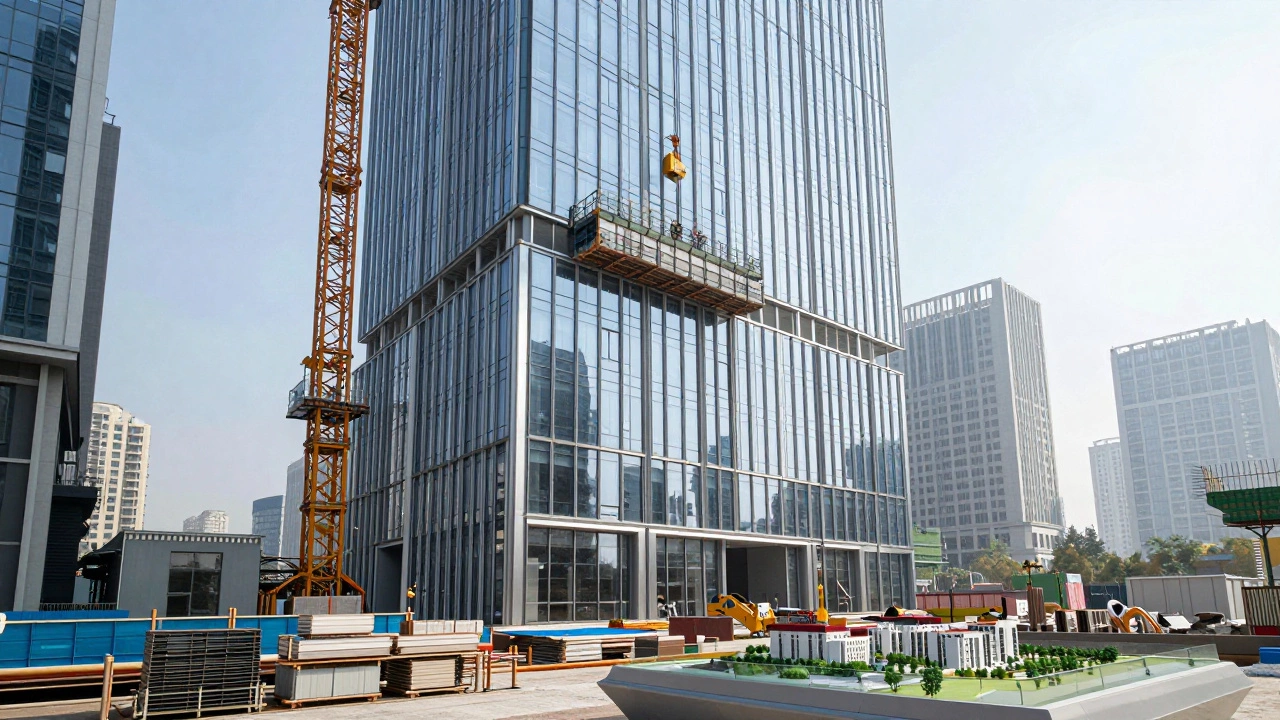
Now, let's shift gears. Commercial Construction is the building of structures intended for business use, retail, or professional services. While civil work builds the road, commercial construction builds the shopping mall at the end of that road. These projects are usually driven by profit, branding, and customer experience.
Unlike the public nature of civil works, commercial buildings are typically funded by private developers or corporations. The focus here is often on aesthetics, interior functionality, and maximizing rentable square footage. You'll see a much heavier emphasis on things like HVAC systems (Heating, Ventilation, and Air Conditioning), lighting design, and interior partitions. If a civil engineer cares about the soil's load-bearing capacity for a bridge, a commercial builder cares about whether the lobby looks inviting to a client.
You'll find this type of work in:
- Office complexes and skyscrapers.
- Shopping centers, boutiques, and restaurants.
- Hotels, hospitals, and private clinics.
- Warehouses and distribution centers.
The Main Differences in Funding and Ownership
One of the biggest divides between these two is who signs the checks. Civil construction is almost always tied to the public sector. Projects are often funded through taxes or government bonds. This means the procurement process is usually a public tender-a formal competition where the government picks the contractor based on a mix of cost and proven capability.
Commercial construction, on the other hand, is the wild west of private equity. A developer might buy a plot of land, secure a loan from a bank, and hire an architect to build a luxury apartment complex. The decision-making process is much faster because it's not bogged down by public hearings or political debates. However, the risk is higher for the investor; if the commercial building doesn't attract tenants, the developer loses money, whereas a public road is built because it's a necessity, not necessarily for a direct profit.
Materials and Technical Requirements
If you look at a job site, you can tell which is which by the materials. Civil projects rely heavily on "heavy" materials. You'll see massive amounts of reinforced concrete and structural steel. Because these projects often interact with the earth-like digging a tunnel or building a pier-they require specialized heavy machinery like excavators, pile drivers, and pavers.
Commercial sites use those materials too, but they add a layer of refinement. You'll find a lot more glass, drywall, aluminum cladding, and complex electrical wiring. While a civil project focuses on the external shell and the ground, a commercial project spends a huge amount of time on the "fit-out." This is the process of turning a concrete shell into a functional office with carpets, painted walls, and high-speed internet cabling.
Scale and Project Duration
Scale is where these two really diverge. A commercial project is usually contained within a specific property line. Even a massive skyscraper, while tall, occupies a relatively small footprint of land. The project has a clear beginning and end: once the building is occupied, the construction team leaves.
Civil projects are often linear and sprawling. A highway project might span 50 miles of territory, affecting thousands of different land plots and crossing multiple jurisdictions. These projects also tend to take much longer. Building a new subway line in a city can take a decade of planning and execution, while a medium-sized retail store might be finished in six months.
Risk Management and Safety Standards
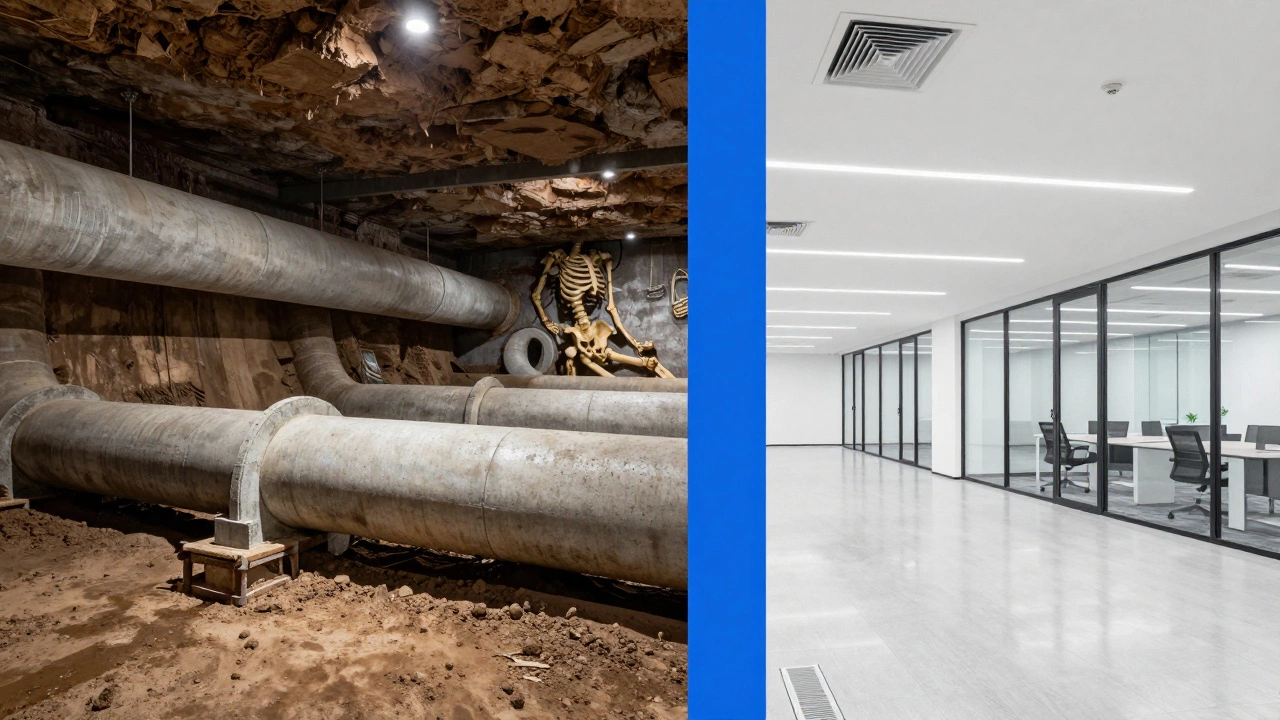
Safety is a priority in both, but the type of risk is different. In commercial construction, the biggest risks are often related to falls from heights or accidents involving power tools. The focus is on protecting workers within the building envelope.
In civil construction, the risks are more environmental and systemic. Think about the danger of a trench collapsing during pipe installation or the risk of a crane tipping over on a busy public road. Because civil work happens in public spaces, there's an added layer of complexity: managing traffic and ensuring that a curious pedestrian doesn't wander into a construction zone. The liability is also different; a failure in a public bridge can lead to massive government lawsuits and loss of life on a scale that a private building failure rarely reaches.
Which One Do You Need?
If you are a developer looking to create a revenue-generating asset, you are in the realm of commercial construction. You need a team that understands zoning laws, building codes for occupancy, and the latest in energy-efficient architecture. Your goal is a finished product that looks great and attracts users.
If you are working on a project that modifies the land or creates a utility for the community-like a parking lot, a drainage system, or a road-you need a civil contractor. These experts specialize in earthmoving, grading, and structural integrity. They don't care about the color of the walls; they care that the ground doesn't shift and the water flows in the right direction.
Can a company do both civil and commercial construction?
Yes, some large-scale construction firms have different divisions for both. However, the equipment and certifications are very different. A company specializing in high-rise offices might not have the massive dredging equipment needed for a harbor project, and a road-building crew might not have the expertise in interior commercial fit-outs.
Is residential construction considered commercial?
No. Residential construction is its own category focused on housing. While it shares some similarities with commercial work (like using drywall and HVAC), the building codes, zoning, and scale are different. Commercial construction specifically refers to buildings used for business purposes.
Which one is more expensive?
In terms of total budget, civil projects are often more expensive because of their sheer scale. A national highway system costs billions. However, on a per-square-foot basis, commercial buildings can be more expensive due to high-end finishes, complex electrical systems, and expensive glass facades.
Do both require an architect?
Commercial construction almost always requires an architect to handle the aesthetics and layout. Civil construction relies more heavily on civil engineers. While some civil projects (like a fancy bridge) have an architectural component, the primary driver is usually engineering and functionality rather than visual design.
What is the most common material in civil construction?
Concrete is the king of civil construction. From sidewalks and curbs to dam walls and bridge pillars, reinforced concrete is used because of its compressive strength and durability against the elements.
Next Steps for Project Planning
If you're just starting a project, first define your goal. Are you creating a public utility or a private business space? If it's the latter, start by hiring a commercial architect to sketch out your vision. If it's the former, you'll need to start with a land survey and a civil engineering firm to assess the topography and soil quality.
Avoid the mistake of hiring a general contractor who claims they can "do it all" without having a portfolio in both specific areas. A great office builder might be completely out of their depth when it comes to installing a municipal storm drain system. Check their previous projects-if they've never handled a government contract, they might struggle with the red tape of a civil project. Conversely, if they've only done roads, they likely won't have the eye for detail needed for a high-end retail store.