
Do New Builds Get Mold? What Homeowners Need to Know
 Mar, 5 2026
New Home Mold Risk Calculator
Assess Your New Home's Mold Risk
This tool calculates the risk of mold growth in your new home based on key factors from the construction phase. Enter your home's current conditions to receive personalized risk assessment and prevention advice.
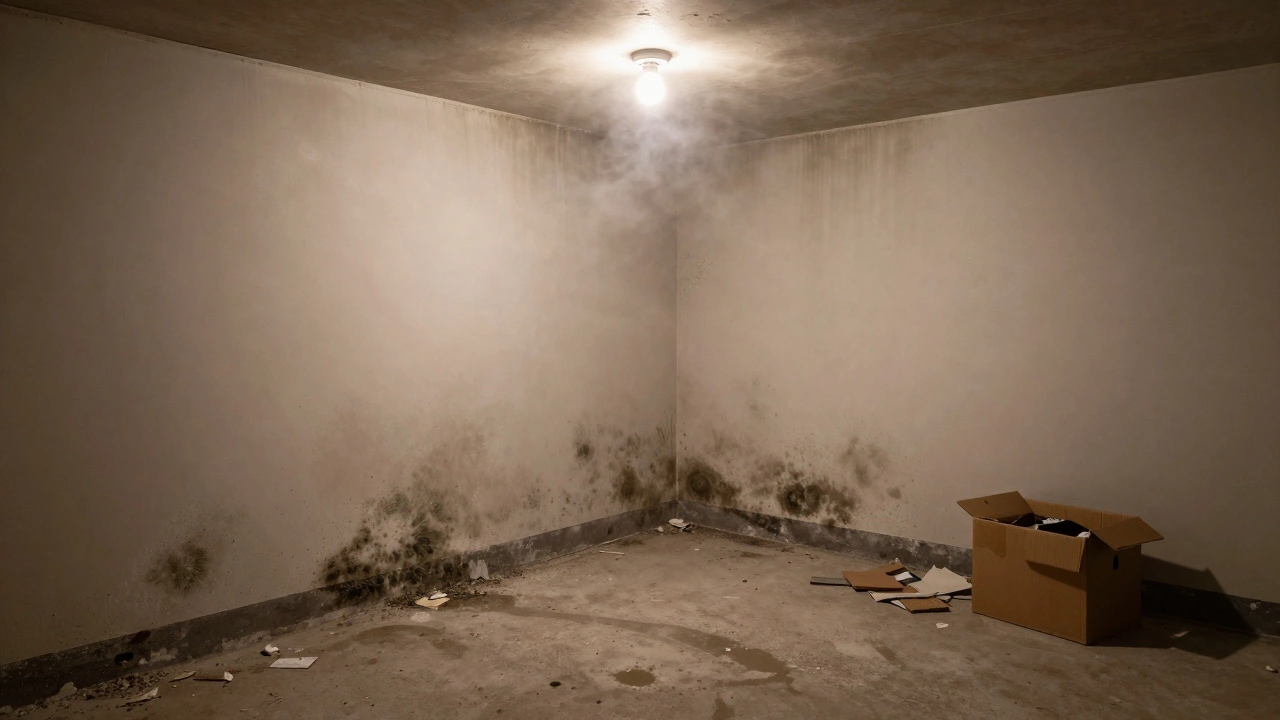
It’s 2026, and you just moved into your brand-new home. The walls are fresh, the floors are shiny, and everything smells like paint and progress. But then you notice it-a faint musty odor in the basement, or a dark spot creeping along the bathroom ceiling. Your first thought? Mold. And you’re not alone. Thousands of new homeowners in the last two years have reported the same surprise: mold showing up in homes built just months ago.
New builds don’t come with mold stamped on the permit. But that doesn’t mean they’re immune. In fact, new construction is one of the most common places mold hides-often because of how fast homes are built today. Speed over drying. Pressure over precision. And when you skip the right steps, moisture doesn’t just disappear-it lingers. And mold loves to wait.
Why New Homes Are Vulnerable to Mold
Think of a new home like a sponge that’s been soaked and then wrapped in plastic. During construction, materials like wood framing, drywall, insulation, and even concrete absorb moisture from rain, snow, or high humidity. If the builder rushes to close things up before those materials dry, you’re locking in moisture inside the walls.
Studies from the U.S. Department of Energy show that 68% of new homes built in humid climates have visible or hidden moisture issues at handover. That doesn’t mean every one turns into a mold colony-but it does mean the conditions are ripe. Mold spores are everywhere. They don’t need much: a damp surface, temperatures between 60°F and 80°F, and a few days of no airflow. New homes often have tight seals for energy efficiency, which sounds great-until it traps moisture inside.
Here’s what usually goes wrong:
- Sheathing and framing get rained on during construction and aren’t dried out before insulation is installed.
- Drywall is hung before the building is fully dried, trapping moisture behind it.
- Plumbing leaks during rough-in are missed and left to sit for weeks.
- Ventilation systems aren’t turned on early enough-or at all-during the drying phase.
These aren’t rare mistakes. They’re standard shortcuts in high-volume housing markets. Builders under pressure to hit deadlines often skip drying times that should take weeks. In some cases, homes are sold before they’ve even been fully dried out.
Where Mold Shows Up in New Builds
Mold doesn’t pick random spots. It follows the moisture. In new homes, it tends to show up in predictable places:
- Behind drywall in bathrooms, kitchens, or laundry rooms-where plumbing runs and humidity spikes.
- In crawl spaces or basements, especially if the ground wasn’t properly graded or vapor barriers weren’t installed.
- Under flooring, particularly in rooms with concrete slabs that haven’t cured fully.
- Inside HVAC ducts if the system was turned on before the building was dry.
- Around windows where condensation builds and air sealing was done poorly.
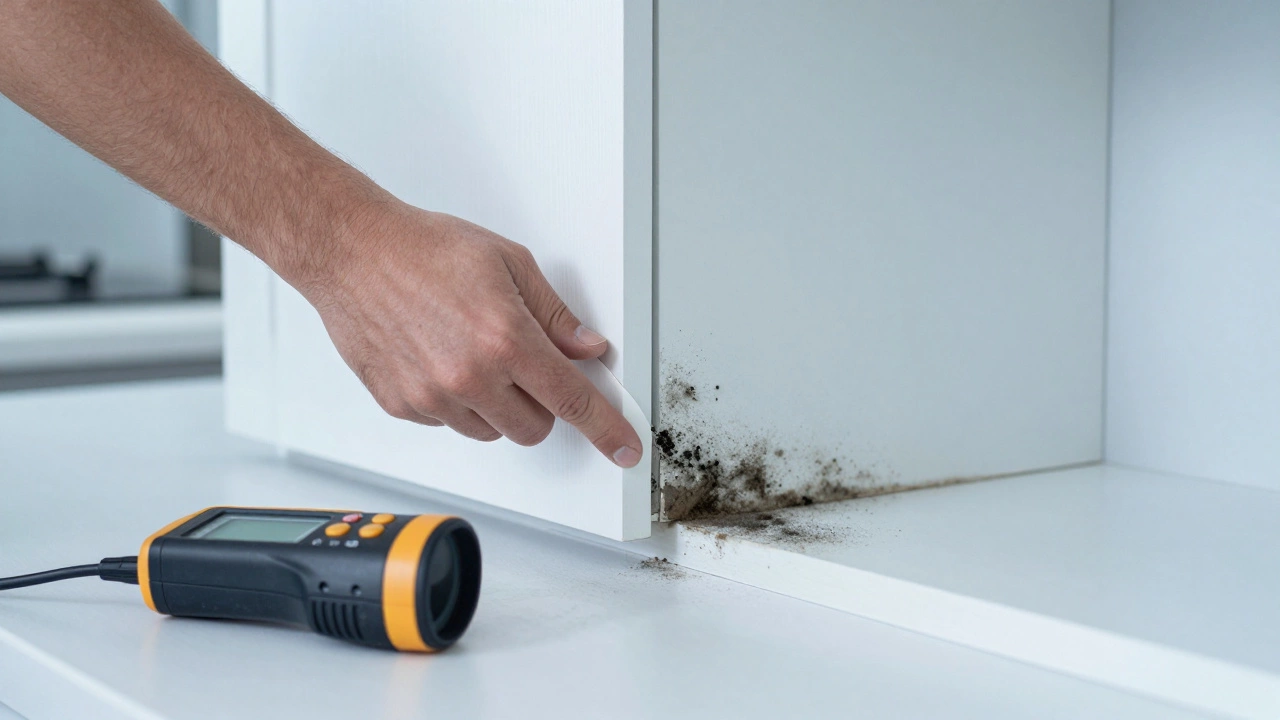
One homeowner in Atlanta found black mold behind her kitchen cabinets just six weeks after moving in. The builder had installed the cabinets before the walls were dry. Moisture had been trapped for over a month. By the time she noticed, the drywall was already rotting.
Another case in Portland involved a new townhouse where the attic insulation was installed while the roof deck was still wet from winter rains. Within three months, mold was growing under the shingles and spreading into the ceiling. The homeowner had to tear out the entire attic.
How to Spot Mold Early
You don’t need a lab test to know if mold is growing. Here’s what to look for in the first 90 days:
- A damp, earthy smell-especially after showers, rain, or when the AC turns on.
- Discoloration on walls, ceilings, or baseboards. Black, green, or white streaks that don’t wipe off.
- Warped or bubbling drywall, peeling paint, or cracked caulk around windows.
- Condensation on windows that doesn’t clear up by midday.
- Allergies or respiratory irritation that get worse at home but improve when you leave.
If you notice any of these, don’t wait. Mold doesn’t wait. It spreads. And the longer it sits, the harder and more expensive it is to fix.
What Builders Should Be Doing (But Often Don’t)
Good builders know how to prevent mold. They follow the three D’s: Dry, Delay, Detect.
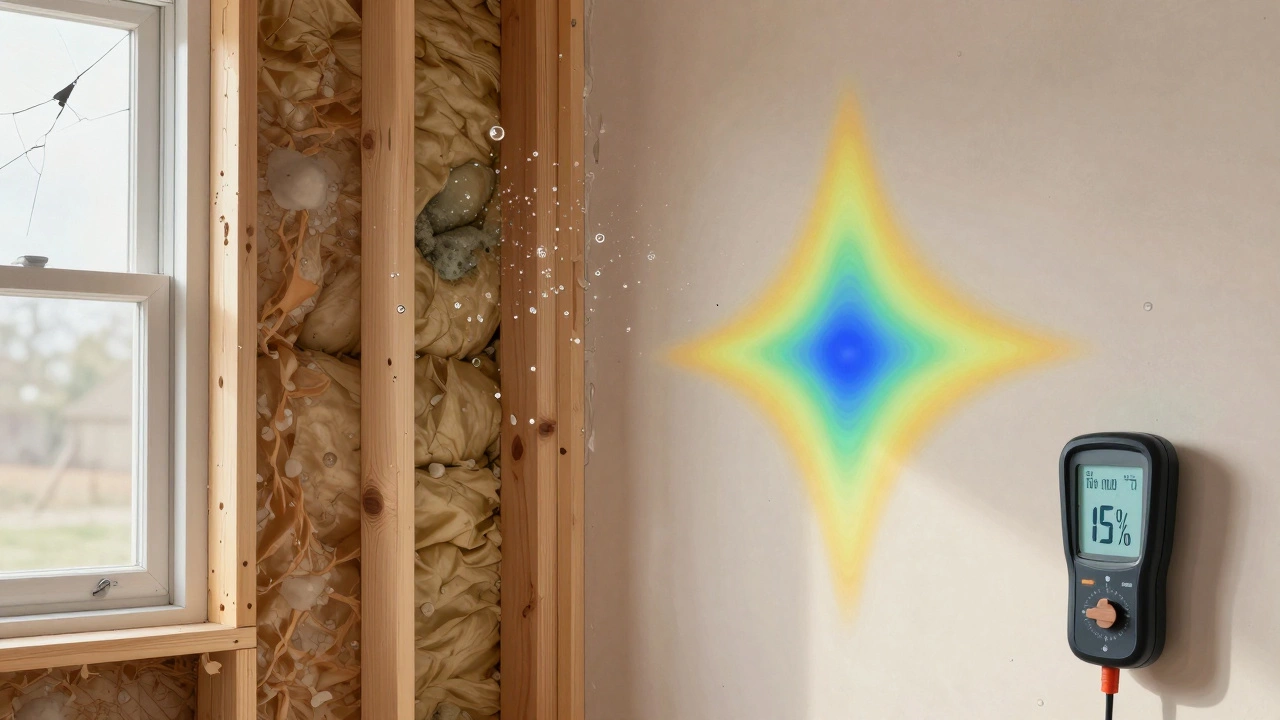
- Dry-Wait until materials are dry before sealing them in. Use moisture meters on framing and drywall. The moisture content should be below 15% for wood and below 0.5% for drywall.
- Delay-Don’t rush. Let the building breathe for at least 30 days after the roof is on and before installing insulation or drywall.
- Detect-Use infrared cameras to scan for hidden moisture. Test HVAC ducts before turning them on. Do a final moisture audit before the homeowner moves in.
Some builders in the Pacific Northwest now require a 45-day drying period before closing. They charge a small fee for it-but they also have 80% fewer mold claims. That’s not luck. That’s science.
What You Can Do as a Homeowner
You can’t control how the house was built-but you can control what happens after you move in.
- Turn on the HVAC system as soon as possible-even if it’s cold. Let it run on fan mode for 24 hours a day for the first two weeks.
- Use dehumidifiers in basements and bathrooms. Keep indoor humidity below 50%.
- Open windows for 15 minutes each day, even in winter. Fresh air is the best mold prevention tool.
- Check under sinks, behind toilets, and around windows weekly for the first three months.
- Don’t install rugs or carpet in bathrooms or basements until you’re sure the floors are dry.
And if you find mold? Don’t scrub it with bleach. That’s a myth. Bleach doesn’t kill mold in porous materials-it just changes its color. Instead, call a certified mold inspector. They’ll use air sampling and moisture mapping to find the source. Most insurance policies cover mold damage if it’s caught early and wasn’t caused by neglect.
The Bottom Line
New builds don’t automatically come with mold. But they do come with hidden risks if moisture isn’t managed. The same fast-building practices that get homes on the market quickly also create perfect conditions for mold to grow unnoticed.
The good news? Mold in new homes is preventable. It’s not inevitable. It’s a result of rushed work, not bad luck. If you’re buying a new home, ask your builder: "Did you test for moisture before closing?" If they look confused or say "no," walk away-or at least get an independent inspection.
Mold isn’t just ugly. It’s expensive. And in some cases, it’s dangerous. Don’t assume your new home is safe just because it’s new. The walls might be fresh-but the moisture inside might not be.
Can new construction homes get mold even if they’re built with "mold-resistant" materials?
Yes. Mold-resistant drywall or paint only slows down mold growth-they don’t stop it. If moisture is trapped behind the walls, mold will still grow underneath. These materials are helpful, but they’re not magic. The real solution is proper drying and ventilation during construction.
How long does it take for mold to grow in a new home?
Mold can start growing in as little as 24 to 48 hours under the right conditions-damp surface, warm temperature, and no airflow. In new homes with trapped moisture, you might not see mold for weeks or months, but it could be growing behind the walls the whole time.
Is mold in a new home covered by warranty?
It depends. Most builder warranties cover structural defects and workmanship errors for 1-2 years. If mold is caused by a construction flaw-like a missing vapor barrier or improper sealing-it may be covered. But if it’s due to homeowner neglect (like leaving windows open during rain), it won’t be. Always document everything and report issues in writing.
Should I get a mold inspection before closing on a new home?
Yes-if you’re in a humid climate or the home was built during rainy seasons. A professional mold inspection costs $300-$500, but it can save you thousands in repairs later. Most inspectors use moisture meters and infrared cameras to find hidden damp spots. It’s not a standard part of the home-buying process, but it should be.
Can I prevent mold by just using a dehumidifier after moving in?
A dehumidifier helps, but it won’t fix mold that’s already growing behind walls. It’s a tool for managing humidity after the fact, not a cure for construction mistakes. The best defense is catching moisture issues before the walls are sealed. Still, using one for the first six months is a smart move.