
How Long Does It Take to Fix a Crack in the Foundation of a House?
 Dec, 8 2025
Foundation Crack Repair Time Estimator
Estimate Repair Time
Estimated Repair Time
Not all foundation cracks are the same. Some are harmless, others are warning signs. If you’ve noticed a crack in your basement wall or along the edge of your concrete slab, you’re probably wondering: how long does it take to fix a crack in the foundation of a house? The answer isn’t simple. It could be a few hours or several weeks - and it all depends on what’s really going on beneath the surface.
Not Every Crack Needs a Full Repair
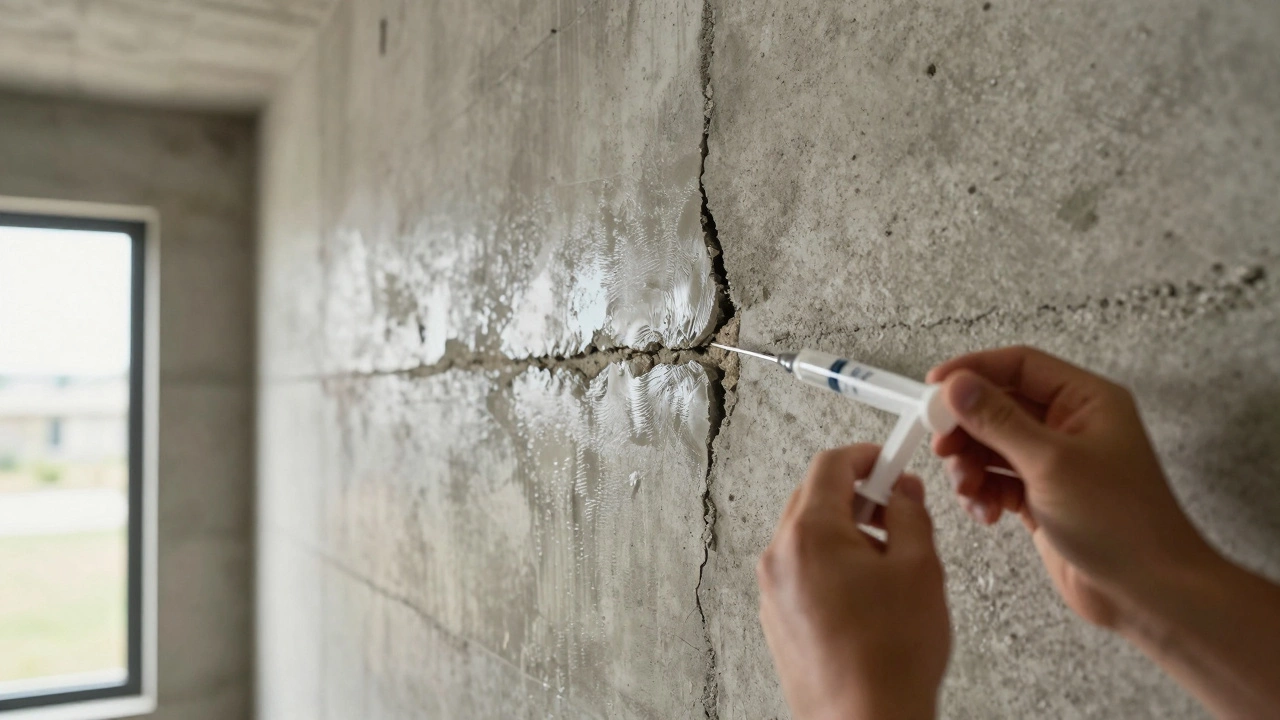
First, let’s clear up a big misconception. Many homeowners panic when they see a hairline crack. In New Zealand, where homes are often built on clay soils or seismic zones, small vertical cracks (less than 1/8 inch wide) are common. These usually come from normal settling or seasonal expansion and contraction. They don’t mean your house is collapsing. These types of cracks can be sealed with epoxy or polyurethane in under a day. No heavy equipment. No permits. Just a clean-out, injection, and a little paint to hide it. But if the crack is wider than a credit card, if it’s horizontal, if it’s growing, or if it’s accompanied by sticking doors, uneven floors, or gaps around window frames - that’s a different story. That’s structural damage. And that takes time.What Happens During a Structural Foundation Repair?
When a crack is caused by settling, soil movement, or poor drainage, the repair isn’t just about filling the gap. You have to fix the cause. That means:- Identifying the source of movement (is it water? Poor compaction? Tree roots?)
- Stabilizing the foundation
- Reinforcing or lifting sections if needed
- Sealing and waterproofing
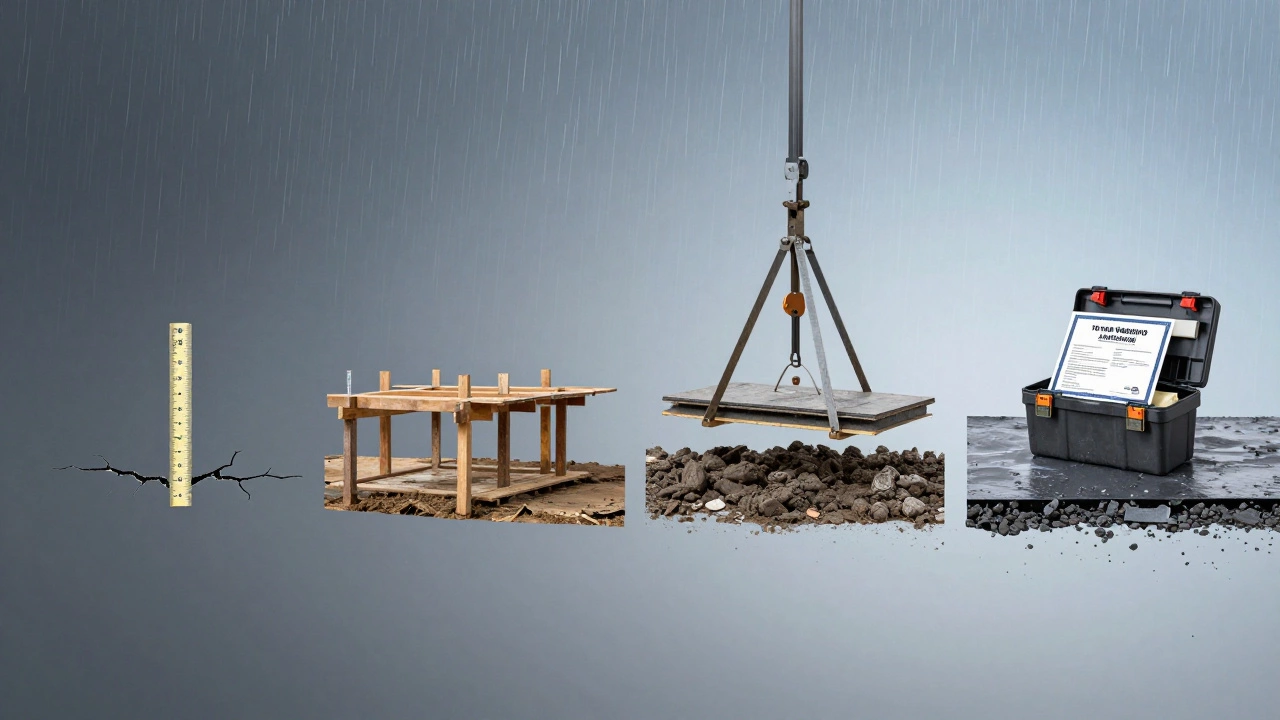
- Site assessment and measurement (1 day)
- Drilling holes and installing piers (2-4 days)
- Gradual lifting of the foundation (1-2 days)
- Crack repair and waterproofing (1 day)
What About Slab Foundations?
If your house has a concrete slab (common in newer builds), the repair process changes slightly. Slab cracks often result from soil shrinkage during dry spells or poor drainage. The fix might involve mudjacking - pumping a cement slurry under the slab to lift it back into place. This takes about 1-2 days. But if the slab has shifted more than 2 inches, or if there’s a major sinkhole underneath, you might need full slab replacement. That’s a 10-14 day job, including demolition, regrading, pouring new concrete, and curing.Weather Matters - Especially in New Zealand
In Wellington, rain is constant. Moisture is the enemy of foundation repair. Most contractors won’t start work during heavy downpours. Wet soil is unstable. Sealants won’t bond properly. Concrete needs dry conditions to cure. So even if the work itself takes 5 days, the whole project might stretch to 2 weeks because of weather delays. Also, concrete curing takes time. Even if the piers are installed and the slab is lifted, the repair epoxy or patching compound needs at least 48 hours to fully harden. You can’t walk on it, park on it, or put heavy furniture back until then.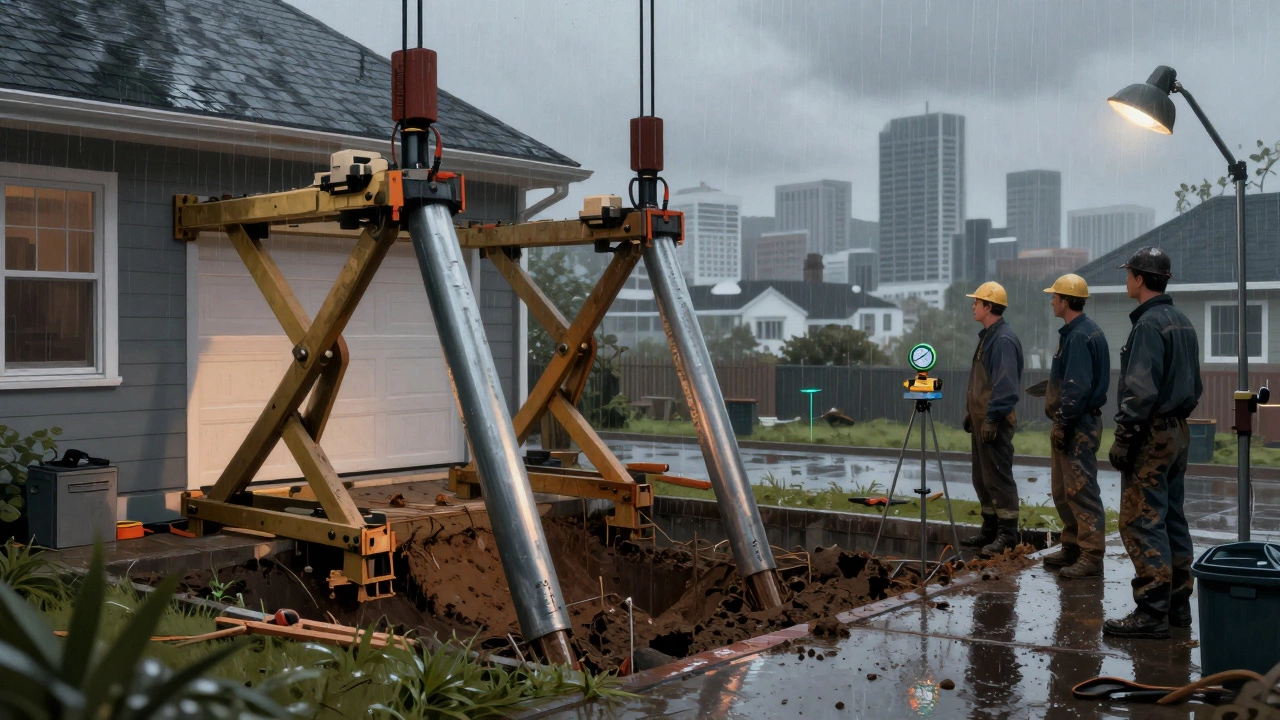
Permits and Inspections Add Time
In New Zealand, any structural foundation repair requires a building consent from your local council. Wellington City Council takes 10-15 working days to process applications. That’s not including the time it takes to prepare the plans. If your repair involves altering load-bearing walls or drainage systems, you might need a structural engineer’s report. That adds another 5-7 days. Some homeowners skip the permit to save time. Don’t. If you sell your house later, an inspector will find the unpermitted work. You could be forced to undo it - or pay thousands to get it approved retroactively.Emergency Repairs Are Faster - But Rare
If a crack suddenly widens overnight, or if you hear loud cracking sounds in your walls, that’s an emergency. In those cases, some contractors offer rapid-response services. They’ll install temporary supports, seal the crack with fast-curing polyurethane, and stabilize the area within 24 hours. But this is just a band-aid. The real repair still needs to happen later - usually within 30 days.What You Can Do While Waiting
While you’re waiting for the repair team, here’s what helps:- Keep gutters clean and downspouts directed at least 3 feet from the foundation
- Fix leaking pipes or sprinklers near the house
- Remove large trees or shrubs growing within 10 feet of the foundation
- Don’t try to fix it yourself with DIY kits - they rarely work on structural cracks
When to Call a Pro - And When Not To
Here’s a quick rule: if the crack is thinner than a pencil and hasn’t changed in 6 months, monitor it. Take a photo every month. If it’s wider than a pencil, or if it’s getting longer, call a structural engineer. Don’t wait for the walls to lean. Also, if your house is over 30 years old and you’ve never had it inspected, schedule one. Foundation issues don’t show up on home inspections unless they’re severe. A professional can spot early signs - like uneven floor tiles or doors that stick only on one side - before they become cracks.How to Choose a Foundation Repair Company
Not all contractors are equal. Look for:- Local experience - they should know Wellington’s soil types
- Insurance and licensing - ask for proof
- Written warranty - at least 10 years on structural repairs
- Before-and-after photos of past jobs
- No upfront payments - pay in stages, after each phase is complete
Final Answer: How Long Does It Really Take?
So, back to your original question: how long does it take to fix a crack in the foundation of a house?- Minor crack (sealing only): 1-2 days
- Structural repair with piers: 5-14 days (plus 10-15 days for permits)
- Slab replacement: 10-21 days
- Emergency stabilization: 24 hours (temporary fix only)
Can I fix a foundation crack myself with a DIY kit?
Only if it’s a tiny, stable crack - less than 1/8 inch wide and not growing. DIY epoxy kits work for cosmetic sealing, but they don’t fix the cause. If the ground is still moving, the crack will come back. For any crack wider than a pencil, or if doors are sticking or floors are sloping, DIY won’t cut it. You risk making the problem worse and voiding your home insurance.
Will my home insurance cover foundation crack repair?
Most standard home insurance policies in New Zealand don’t cover foundation damage caused by gradual settling, soil movement, or poor drainage. They only cover sudden events like earthquakes (if you have earthquake insurance) or burst pipes. If your crack is due to long-term water seepage or tree roots, you’ll pay out of pocket. Always check your policy wording - and consider adding a foundation endorsement if you live in a high-risk area.
How do I know if a foundation crack is serious?
Look for these signs: cracks wider than 1/4 inch, horizontal cracks (not vertical), cracks that are getting wider over time, doors or windows that won’t close properly, stair-step cracks in brickwork, or gaps between walls and floors. If you see any of these, get a structural engineer to inspect it. Don’t wait for the wall to bulge.
Can foundation repair affect my property value?
Yes - but in the right way. A properly repaired foundation with documentation and a warranty can actually improve your home’s value. Buyers are wary of foundation issues. If you can show them a professional repair with a 10-year guarantee, it becomes a selling point. Unrepaired or poorly fixed cracks, however, can reduce your home’s value by 10-25%.
How often should I check my foundation for cracks?
Check at least twice a year - once in spring after winter rains, and once in autumn before the wet season. Take photos and measure the width with a ruler. Mark the ends of each crack with a pencil so you can track growth. If you notice any change, get it checked. Early detection saves thousands.