
Saving a House with a Bad Foundation: Repair Options and Warning Signs
 Apr, 30 2026
Foundation Health Checker
Check the boxes below based on the signs you've observed in your home. This tool provides a preliminary assessment based on the article's warning signs.
Analysis Result
Quick Takeaways
- Most foundation issues are fixable if caught before the main structural frame warps.
- Common fixes range from simple drainage changes to heavy-duty steel piering.
- Warning signs include slanted floors, sticking doors, and horizontal wall cracks.
- The cost of repair is usually a fraction of the cost of replacing a home.
How to Tell if Your Foundation is Actually Failing
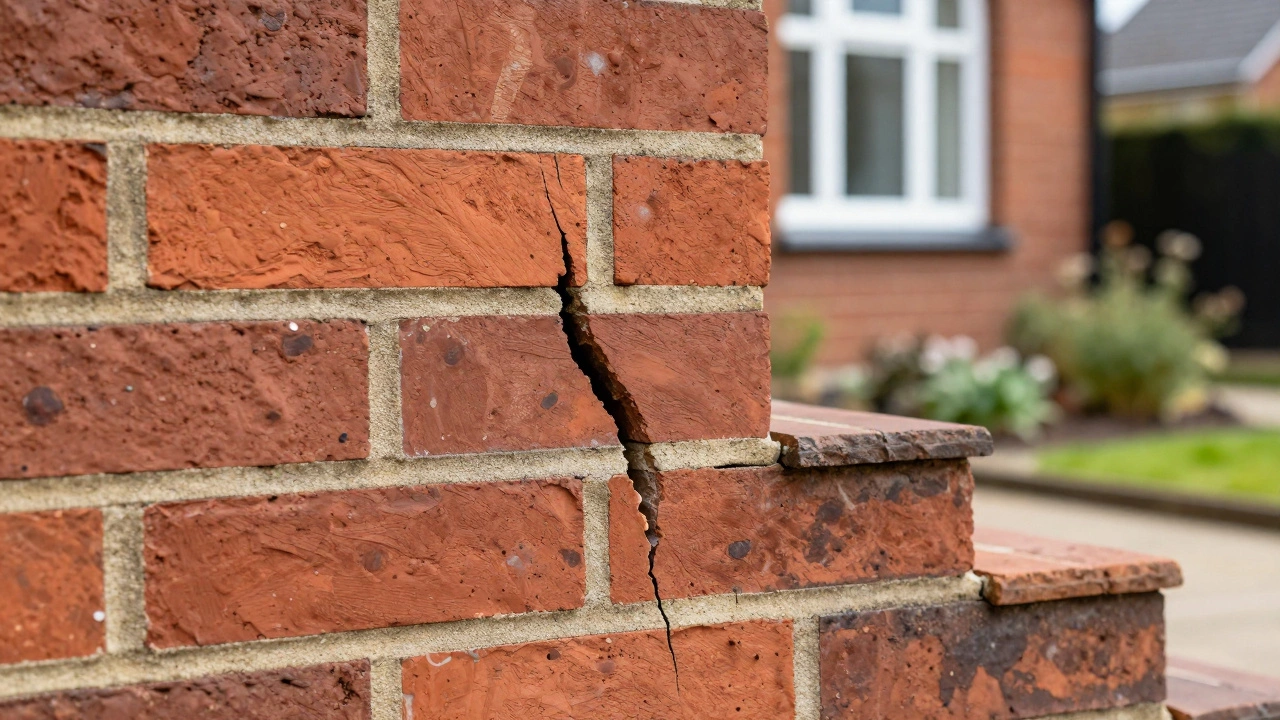
Not every crack in a wall means you need to evacuate. Houses move; it is just physics. But there is a big difference between a cosmetic hairline crack and a structural failure. You need to look for patterns. If you see "stair-step" cracks in your brickwork-where the crack follows the mortar lines like a set of stairs-that is a classic sign of foundation repair is the process of stabilizing and leveling the base of a building to prevent further sinking or shifting. This usually happens when the soil beneath one corner of the house compresses more than others.
Another red flag is the "sticky door" syndrome. If you've always had to shoulder-bump your bedroom door to get it shut, and now it just sticks, your door frame is likely out of square. This means the foundation has shifted enough to warp the wooden skeleton of the house. Horizontal cracks in a basement wall are even more urgent; they often suggest that the soil outside is pushing the wall inward, a phenomenon known as hydrostatic pressure.
The Role of Soil and Water in Foundation Failure
Your house doesn't just decide to sink; the ground beneath it fails first. In many regions, Expansive Soil is the main culprit. This is a type of clay-rich soil that swells up when it's wet and shrinks during droughts. This constant "breathing" creates a tug-of-war with your concrete, eventually snapping it.
Water is the enemy here. When rain pours off your roof and pools right against the foundation, it softens the soil and creates voids. If you have a failed gutter system or a grade that slopes toward the house instead of away from it, you are essentially inviting your house to sink. This isn't just a drainage problem; it's a structural catalyst. Managing the water table around your perimeter is often the first and most important step in any salvage operation.
Common Methods for Saving a Sinking House
Depending on the severity, a contractor will suggest different ways to stop the sinking. You don't always need to tear the house down to the dirt. Here are the most effective ways to bring a house back from the brink.
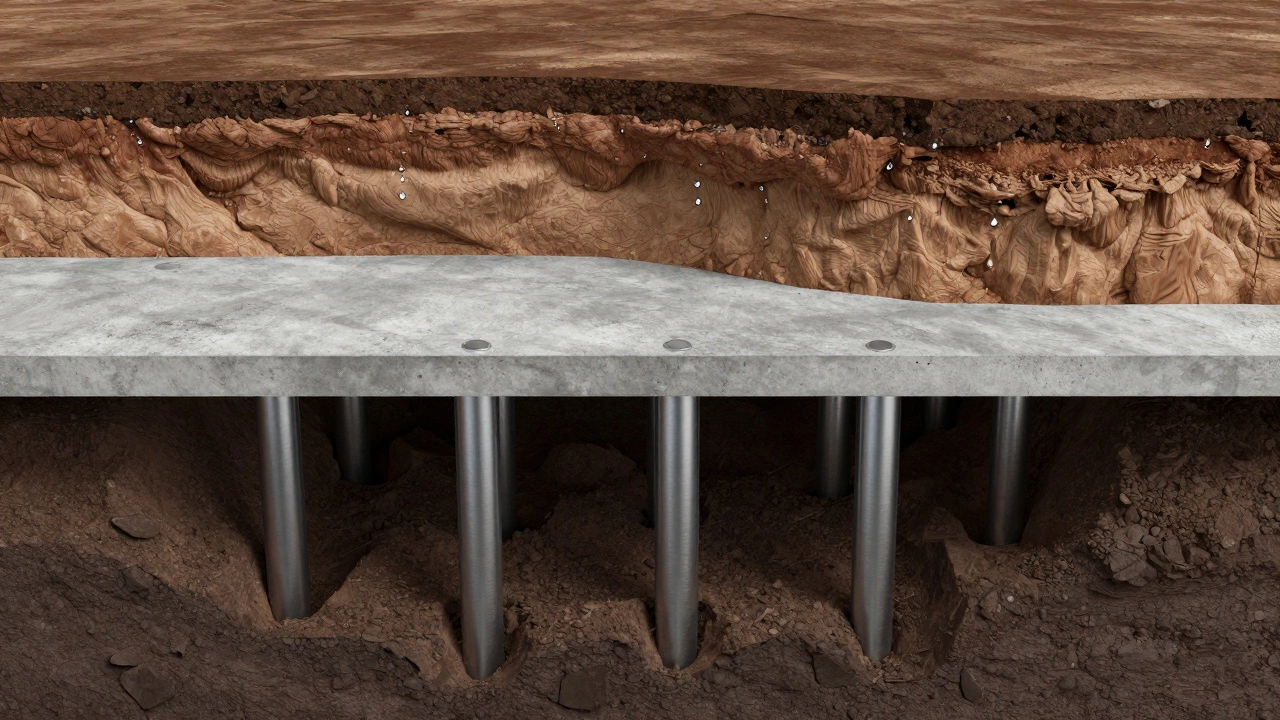
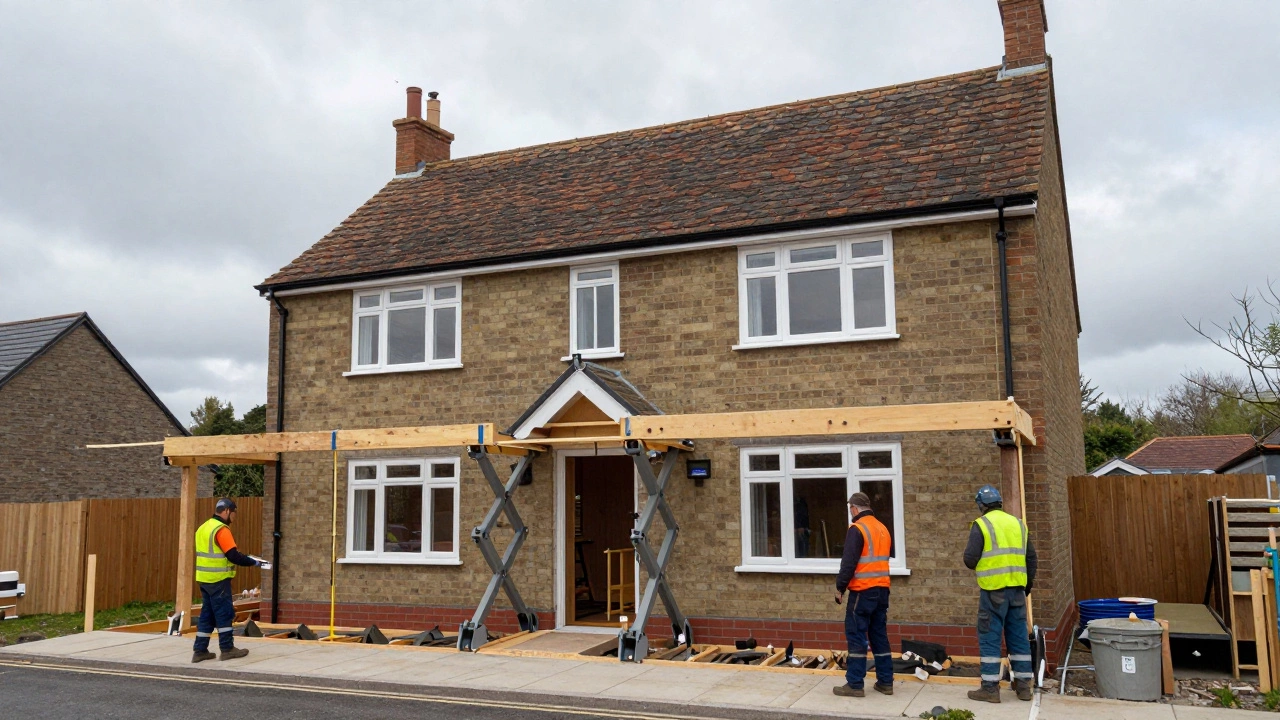
One of the most robust solutions is Underpinning, which is the process of strengthening the foundation of an existing building by extending the foundation depth to more stable soil or rock. If the soil at the current depth is too weak, contractors drive steel piers deep into the earth until they hit bedrock or a load-bearing strata. They then hydraulically lift the house back to its original level. It is a slow, expensive process, but it is the gold standard for permanent stabilization.
For slab-on-grade homes, Slabjacking (or Mudjacking) is a common go-to. This involves drilling small holes through the concrete floor and pumping a slurry of grout or polyurethane foam underneath. The foam expands rapidly, lifting the slab back up. This is much less invasive than underpinning and works great for localized sinking areas.
| Method | Best For | Durability | Invasiveness |
|---|---|---|---|
| Underpinning (Piers) | Severe sinking / Bedrock reach | Permanent | High |
| Slabjacking / Poly-leveling | Concrete slabs / Localized dips | Long-term | Low |
| Wall Anchors | Bowing basement walls | Moderate to High | Medium |
| Drainage Correction | Preventing further movement | Preventative | Low |
Is it Ever Too Late to Save a House?
There is a point where a house becomes "beyond economic repair." This usually happens when the foundation failure has led to the total collapse of the main load-bearing beams or if the house has tilted so far that the internal plumbing and electrical systems are compromised beyond safety limits.
However, even in extreme cases, the structure can often be saved by a Structural Engineer, who is a professional engineer specializing in the analysis and design of structures that support weight. They can determine if the house can be "jacked" up and placed on a completely new foundation. This is an enormous undertaking, but for historic homes or properties in high-value areas, it is a viable path.
If you are looking at a property and see massive, jagged cracks and a roofline that looks like a wave, don't walk away immediately. Instead, get a structural report. Often, the cost of a massive piering job is still cheaper than buying a new home in today's market, especially if the rest of the house is well-maintained.
The Cost of Doing Nothing
Some homeowners try to hide foundation issues with sawdust and joint compound, hoping the house just stops sinking. This is a dangerous gamble. Foundation failure is an accelerating problem. Once the seal is broken, water penetrates deeper into the structure, rotting wooden sills and causing mold to bloom inside walls.
A small crack that costs $1,000 to seal today could turn into a $30,000 underpinning project in three years. More importantly, a house with an unrepaired foundation is nearly impossible to sell. Most mortgage lenders require a structural certification before they will approve a loan for a buyer. If you can't get a loan, you can't sell, leaving you with a property that is losing value every single day.
Step-by-Step Recovery Plan for Homeowners
If you suspect your house is sinking, don't call a repair company first. Call an independent engineer. Repair companies have a vested interest in selling you their specific service (like piers), while an engineer is paid for an unbiased diagnosis.
- Get a Structural Audit: Hire a licensed engineer to map the movement and identify the cause (e.g., soil shrinkage or leaking pipes).
- Fix the Water Source: Install gutters, extend downspouts 5-10 feet away from the house, and regrade your yard so water flows away from the base.
- Choose the Stabilization Method: Based on the engineer's report, decide between piers, slabjacking, or wall anchors.
- Execute the Repair: Hire a contractor who provides a transferable warranty on the work.
- Cosmetic Repair: Only after the house is stabilized should you fix the drywall cracks and repaint. If you fix the paint first, the cracks will just reappear as the house settles further.
How long does a typical foundation repair take?
Most residential repairs, like slabjacking or installing a few piers, can be completed in a few days to two weeks. However, a full house lift or extensive underpinning for a large home can take several weeks or even months depending on the soil conditions and the number of piers needed.
Will foundation repair increase my home's value?
It restores the value rather than increasing it above market rate. A house with a failed foundation has significantly diminished value. By repairing it and providing a certified engineer's report and a warranty, you make the home "bankable" again, allowing you to sell it at full market value.
Can I fix a foundation crack myself?
You can fill cosmetic cracks with epoxy or polyurethane injections, but this is like putting a bandage on a broken leg. If the crack is caused by the house sinking, the fill will just crack again. You must solve the underlying soil or water issue before filling the cracks.
What is the difference between settling and sinking?
Settling is a natural process where a house sinks slightly into the ground over the first few years after construction. Sinking (or subsidence) is an ongoing, uneven movement that creates structural gaps, tilted floors, and cracked walls. Settling is normal; sinking is a problem.
Are steel piers better than concrete piers?
Generally, yes. Steel piers can be driven much deeper into the earth to reach bedrock or stable soil, whereas concrete piers are often limited by the depth they can be poured. Steel piers also allow for hydraulic lifting, which can actually level a house, whereas concrete piers usually only provide stabilization to prevent further sinking.