
What Is the Major Difference Between Residential and Commercial Construction?
 Jan, 18 2026
Construction Type Classifier
This tool helps determine whether your project falls under residential or commercial construction based on key criteria discussed in the article.
Enter your project details above to see a comparison between residential and commercial construction requirements.
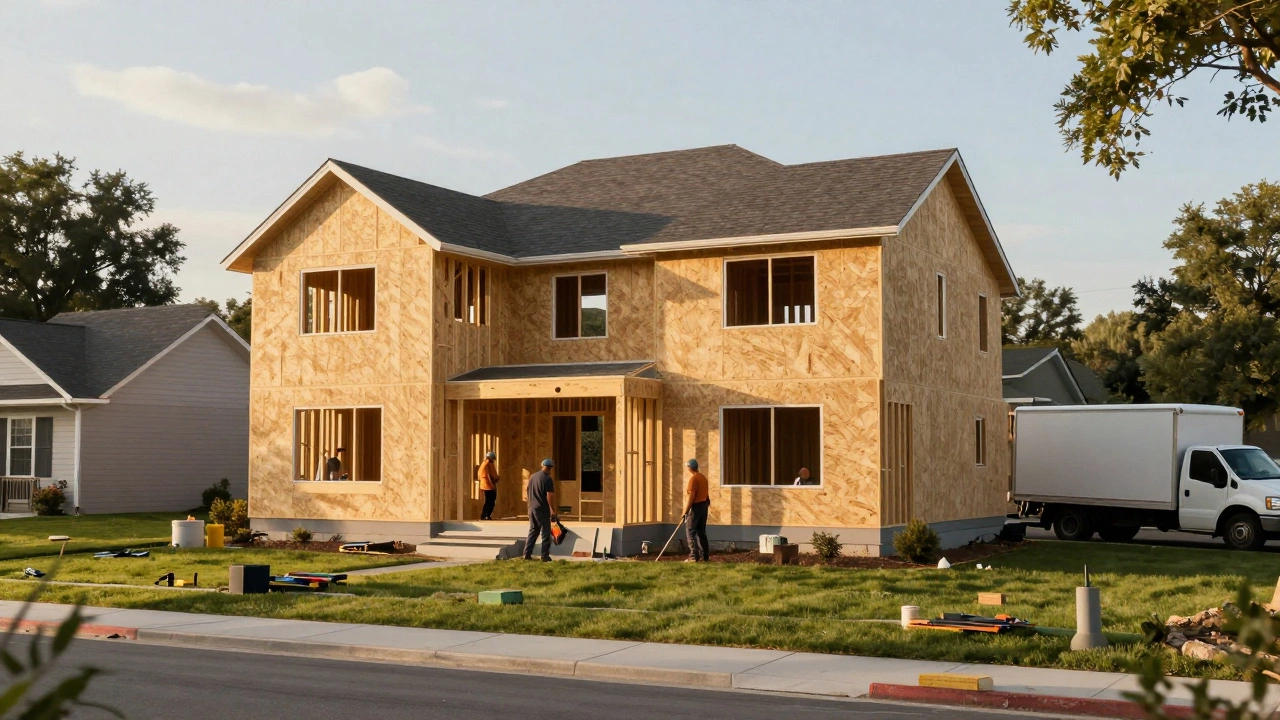
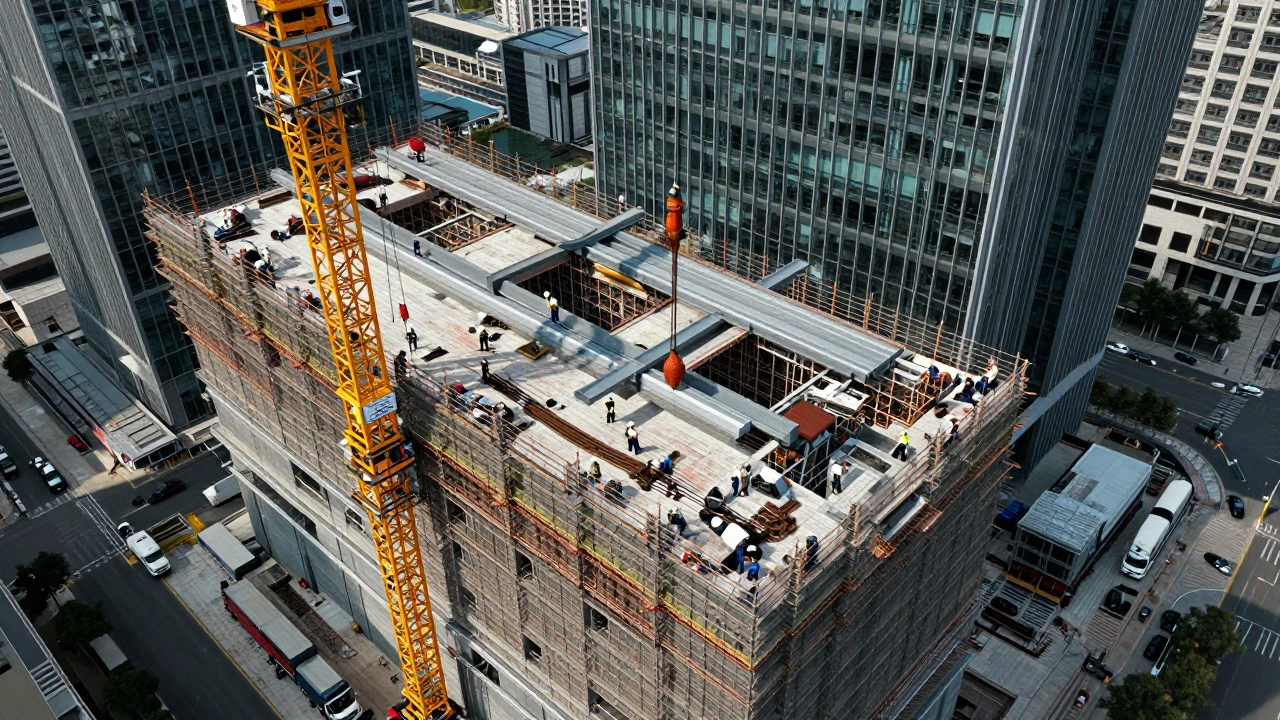
When you see a house being built down the street, it looks pretty straightforward: walls go up, a roof goes on, and soon someone’s moving in with a toaster and a dog. Now picture a 20-story office tower rising in the city center-steel beams, cranes, concrete pours that last days, and workers in hard hats managing dozens of trades. Both are construction. But they’re not the same. The major difference between residential and commercial construction isn’t just size-it’s everything.
Scale and Complexity
Residential construction usually means one or two-story homes, townhouses, or small apartment blocks for families. Most projects involve a handful of trades: framing, plumbing, electrical, drywall, and finish work. A typical single-family home might take 6 to 9 months from permit to keys.
Commercial construction? That’s a whole different ballgame. Think hospitals, hotels, warehouses, retail centers, or office towers. These projects often involve hundreds of workers, dozens of subcontractors, and complex scheduling. A single mid-sized retail building can take 18 to 24 months. And it’s not just about time-it’s about coordination. One delay in the HVAC system can hold up electrical, plumbing, and even interior finishes. There’s no room for guesswork.
Building Codes and Regulations
Residential buildings follow the International Residential Code (IRC), which is straightforward and focused on safety for families. It covers things like stair rise heights, window sizes for emergency exits, and minimum room dimensions. It’s designed to be understood by general contractors and even DIY homeowners.
Commercial buildings follow the International Building Code (IBC), which is far more detailed and strict. Why? Because hundreds or even thousands of people might use the building every day. Fire exits need to be wider, stairwells must be enclosed with fire-rated materials, and elevators have to meet ADA standards with precise load capacities. There are also requirements for seismic resilience, energy efficiency, and accessibility that go way beyond what’s needed for a house.
In Wellington, for example, commercial buildings must meet strict seismic standards because of the region’s earthquake risk. A residential home might need basic bracing. A commercial office building? It needs engineered steel frames, base isolators, and certified structural analysis. One mistake here isn’t just a bad renovation-it’s a safety hazard.
Materials and Design
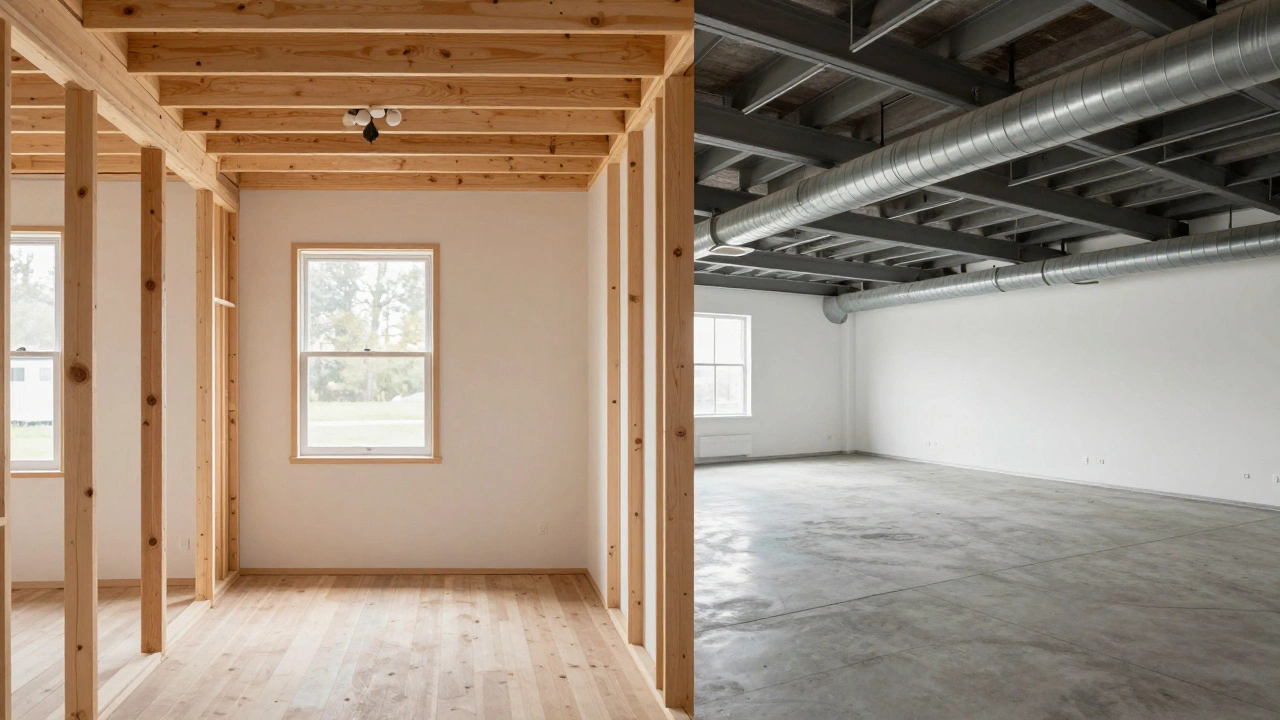
Residential projects use wood framing almost exclusively. It’s cheap, easy to work with, and familiar to most builders. Drywall, vinyl flooring, laminate countertops-these are standard. Aesthetics matter, but durability is secondary to cost and speed.
Commercial buildings? Steel, concrete, and composite materials dominate. You won’t see wood studs holding up a 10,000-square-foot warehouse. Instead, you’ll find structural steel beams, reinforced concrete slabs, and curtain wall systems made of aluminum and glass. These materials handle heavier loads, last longer under constant use, and meet fire ratings that wood simply can’t.
Design priorities are different too. A home is built for comfort: cozy corners, warm lighting, personal touches. A commercial space is built for function: open floor plans for flexibility, high ceilings for HVAC efficiency, durable flooring that can handle rolling carts and heavy foot traffic. The goal isn’t to impress-it’s to operate smoothly for years.
Financing and Project Management
Buying a house? You get a mortgage. Simple. The builder gets paid in stages as milestones are reached. There’s usually one client-the homeowner-who makes decisions on paint colors and cabinet handles.
Commercial projects involve layers of stakeholders: investors, tenants, city planners, insurance companies, and sometimes multiple tenants signing leases before ground is even broken. Financing isn’t a single loan-it’s a mix of equity, construction loans, government grants, and sometimes public-private partnerships. Project managers don’t just coordinate workers; they handle contracts, permits, zoning variances, and risk assessments. One misstep can cost millions.
Change orders in residential work? Maybe swapping a tile color. In commercial work? Changing the location of a load-bearing wall after the slab is poured means tearing out concrete, delaying the entire project, and paying penalties. That’s why commercial projects have detailed blueprints, BIM modeling, and weekly progress meetings with lawyers.
Timeline and Labor
Residential crews are usually small-maybe 5 to 10 people. Many contractors handle multiple homes at once, shifting teams between sites. Work hours are typically 7 a.m. to 5 p.m., with weekends off.
Commercial sites run 24/7 in some cases. You’ll find crane operators working the night shift, concrete trucks pouring at midnight, and electricians running wires while the HVAC team finishes their ductwork. Labor isn’t just more-it’s specialized. You need licensed structural engineers, fire protection specialists, and environmental compliance officers. A residential builder might know how to install a toilet. A commercial contractor needs to know how to design a sewage system that handles 500 people a day.
Permitting and Approvals
Getting a permit for a house? You submit plans, pay a fee, and wait a few weeks. The local building department checks for basic safety compliance. If it’s a simple extension, you might even get approval over the counter.
Commercial permits? That’s a process. You need environmental impact assessments, traffic studies, fire safety certifications, accessibility audits, and sometimes public hearings. In New Zealand, commercial projects must also meet the Building Act 2004 and comply with the New Zealand Building Code. A single building might require approvals from the council, regional authorities, fire services, and even heritage boards if it’s near a historic zone.
And it’s not just one permit-it’s dozens. Electrical, plumbing, mechanical, zoning, signage, stormwater, even noise control during construction. One missing document can stall a project for months.
Long-Term Maintenance and Costs
Residential homes need upkeep-painting, gutter cleaning, roof repairs. But the scale is manageable. A homeowner might spend $2,000 a year on maintenance.
Commercial buildings? Maintenance is a full-time job. HVAC systems need quarterly servicing. Fire alarms must be tested monthly. Elevators require annual inspections. Lighting systems are replaced in phases. A single commercial property can spend $50,000 to $200,000 a year just keeping things running. That’s why commercial owners hire property managers and use preventive maintenance software.
And the cost of failure? A broken boiler in a home is inconvenient. A broken elevator in a 12-story office building? It’s a liability, a lawsuit waiting to happen.
Why This Matters to You
If you’re thinking about building something-whether it’s a backyard studio or a small retail shop-you need to know which category you’re in. Mistaking a commercial project for a residential one can lead to code violations, fines, or even being forced to tear down what you built.
Conversely, if you’re a homeowner looking to add a home office or convert a garage, you might think you’re doing a simple job. But if that space will be used for a business-like a daycare, a salon, or a workshop with clients coming in-you’re crossing into commercial territory. That means stricter codes, higher insurance, and possibly a change in zoning.
The line isn’t always clear. But the consequences of getting it wrong are.