
What Is the Most Expensive Part of a Bathroom Remodel?
 Feb, 1 2026
Bathroom Plumbing Cost Calculator
Plumbing Cost Estimator
Based on your home age, location challenges, and complexity, we'll estimate the plumbing costs for your bathroom remodel.
Estimated Plumbing Costs
Plumbing is the most expensive part of any bathroom remodel - as the article explains, it's not about the fixtures or tiles, but the essential plumbing infrastructure that makes your bathroom functional.
When you’re planning a bathroom remodel, it’s easy to get distracted by fancy tiles, sleek vanities, or that massive freestanding tub you saw on Instagram. But here’s the truth: none of those things are what breaks the bank. The real cost killer? plumbing.
Why Plumbing Costs More Than You Think
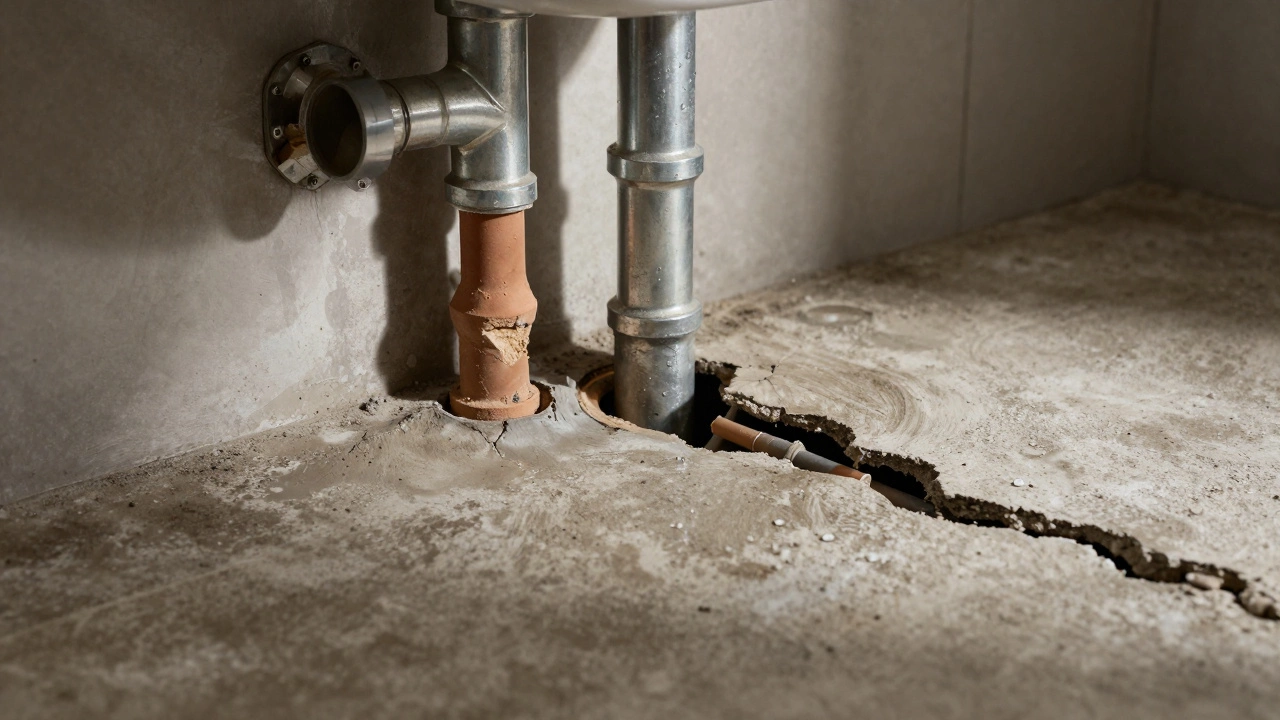
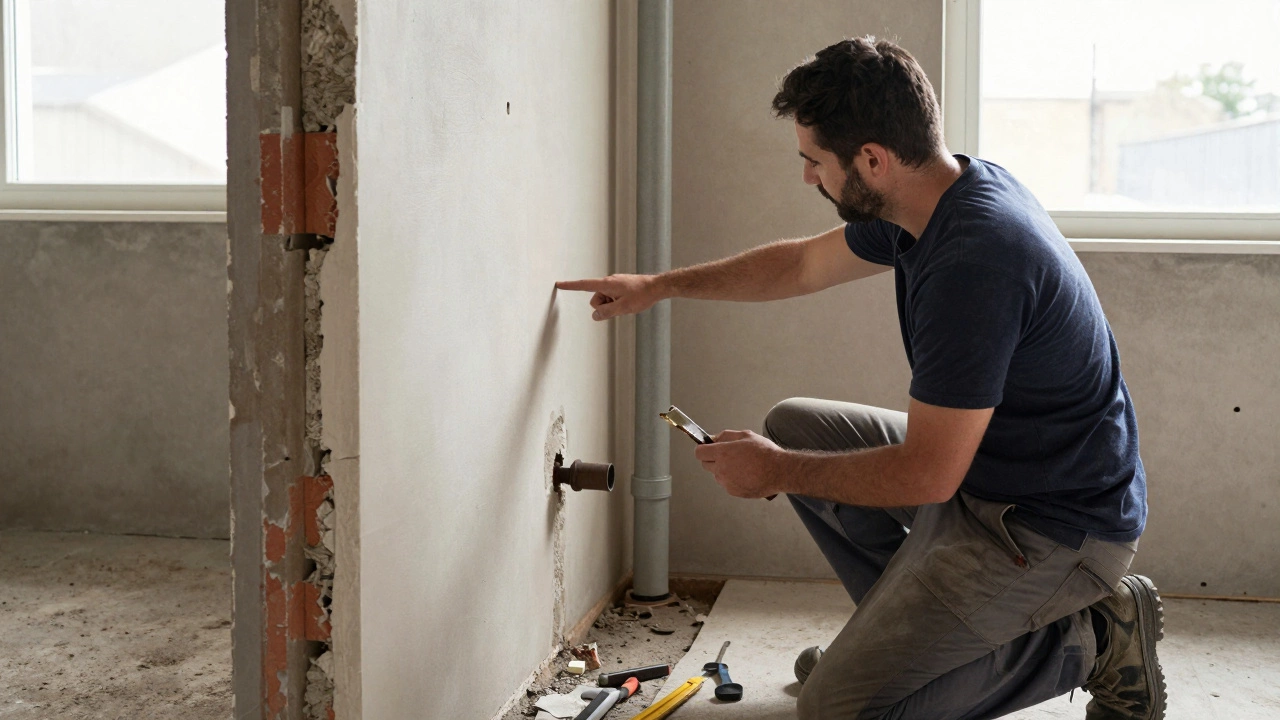
Plumbing isn’t glamorous. You won’t post a photo of it on social media. But it’s the skeleton of your bathroom. Move a sink a foot to the left? That means rerouting water lines and drain pipes. Relocate the shower? You’re dealing with floor joists, waterproofing, and possibly a new vent stack. And if your house is older-say, built before 1990-you’re not just moving pipes. You’re dealing with galvanized steel, cast iron, or even clay drain lines that crumble when you touch them.
In Wellington, where many homes have steep slopes and rocky subsoil, running new pipes often means breaking through concrete slabs or digging trenches under existing flooring. Labor alone can add $1,500 to $4,000 just for access and repair. Then there’s the material: copper piping, PEX tubing, fittings, waterproof membranes, and specialized drains. A full repipe can cost $3,000 to $8,000 depending on complexity.
Fixtures and Finishes Are Surprisingly Affordable
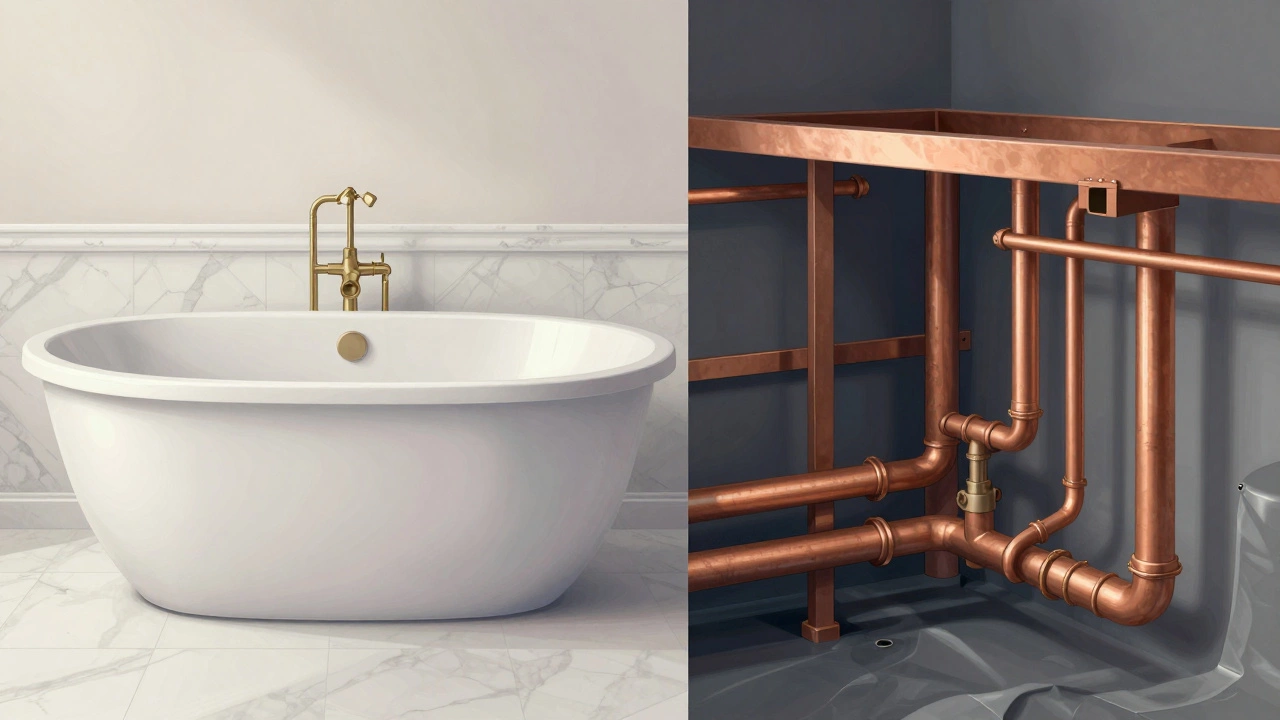
People assume the vanity or the tile is the big expense. But a decent quartz countertop vanity runs $1,200-$2,500 installed. Porcelain tiles? $5-$15 per square foot. Even a high-end freestanding tub? $2,000-$4,000, including delivery and leveling. Compare that to plumbing, and it’s clear: fixtures are the easy part.
Here’s what actually happens: you pick out a $3,000 tub. The contractor says, “Great, we’ll install it.” But then they realize the existing drain is 6 inches off-center. Now you need a new waste line, a new slope, a new vent, and possibly a structural support under the tub. That’s another $2,500 before you even touch the tub itself.
Electrical Isn’t the Big One Either
Yes, adding heated floors, a smart mirror, or a steam shower requires new circuits and GFCI protection. But unless you’re rewiring the whole house, electrical work rarely pushes past $1,500-$2,500. Most bathroom remodels just need one or two new outlets and a switched light circuit. Even a full electric shower system with its own dedicated line usually costs under $3,000 total.
Plumbing, on the other hand, touches everything. It’s tied to the structure, the drainage, the water pressure, the sewage system. One mistake-and you’re dealing with mold, rot, or worse. That’s why plumbers charge more. They’re not just installing pipes. They’re preventing disasters.
What About Tile and Flooring?
Tile gets blamed a lot. And sure, high-end natural stone or custom mosaic patterns can cost $20-$50 per square foot. But even at $40/sq.ft. for a 60-square-foot bathroom, that’s $2,400. Add labor? Maybe another $1,800. Total: $4,200.
Now compare that to a full plumbing overhaul: $5,000-$9,000. Tile is expensive, yes-but it’s optional. You can use vinyl plank or ceramic for a fraction of the cost. Plumbing? Not optional. If it’s broken, outdated, or poorly routed, your bathroom won’t work. No matter how beautiful the tile is.
Hidden Costs That Multiply the Price
Here’s where things get worse. You’re replacing the tub. You pull it out. And you find:
- Rot in the subfloor from a 15-year-old leak
- Mold behind the wall where the shower valve was
- Old galvanized pipes that won’t connect to modern PEX
- A drain line that slopes the wrong way
These aren’t rare. In Wellington homes built in the 70s and 80s, they’re the norm. Fixing hidden damage adds $2,000 to $7,000 to your bill. And guess what? You didn’t budget for it. That’s why so many bathroom remodels go 30-50% over budget.
That’s not the contractor’s fault. It’s the nature of working inside walls and under floors. You can’t see it until you tear it out. And when you do, the plumbing is almost always the source of the problem.
How to Avoid Getting Screwed
Here’s what works:
- Keep fixtures in the same spot. Move the toilet, sink, or shower even a few inches, and you’re adding $1,500+ to the bill.
- Don’t upgrade to a steam shower unless you’re prepared for $5,000+ in plumbing and electrical.
- Ask for a “rough-in” estimate before choosing fixtures. A good contractor will show you where pipes are now and how much it’ll cost to move them.
- Get a moisture test done before demolition. If there’s rot or mold, fix it before you pay for new tile.
- Use PEX instead of copper. It’s cheaper, faster to install, and doesn’t corrode.
One client in Newtown spent $18,000 on a bathroom remodel. $12,000 of it was plumbing and structural repairs. The tile? $2,000. The vanity? $1,200. The mirror? $150. The rest? Hidden damage and pipe relocation.
Bottom Line: It’s Never About the Look
People think a bathroom remodel is about aesthetics. It’s not. It’s about function. And function is controlled by pipes, drains, and water flow. You can have the most beautiful bathroom in the world, but if the water doesn’t drain, the toilet overflows, or the shower leaks into the ceiling below-it’s useless.
Plumbing isn’t sexy. But it’s the only thing that makes your bathroom work. And that’s why it’s the most expensive part. Skip the marble countertop. Keep the fixtures where they are. Invest in good pipes. Your future self-and your downstairs neighbor-will thank you.