
What Is Type 5 Building Construction? Understanding Fire-Rated Wood Frame Structures
 Mar, 9 2026
Type 5 Construction Fire Rating Calculator
Type 5 Building Calculator
Calculate the appropriate fire resistance rating for your Type 5 construction project based on building type, height, and occupancy.
Results will appear here after calculation.
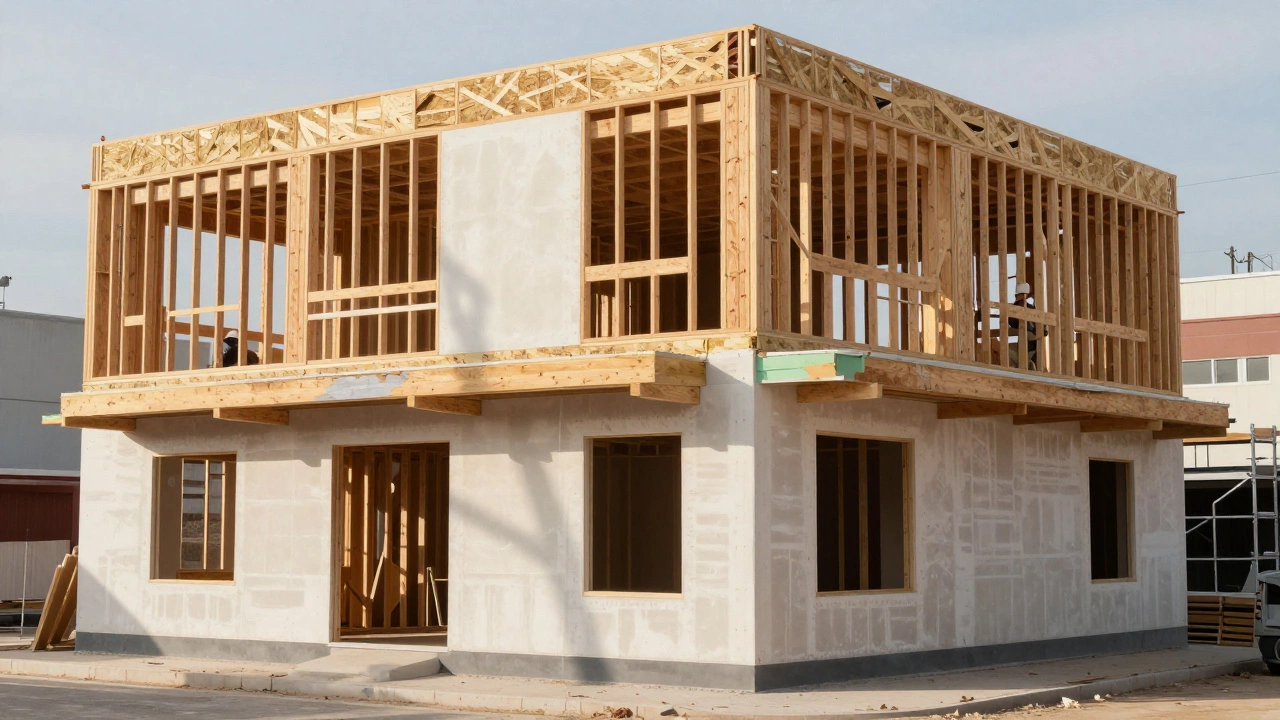
When you walk into a two-story office building, a strip mall, or a small apartment complex, you're likely standing inside a Type 5 building. It’s the most common form of construction in the U.S. for low-rise commercial and residential structures - and yet, most people don’t know what it actually means. Type 5 construction isn’t just about using wood. It’s a specific set of rules defined by building codes that dictate how materials are used, how fire spreads, and how long a structure can hold up under extreme heat.
What Exactly Is Type 5 Construction?
Type 5 construction is defined by the International Building Code (IBC) as a building where the structural elements - walls, floors, and roofs - are made mostly of wood or other combustible materials. Unlike steel or concrete buildings, Type 5 structures don’t rely on non-combustible framing. Instead, they use dimensional lumber, engineered wood products like I-joists, and sometimes light-gauge steel for framing. The key difference between Type 5 and other types isn’t the material itself, but how it’s protected and tested.
Here’s the catch: just because something is made of wood doesn’t mean it’s automatically Type 5. Type 5 buildings must meet strict fire-resistance ratings. For example, exterior walls must resist fire for at least one hour. Interior partitions and floor assemblies need to hold up for 30 to 60 minutes depending on occupancy and building height. This isn’t about making wood fireproof - it’s about slowing down how fast fire spreads so people can escape and firefighters can respond.
Why Type 5 Is So Common
If you’ve ever looked at a new retail center or a suburban apartment complex, you’ve seen Type 5 in action. It dominates because it’s fast, affordable, and flexible. A typical 40,000-square-foot retail building built with Type 5 construction can be framed in under three weeks. Labor costs are lower than steel or concrete. Materials are easy to source - you can buy 2x4s at any home improvement store. That’s why over 70% of new commercial buildings under five stories in the U.S. use Type 5 framing.
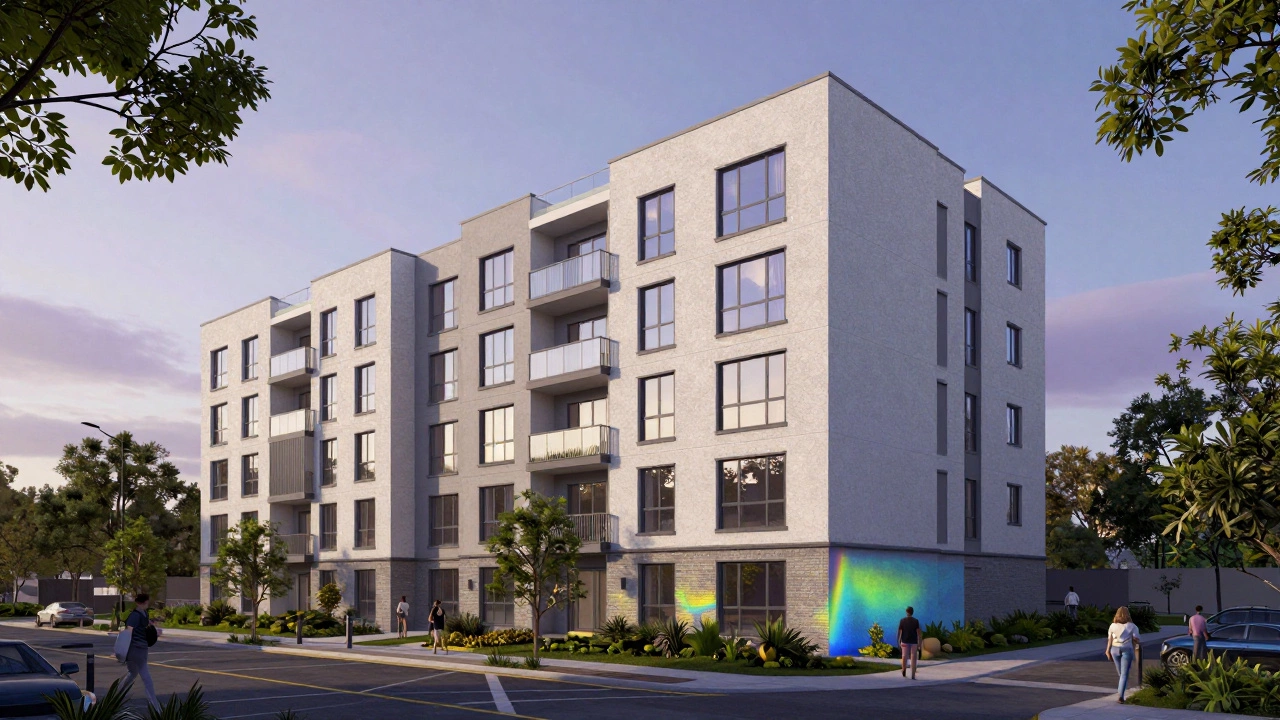
It’s not just small businesses. Major chains like Walmart, Target, and Starbucks use Type 5 construction for their smaller-format stores. Even multi-family housing - think four- to six-unit apartment buildings - relies on this method. In fact, the 2021 IBC expanded Type 5 to allow buildings up to six stories high in certain conditions, as long as sprinklers are installed and fire-resistant materials are used in critical areas.
Type 5A vs Type 5B: The Fire Rating Split
Type 5 isn’t one-size-fits-all. It’s split into two subcategories: Type 5A and Type 5B. The difference comes down to fire resistance.
- Type 5A requires one-hour fire resistance for exterior walls, roof, and floor assemblies. This version is used in buildings where public safety is a bigger concern - like schools, medical clinics, or mixed-use buildings with retail on the ground floor and apartments above.
- Type 5B only needs 30-minute fire resistance for the same elements. It’s common in small retail shops, standalone offices, or warehouses where occupancy is low and fire risk is considered minimal.
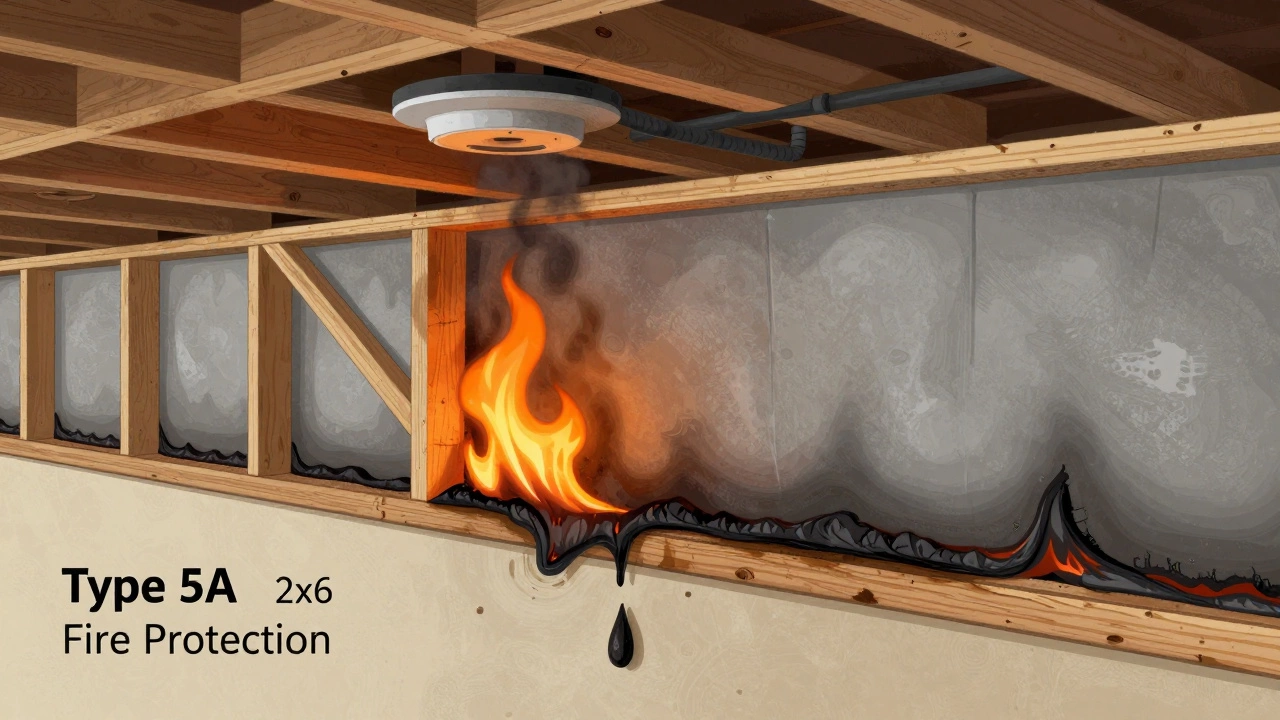
The choice between 5A and 5B affects everything: material thickness, insulation requirements, and even the number of exits needed. A Type 5A building might use 2x6 exterior studs with gypsum board on both sides. A Type 5B might get away with 2x4s and single-layer drywall. These small changes can add up to thousands of dollars in material cost - and sometimes make the difference between approval and rejection from the building inspector.
How Fire Protection Actually Works in Wood Buildings
Many people assume wood burns fast. That’s true - but only if it’s left exposed. In Type 5 construction, wood is protected. Gypsum drywall, fire-retardant-treated lumber, and intumescent coatings all play a role. Drywall, for instance, doesn’t stop fire - it slows it. When exposed to heat, the water inside the drywall turns to steam, absorbing energy and keeping the wood underneath cooler for longer. That’s why a wall covered in 5/8-inch Type X drywall can hold back fire for up to 90 minutes.
Engineered wood products like cross-laminated timber (CLT) are also gaining traction in Type 5 buildings. These materials char on the outside during a fire, forming a protective layer that shields the inner wood from burning. This charring effect is actually predictable - engineers can calculate how fast the char will spread and design the structure accordingly. It’s not magic. It’s science.
Where Type 5 Falls Short
Type 5 construction isn’t perfect. It has limits. In high-wind zones, like coastal areas or tornado-prone regions, wood frames can be more vulnerable than steel. A 2023 study from the National Institute of Standards and Technology (NIST) found that Type 5 buildings in hurricane zones had a 30% higher failure rate during Category 3+ storms compared to steel-framed structures. That’s why many local codes now require additional bracing or shear walls in Type 5 buildings in these areas.
Another issue is energy efficiency. Wood framing creates thermal bridges - places where heat escapes through the studs. That’s why modern Type 5 buildings often use continuous insulation (CI) on the exterior. Without it, you’re losing 20-30% of your heating and cooling efficiency. Many builders now combine Type 5 framing with exterior foam sheathing and air-sealing techniques to meet modern energy codes.
Type 5 vs Other Construction Types
Here’s how Type 5 stacks up against the other four main construction types:
| Type | Materials | Fire Resistance | Typical Use | Cost (per sq. ft.) |
|---|---|---|---|---|
| Type 1 | Steel, concrete | 2-4 hours | Tall buildings, hospitals, skyscrapers | $120-$200 |
| Type 2 | Steel, concrete (no insulation) | 1-2 hours | Warehouses, big-box stores | $80-$130 |
| Type 3 | Masonry walls, wood roof | 1 hour (walls), 30 min (roof) | Strip malls, older storefronts | $70-$110 |
| Type 4 | Heavy timber | 1-2 hours (charring protection) | Historic buildings, high-end retail | $100-$180 |
| Type 5 | Wood, light-frame | 30-60 min (depending on 5A/5B) | Offices, apartments, small retail | $60-$100 |
As you can see, Type 5 sits at the bottom of the cost and fire-resistance scale - but it’s not weak. It’s optimized. It’s the right tool for the job when you need speed, affordability, and enough safety to meet code.
What’s Changing in 2026?
Building codes evolve. In 2024, the IBC updated rules for Type 5 construction to allow taller buildings - up to six stories - if sprinklers are installed throughout and exterior walls use non-combustible cladding. This change was driven by housing shortages and the push for more affordable apartments in urban areas.
Another shift? Fire sprinklers are now required in almost all new Type 5 buildings, even single-story retail. This wasn’t always the case. Before 2022, small shops under 5,000 square feet didn’t need them. Now, they do. The result? Fewer fires, faster evacuations, and lower insurance premiums for owners.
Also, more cities are requiring Type 5 buildings to include energy modeling reports. That means you can’t just slap up a wood frame and call it done. You have to prove it meets efficiency standards - which is pushing builders toward better insulation, tighter seals, and more efficient windows.
Final Takeaway
Type 5 construction isn’t the most glamorous or the most durable. But it’s the most practical. It’s how small businesses grow, how housing gets built quickly, and how communities expand without breaking the bank. It’s not about cutting corners - it’s about smart engineering. When you understand what’s behind the drywall and the studs, you see that Type 5 isn’t just wood. It’s a system - one that balances safety, cost, and speed better than almost any other method out there.
Is Type 5 construction safe in a fire?
Yes, when built to code. Type 5 buildings use fire-resistant materials like gypsum drywall and fire-retardant-treated wood to slow fire spread. Exterior walls must resist fire for at least 30 minutes (Type 5B) or up to one hour (Type 5A). Sprinklers are now required in most new constructions, which dramatically improves safety. The goal isn’t to stop fire entirely - it’s to give people time to escape and firefighters time to respond.
Can you build a Type 5 building taller than five stories?
Yes - but only under strict conditions. The 2021 IBC allows Type 5 construction up to six stories if the building has a full sprinkler system, non-combustible exterior cladding (like brick, stucco, or metal), and fire-rated interior partitions. Some states have even stricter rules. Always check local codes - what’s allowed in Texas might not fly in California.
Why do insurance companies prefer Type 5 buildings?
They don’t - not always. Older Type 5 buildings without sprinklers or proper insulation can have higher premiums. But modern Type 5 buildings with sprinklers, fire-rated walls, and energy-efficient designs often qualify for lower rates. Insurance providers use building codes as a baseline. If a structure meets or exceeds current standards, it’s seen as lower risk. That’s why retrofitting old Type 5 buildings with sprinklers can cut insurance costs by 15-25%.
Are Type 5 buildings energy efficient?
Not by default. Traditional wood framing creates thermal bridges that let heat escape. But modern Type 5 buildings fix this with continuous insulation on the outside, air-sealing techniques, and high-performance windows. Builders who use these methods can meet or exceed ENERGY STAR standards. The key is design - a Type 5 building can be as efficient as a steel-framed one if built right.
Can I convert an old Type 3 building into a Type 5 structure?
Not directly. Type 3 buildings have masonry walls and wood roofs - they’re structurally different. You can’t just remove the brick and replace it with wood studs. To convert, you’d need to demolish and rebuild from the ground up. However, you can upgrade an existing Type 3 building with Type 5-style interior framing for renovations, as long as the original structure remains intact. Always consult a structural engineer before making changes.