
What Is Type C Construction? A Clear Breakdown for Builders and Developers
 Mar, 22 2026
Type C Construction Eligibility Calculator
Is Your Project Eligible for Type C Construction?
This calculator determines if your commercial building qualifies for Type C construction based on IBC standards and New Zealand requirements.
Type C Construction Eligibility
Your project will be evaluated based on New Zealand building code requirements
When you hear the term type C construction, it doesn’t mean a brand of concrete or a new tool on site. It’s a classification system used by building codes to define how a structure is built, what materials are allowed, and how it’s expected to perform in a fire. If you’re involved in commercial building - whether you’re a contractor, developer, or property owner - understanding type C construction isn’t optional. It’s the difference between passing inspection and facing costly delays.
What Exactly Is Type C Construction?
Type C construction is one of the five main building construction types defined in the International Building Code (IBC). It’s specifically for buildings with limited fire resistance. Think of it as the middle ground: not as flammable as type D, but not as fire-resistant as type A or B. In simple terms, type C means the structure has some fire protection built in, but not enough to survive a full-blown fire for hours.
This classification is based on three things: the materials used in walls, floors, and ceilings; how long those materials can hold up under fire; and the building’s intended use. Type C is most commonly used for low-rise commercial buildings like small retail shops, auto repair garages, storage facilities, and light industrial spaces.
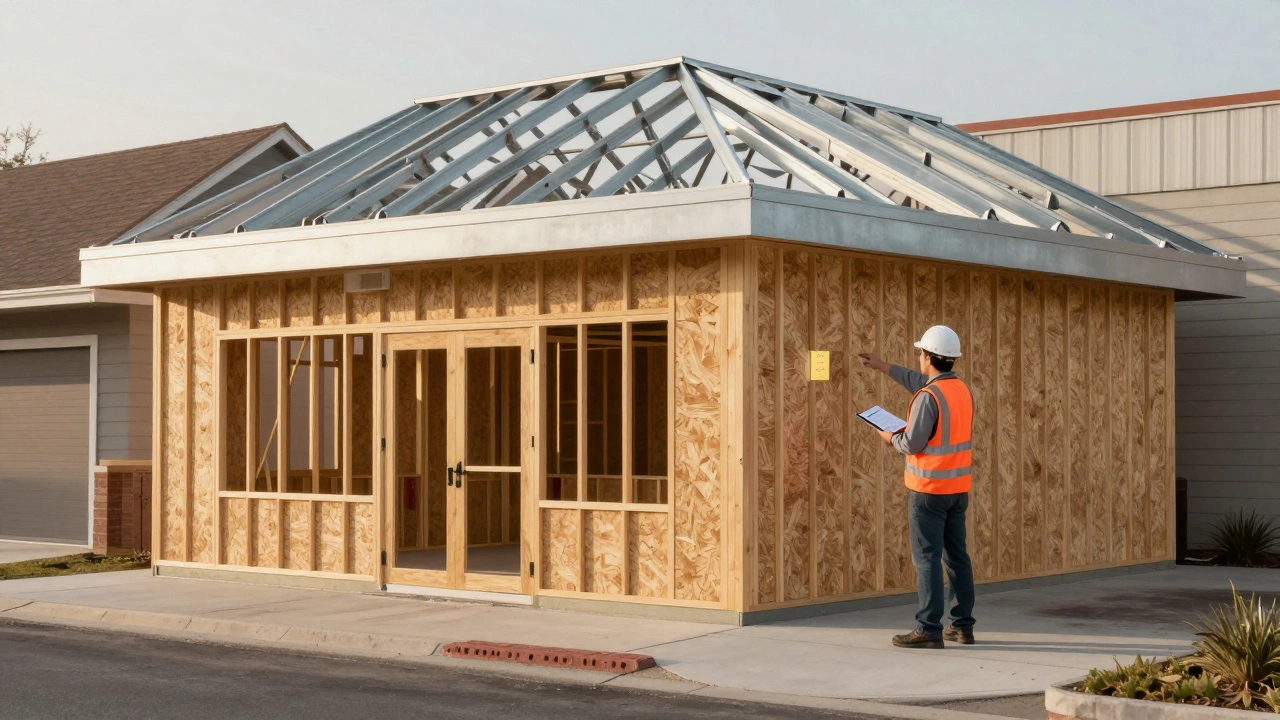
For example, if you’re building a 3,000-square-foot hardware store in a suburban strip mall, you’ll likely fall under type C. The walls might be wood-framed with gypsum board, the roof could be lightweight steel trusses, and the floor might be wood joists with a concrete slab. None of these are fireproof, but they meet the minimum code requirements for non-residential buildings with limited occupancy.
How Type C Compares to Other Construction Types
Building codes group structures into five types, each with different fire performance standards. Here’s how type C stacks up:
| Type | Fire Resistance | Common Materials | Typical Uses |
|---|---|---|---|
| Type A | High (3+ hours) | Reinforced concrete, steel with fireproofing | Hospitals, high-rises, schools |
| Type B | Medium (2 hours) | Steel frame, fire-treated wood | Middle-income apartments, office buildings |
| Type C | Low (1 hour) | Wood framing, gypsum board, lightweight steel | Small retail, garages, storage units |
| Type D | Very Low (less than 30 minutes) | Unprotected wood, lightweight materials | Temporary structures, sheds, carports |
| Type E | None | Combustible materials with no fire rating | Unpermitted structures, some agricultural buildings |
Type C sits right in the sweet spot for small commercial projects. It’s cheaper than type A or B, but still meets safety standards for buildings where people aren’t staying overnight or gathering in large numbers. A type C building can handle a fire for about an hour before structural integrity is compromised. That’s enough time for evacuation and fire department response in most small-scale scenarios.
Where You’ll See Type C Construction in Practice
You don’t need to be an architect to spot type C construction. Look around your local business district. The corner convenience store? Type C. The small mechanic shop with the wooden roof and drywall walls? Type C. The storage unit complex with metal studs and vinyl siding? Also type C.
In New Zealand, where building codes align closely with the IBC, type C is the go-to for commercial buildings under 1,000 square meters. A bakery in Lower Hutt, a laundromat in Tauranga, or a small gym in Nelson - all likely type C. These buildings don’t require heavy steel beams or thick concrete walls. They use standard framing techniques that are familiar to most builders.
The key is occupancy. Type C is not allowed for buildings where large crowds gather, like theaters or restaurants with more than 50 seats. It’s also not permitted for buildings over three stories unless there’s an automatic sprinkler system. That’s because the code assumes that if you’re putting more people or height into a structure, you need more protection.
Why Type C Matters for Your Project Budget
Choosing type C construction can save you anywhere from 15% to 30% compared to type A or B. Why? Because you’re not using expensive fire-rated materials. No need for fireproofed steel columns. No thick concrete slabs. No specialized insulation.
Instead, you use:
- Wood studs (2x4 or 2x6) for walls
- Standard gypsum board (½-inch or ⅝-inch) on walls and ceilings
- Wood or light-gauge steel joists for floors and roofs
- Basic asphalt shingles or metal roofing
These are the same materials used in residential construction. That means labor is more readily available, and materials are easier to source. In Wellington, where skilled tradespeople are in high demand, using type C can cut your build time by weeks.
But there’s a trade-off. Type C buildings are more vulnerable to fire damage. Insurance premiums for type C structures are typically 10-20% higher than for type A. And if you ever want to convert it into a restaurant or daycare center, you’ll need to upgrade the entire structure - which can cost as much as rebuilding.
What Happens If You Build Type C Wrong?
Building code inspectors don’t guess. They check. Every wall, every joist, every fire-rated assembly. If your type C building doesn’t meet the 1-hour fire resistance standard, you’ll get a stop-work order. No exceptions.
Common mistakes include:
- Using ½-inch drywall instead of ⅝-inch on walls that need fire rating
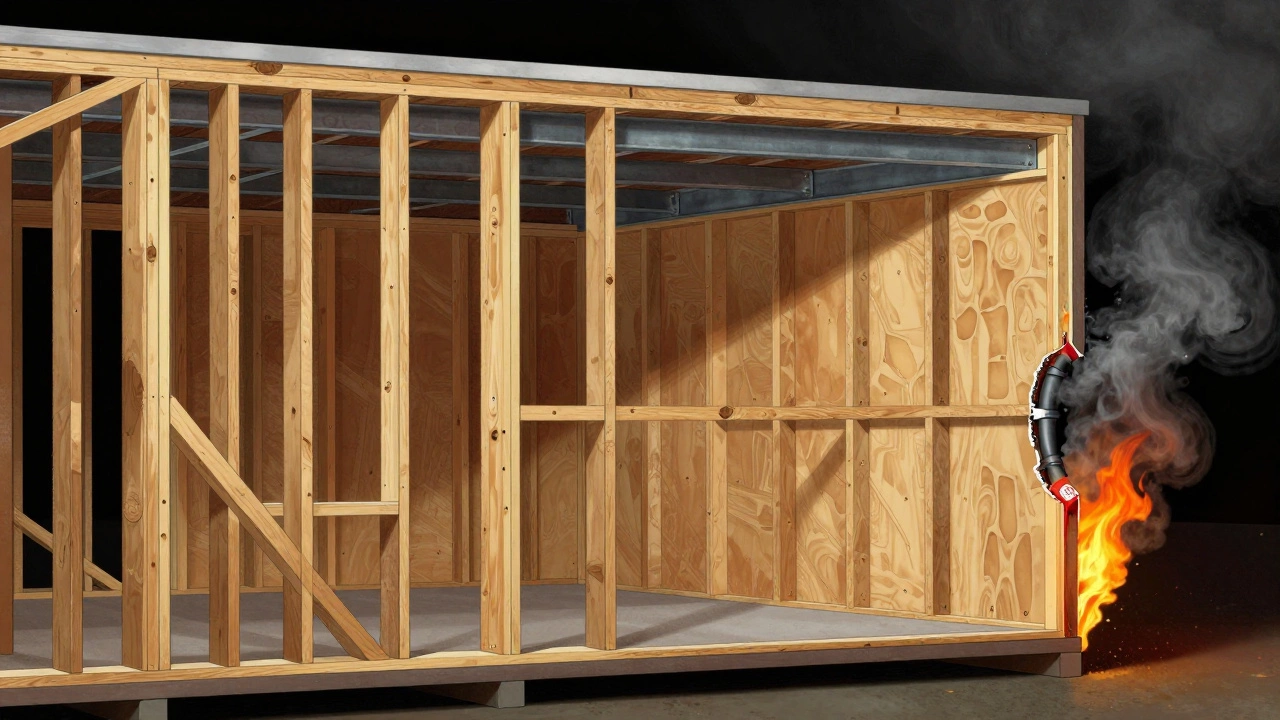
- Skipping fire-stopping in penetrations (like pipes or electrical conduits going through walls)
- Using untreated wood in load-bearing walls
- Installing non-rated doors in fire-rated partitions
One contractor in Christchurch learned this the hard way. They built a small retail space using standard residential framing, assuming it would pass. The inspector flagged 14 violations. The project sat idle for six weeks while they rewired, re-insulated, and replaced doors. The delay cost them $37,000 in lost rent and labor penalties.
Always get your plans reviewed by a registered building designer before breaking ground. A $500 plan check saves you $50,000 in rebuilds.
When Type C Isn’t Right for You
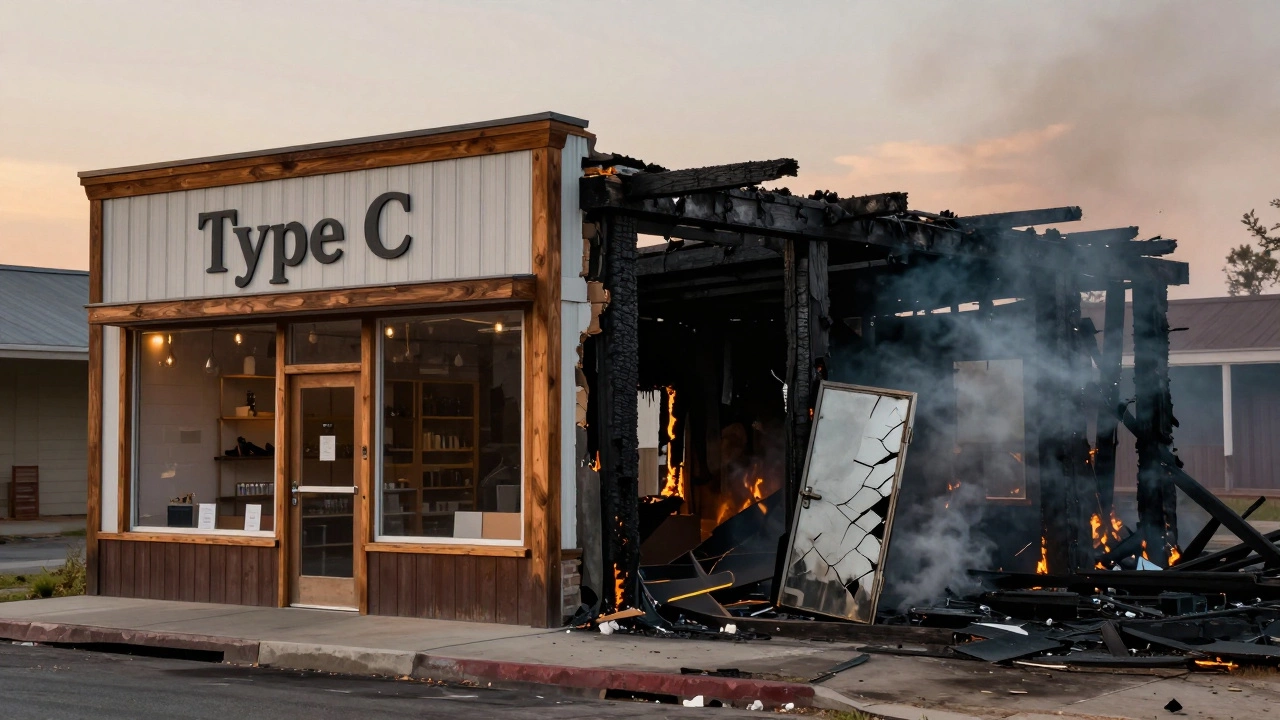
Type C is great - until it isn’t. Here are situations where you should skip it:
- You’re building a restaurant with more than 50 seats - go type B or A
- You plan to add a second story later - type C limits height
- You’re in a high-fire-risk zone like near bushland - type A with sprinklers is safer
- You want to lease to a tenant who needs high-end insurance - many policies require type B or higher
If you’re unsure, ask yourself: Will people be sleeping here? Will there be more than 100 people at once? Is this building part of a larger complex with shared walls? If you answered yes to any of these, type C is probably too risky.
Final Thoughts: Type C Is Practical, Not Perfect
Type C construction isn’t glamorous. It won’t make headlines. But it’s the backbone of small commercial development. It’s what lets a local entrepreneur open a coffee shop without needing a $1 million budget. It’s what keeps strip malls, repair shops, and storage units built and operating.
Just remember: type C is a code classification, not a design philosophy. It gives you flexibility - but not freedom. Follow the rules. Use the right materials. Don’t cut corners on fire stops or door ratings. Because when fire comes, it doesn’t care if you saved $10,000 on drywall.
Is type C construction legal in New Zealand?
Yes, type C construction is fully legal in New Zealand under the Building Code, which aligns with the International Building Code. It’s commonly used for small commercial buildings like retail stores, garages, and storage facilities under 1,000 square meters. As long as the design meets the 1-hour fire resistance requirement and occupancy limits, it passes inspection.
Can you convert a type C building into a restaurant?
You can, but it’s rarely practical. Restaurants with more than 50 seats require type B or A construction due to higher occupancy and fire risk. Converting a type C building means upgrading walls, floors, and ceilings to meet 2-hour fire ratings, installing sprinklers, and replacing doors and exits. In most cases, it’s cheaper to build new.
Does type C construction require sprinklers?
Not always, but it depends on size and use. In New Zealand, sprinklers are required if the building exceeds 500 square meters or has more than 100 people. For small retail or storage under that limit, sprinklers are optional. However, adding them can lower insurance costs and increase resale value.
How long does a type C building last?
With proper maintenance, a type C building can last 50-70 years. The materials - wood framing, drywall, and steel roofing - are durable, but they’re more vulnerable to moisture, pests, and fire than concrete or steel. Regular inspections, pest control, and roof maintenance are critical. Many type C buildings fail not from age, but from neglect.
Is type C construction cheaper than residential construction?
It’s usually about the same cost per square meter. Type C uses the same materials as a high-end home: wood framing, drywall, insulation, and roofing. The difference is in the design standards - commercial buildings need wider doors, better exits, and fire-rated assemblies. Labor costs are similar, but commercial permits and inspections add 5-10% to the total.