
Choosing the Right Commercial Property: A Guide for Investors and Builders
 Apr, 27 2026
Commercial Property Investment Matcher
Select the factors that best describe your investment goals to see which property type fits your profile.
Recommended Property Type: -
MatchWhy this fits you:
-
Key Takeaways for Property Selection
- Industrial properties offer the lowest maintenance and most stable long-term leases.
- Retail provides the highest potential for growth but carries the most risk.
- Office spaces are currently volatile due to the shift toward remote work.
- Multi-family residential is the safest bet for consistent occupancy.
- Mixed-use developments diversify risk by combining different property types.
The Heavy Hitter: Industrial Real Estate
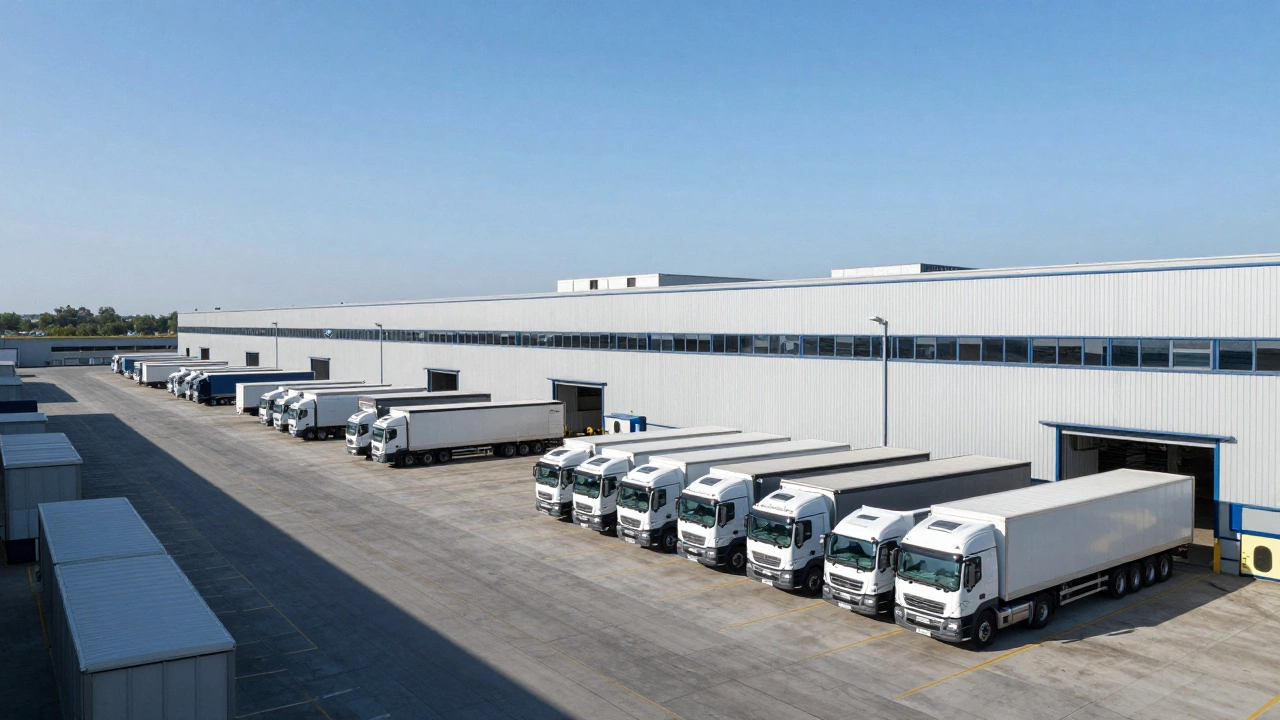
If you want a property that essentially runs itself, look at Industrial Real Estate is a broad category of property used for the production, storage, and distribution of goods. We're talking about warehouses, distribution centers, and light manufacturing plants. The beauty of industrial is the simplicity. The tenants usually handle the interior fit-outs, and they stay for years because moving a massive warehouse of inventory is a logistical nightmare.
Take a look at the rise of e-commerce. Every package arriving at a doorstep had to sit in a distribution center first. This has created a massive demand for "last-mile" logistics hubs-smaller warehouses located closer to city centers. These properties often use Triple Net Leases (NNN), where the tenant pays for insurance, taxes, and maintenance. This means your profit margin is incredibly predictable. If you have a warehouse with 20-foot ceilings and a loading dock, you've got an asset that's easy to maintain and hard for a tenant to leave.
The High-Risk, High-Reward Play: Retail Space
Retail is the flashy sibling of commercial property. It's where you find Retail Space, which includes everything from a standalone pharmacy to a massive shopping mall. The appeal here is the potential for "percentage rent," where you get a cut of the tenant's gross sales. If your tenant becomes the next big fashion trend, you make a killing.
But here's the catch: retail is volatile. A change in consumer habits or a new competitor opening across the street can leave you with a vacant storefront overnight. To survive in retail, you need to focus on "essential services." Think medical clinics, grocery stores, or nail salons. These are businesses people visit regardless of whether the economy is booming or crashing. When building retail, flexibility is key. Designing a space with modular walls allows you to pivot from a small boutique to a larger franchise without tearing down the whole structure.
The Evolving Landscape: Office Properties
For decades, Office Properties were the gold standard. You build a glass tower, sign a 10-year lease with a law firm, and collect checks. But the world changed. The shift toward hybrid work has left many city centers with "zombie buildings"-offices that are technically occupied but empty of people.
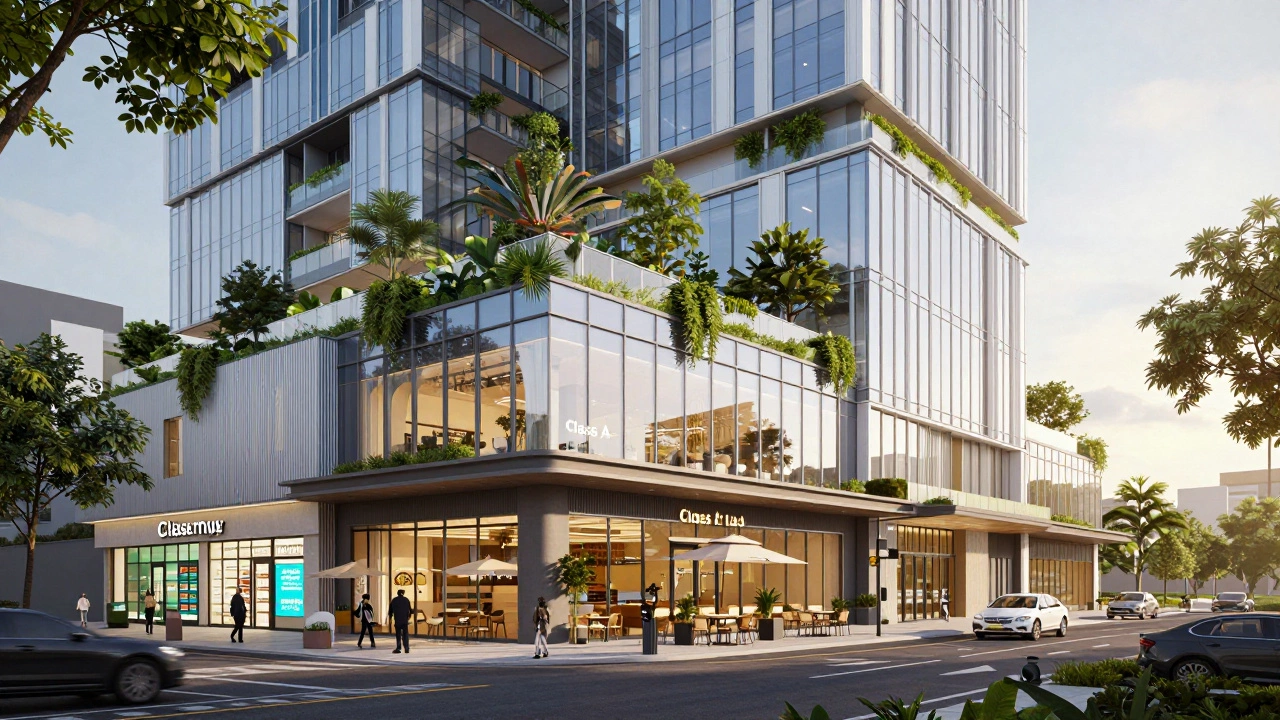
If you're going into offices now, you can't just build a sea of cubicles. The demand has shifted toward "Class A" spaces-buildings with high-end amenities, LEED certification for sustainability, and flexible layouts. Companies are now using the office as a tool to lure employees back, meaning they want spaces that feel more like hospitality hubs than factories for white-collar work. If you're constructing an office, think about adding rooftop gardens or integrated fitness centers to make the commute worth it for the tenants.
The Safety Net: Multi-Family Residential
When people talk about commercial property types, they often forget that apartment complexes are actually commercial assets. Multi-Family Residential involves owning buildings with five or more units. This is widely considered the safest bet because everyone needs a place to live. Even in a recession, people might move from a luxury penthouse to a modest two-bedroom, but they rarely stop renting entirely.
The trade-off is the management intensity. Unlike a warehouse where you have one tenant, a 50-unit apartment building means 50 potential headaches. You're dealing with leaky faucets, noisy neighbors, and constant turnover. However, the scale allows you to spread your risk. If one tenant leaves, you still have 49 others paying the mortgage. To maximize returns, focus on "workforce housing"-units priced for the local average wage rather than the ultra-wealthy.
The Hybrid Strategy: Mixed-Use Development
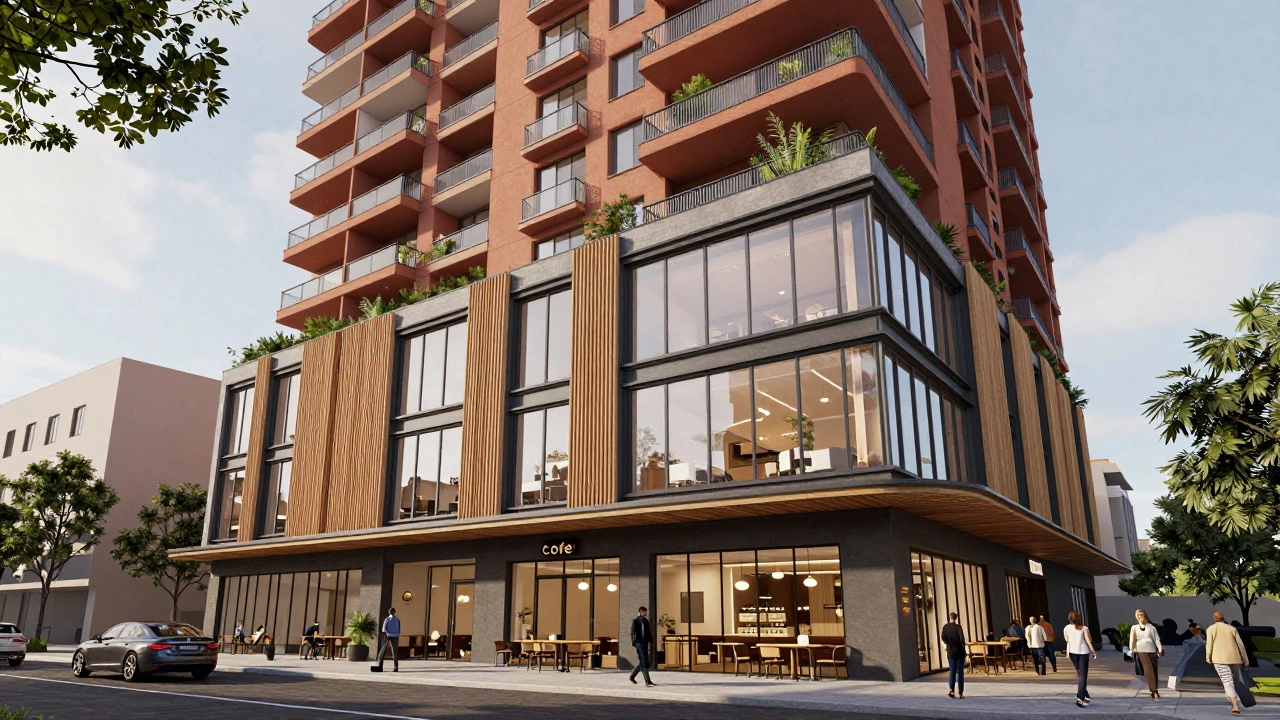
Why choose one when you can have them all? Mixed-Use Development is a project that blends residential, retail, and office spaces into a single building or complex. Imagine a ground-floor coffee shop, three floors of professional offices, and six floors of apartments on top. This is the gold standard for modern urban planning because it creates a built-in customer base for the retail shops.
From a construction standpoint, mixed-use is more complex. You have to deal with different zoning laws and building codes for different sections of the same building. You also need to manage the conflict between residential peace and retail noise. But the financial hedge is unbeatable. If the office market dips, your residential rentals keep the lights on. If the housing market cools, your retail leases provide the growth.
| Property Type | Risk Level | Management Effort | Primary Appeal | Ideal Tenant |
|---|---|---|---|---|
| Industrial | Low | Low | Stability & Low Overhead | Logistics/Manufacturing |
| Retail | High | Medium | High Revenue Potential | Essential Services/Brands |
| Office | Medium-High | Medium | Prestigious Cash Flow | Corporate/Professional |
| Multi-Family | Low-Medium | High | Consistent Occupancy | Local Residents |
| Mixed-Use | Medium | High | Diversified Risk | Various |
Avoiding the Common Pitfalls
One of the biggest mistakes newcomers make is ignoring the "Cap Rate" (Capitalization Rate). This is basically the net operating income divided by the purchase price. If you see a property with a suspiciously high cap rate, it usually means the risk is sky-high or the building is falling apart. Don't get blinded by a high yield if the roof needs replacing in two years.
Another trap is over-improving a space. You might want to put in Italian marble floors and designer lighting to attract a high-end tenant, but if the local market doesn't support those rents, you'll never recoup the cost. Build for the tenant you can actually get, not the tenant you wish you had. Stick to "white box" delivery-clean walls, basic flooring, and functioning utilities-and let the tenant customize the interior to their specific business needs.
Which commercial property has the lowest maintenance cost?
Industrial properties, such as warehouses and distribution centers, typically have the lowest maintenance costs. This is because they have simpler structures (concrete floors and steel frames) and often use Triple Net (NNN) leases, meaning the tenant is responsible for the majority of the upkeep, taxes, and insurance.
Is mixed-use development harder to build than a single-purpose building?
Yes, it is more complex. Mixed-use projects require navigating multiple zoning regulations and designing for different needs-such as soundproofing between a loud ground-floor restaurant and quiet upstairs apartments. It also requires more complex plumbing and electrical systems to handle different types of usage in one footprint.
How do I know if a retail space is a good investment?
Look for "anchor tenants"-large, reputable businesses like supermarkets or pharmacies that draw a constant flow of people to the area. Check the foot traffic and the accessibility (parking and walkability). If the area is dominated by essential services rather than trendy boutiques, the investment is generally safer.
Are office buildings still a good investment in 2026?
They can be, but the strategy has shifted. Traditional "cubicle farms" are struggling. However, high-end, sustainable "Class A" offices with lifestyle amenities are still in demand. The key is to target companies that value in-person collaboration and provide a space that feels more like a destination than a chore.
What is a Triple Net (NNN) lease?
A Triple Net lease is a rental agreement where the tenant agrees to pay the base rent plus three additional expenses: real estate taxes, building insurance, and maintenance costs. This shifts the financial risk of operating the building from the landlord to the tenant, making the landlord's income more stable.
What to Do Next
If you're just starting out, don't jump into a massive development project immediately. Start by analyzing your local market. Walk through your neighborhood and see which stores are always full and which ones have "For Lease" signs in the window. This real-world data is more valuable than any spreadsheet.
For those with a bit of capital, consider a "value-add" play. Look for a dated industrial warehouse or a neglected multi-family building in a growing area. A few strategic upgrades-like adding solar panels or improving the parking layout-can significantly increase the rental value without requiring a total rebuild. Once you've mastered one property type, you can move toward diversifying into mixed-use developments to protect your portfolio from market swings.