
Do You Get Flooring in a New Build?
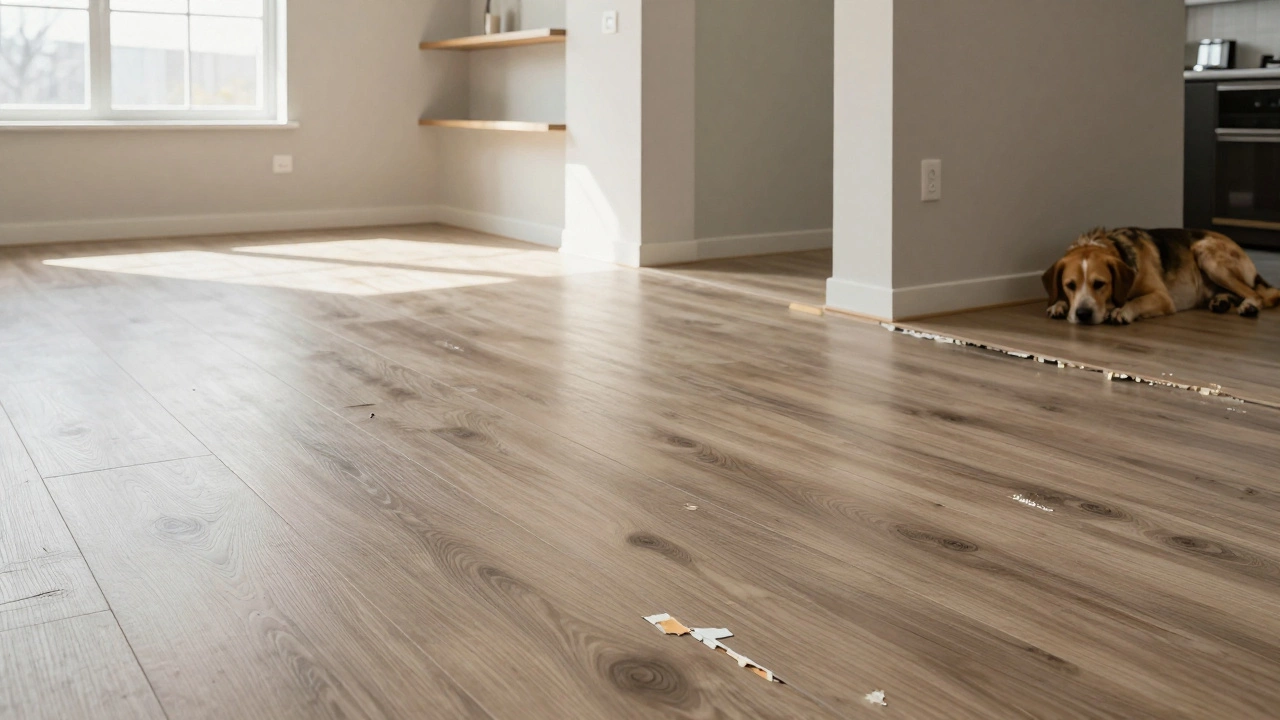 Feb, 22 2026
New Build Flooring Cost Estimator
Your Home Details
Results
Base Cost (Standard Package):
$ total
$ per sq ft
Upgrade Cost:
$ total
$ per sq ft
Long-Term Savings:
$
Savings over 5-7 years
Important: Upgrading before closing is significantly cheaper than doing it later.
When you’re buying a new build home, one of the biggest questions is: Do you get flooring in a new build? The short answer? Sometimes. But it’s never that simple. Most builders include basic flooring as part of the standard package-but what that means can vary wildly depending on the builder, the price point, and even the neighborhood you’re in.
What’s Usually Included
Typically, builders offer one or two flooring options at no extra cost. These are often the cheapest materials they can source in bulk. For example, you might get:
- Low-grade carpet in bedrooms (usually 12-15 oz pile, 5-year warranty)
- Basic vinyl plank in living areas (thin, 4mm wear layer, no rigid core)
- Laminate in kitchens and hallways (often 8mm thick, basic scratch resistance)
These aren’t bad materials per se-they’re just the bare minimum. You won’t find premium hardwood, tile with underfloor heating, or luxury vinyl with realistic wood grain. Builders choose these options because they’re cheap to install, easy to maintain, and quick to lay down. They’re designed to get you into the house, not to impress you.
What’s Not Included
Here’s what you almost never get in a standard package:
- Hardwood floors (even engineered wood)
- Tile in bathrooms or entryways
- Stone or porcelain slabs
- Underfloor heating systems
- Custom stair runners or accent borders
These upgrades are where builders make their real profit. They’ll tell you, "We can install hardwood if you want," but they won’t mention the $8,000-$15,000 price tag that comes with it. That’s not a minor add-on-it’s often the difference between a $350,000 home and a $380,000 home.
Why Builders Do This
It’s not that builders are trying to trick you. They’re following a business model built on economies of scale. They buy 10,000 square feet of the same vinyl plank from one supplier, get a bulk discount, and install it in 50 homes at once. That’s how they keep prices low and close sales fast.
But here’s the catch: once you’re under contract, you’re locked in. If you suddenly decide you want real hardwood in the living room, you’re not just paying for the material-you’re paying for:
- Delaying the closing date
- Re-scheduling installers
- Potential damage to walls or trim
- Extra labor for removal and disposal
Many buyers don’t realize this until it’s too late. They move in, stare at the cheap carpet, and wish they’d made the call earlier.
How to Know What You’re Getting
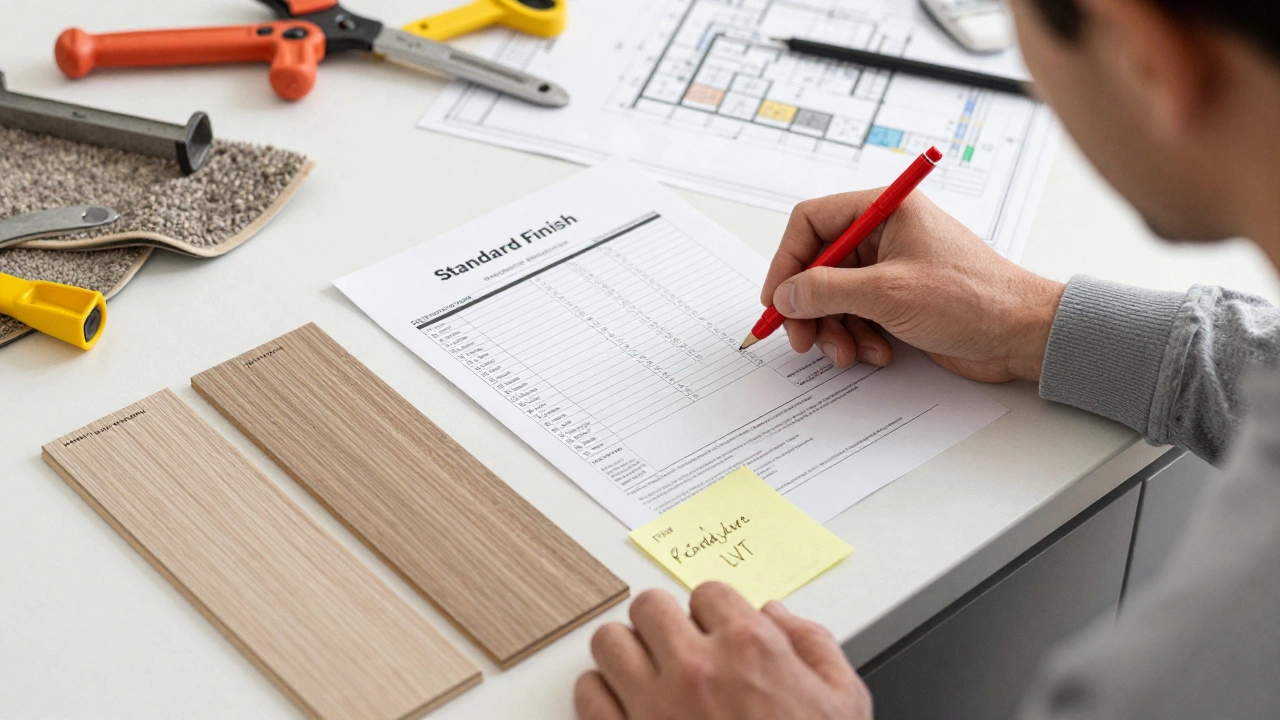
Don’t trust verbal promises. Every builder has a Standard Finish Schedule-a document that lists exactly what materials come with each home. Ask for it before you sign anything. Look for sections labeled:
- “Flooring Package”
- “Interior Finishes”
- “Base Model Specifications”
That document will tell you:
- Brand and model number of the flooring
- Thickness and wear layer (for vinyl/laminate)
- Warranty length
- Where each type is installed (e.g., carpet only in bedrooms 2 and 3)
If they can’t produce it, walk away. A reputable builder will hand it to you without hesitation.
What to Do If You Want Better Flooring
You have three real options:
- Upgrade before signing - This is the easiest and cheapest way. Most builders offer 3-5 upgrade paths. You can swap vinyl for luxury vinyl tile (LVT) for $1-$3 per square foot extra. That’s far less than hiring your own contractor later.
- Wait until closing - Some buyers negotiate to get a flooring credit at closing. For example, $5,000 toward flooring of your choice. This gives you control, but you’ll need to arrange installation yourself after move-in.
- Do it yourself - If you’re handy, you can buy materials and install them after closing. But be warned: removing existing flooring can damage subfloors, and you’ll need to coordinate with the builder’s team to avoid voiding warranties.
Pro tip: If you’re upgrading, go for rigid core LVT. It’s waterproof, durable, looks like real wood, and installs over most existing subfloors. It’s the sweet spot between cost and quality.
What Happens If You Don’t Upgrade?
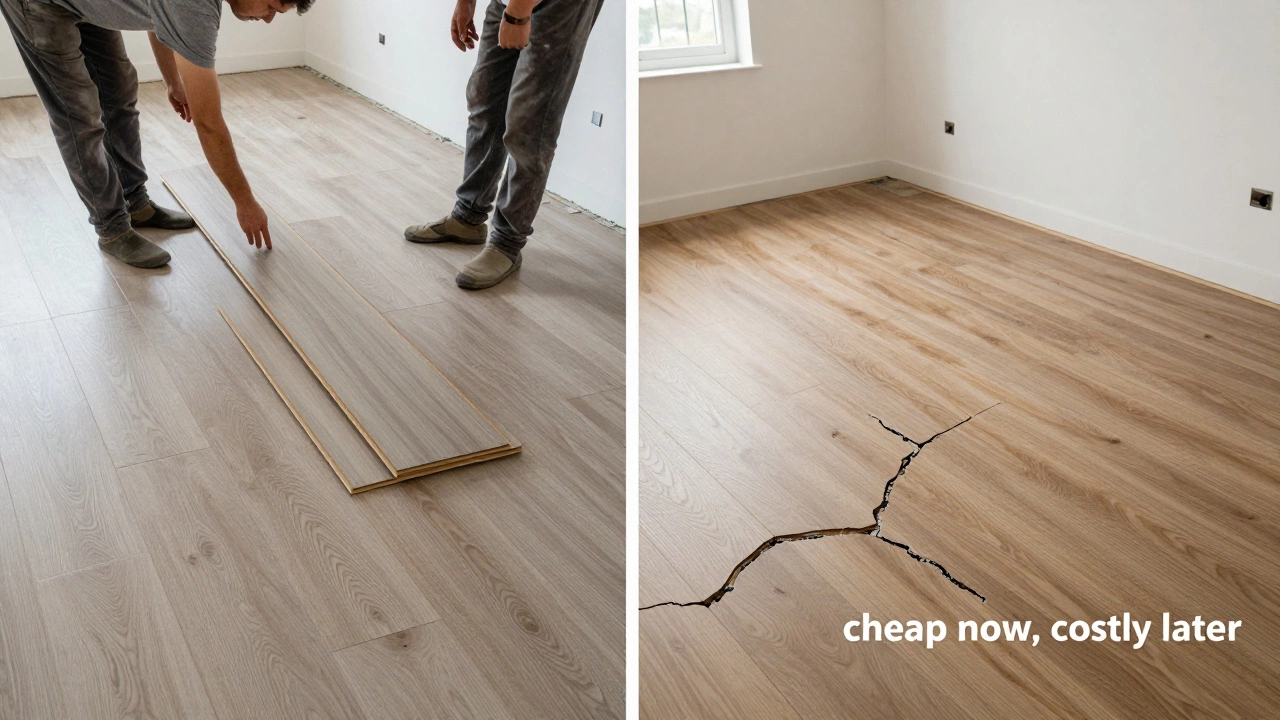
Many people assume the builder’s flooring will last. It won’t. In homes with kids, pets, or heavy foot traffic, that cheap vinyl or carpet starts showing wear in under two years. You’ll see:
- Shedding carpet fibers
- Fading in sunlit rooms
- Peeling edges on vinyl planks
- Indentations from furniture legs
By year three, you’re likely replacing it anyway. So you’re not saving money-you’re just delaying the cost. And when you do replace it, you’ll pay more because you’ll need to remove the old flooring, fix the subfloor, and pay for labor.
Real-World Example
Last year, a family in Raleigh bought a new build from a national builder. They chose the standard package: beige carpet in bedrooms and vinyl in common areas. Three months after moving in, their dog scratched the vinyl in the hallway. They tried to get it replaced under warranty, but the builder said the damage was "excessive wear"-not covered. They ended up paying $3,200 to replace it with rigid core LVT. If they’d upgraded before closing for $1,800, they’d have saved $1,400 and avoided the hassle.
Final Advice
Don’t treat flooring like an afterthought. It’s one of the biggest visual and functional elements in your home. Ask for the finish schedule. Compare upgrade costs. Think about your lifestyle. If you have kids or pets, go for something durable. If you plan to sell in five years, invest in something that appeals to buyers.
And remember: the cheapest option today is rarely the cheapest option long-term.
Do all new builds include flooring?
Yes, most new builds include at least basic flooring as part of the standard package. But what’s included varies widely-often just low-grade carpet in bedrooms and vinyl or laminate in living areas. Premium materials like hardwood or tile are almost always upgrades.
Can I choose my own flooring in a new build?
Yes, but only if you upgrade before signing the contract. Most builders offer 3-5 upgrade paths with set price increases. Once you’re under contract, changing flooring becomes expensive and complicated due to scheduling, removal costs, and potential damage.
What’s the most cost-effective flooring upgrade?
Rigid core luxury vinyl tile (LVT) is the best value. It costs $3-$6 per square foot installed, looks like real wood or stone, is waterproof, and lasts 20+ years. It’s far cheaper than hardwood and more durable than basic vinyl.
Is it worth upgrading flooring before closing?
Almost always. Upgrading through the builder is cheaper than hiring your own contractor later. You avoid removal fees, scheduling delays, and subfloor repairs. Plus, the builder’s warranty usually covers the upgraded flooring.
What if the builder won’t give me the finish schedule?
Walk away. A reputable builder will provide this document without asking. If they can’t or won’t, it’s a red flag. You’re buying a home without knowing what you’re getting. That’s a huge risk.