
How Commercial Projects Differ from Residential Construction
 Jan, 12 2026
Commercial vs Residential Construction Cost Calculator
Calculate how much more expensive commercial construction is compared to residential based on the article's data.
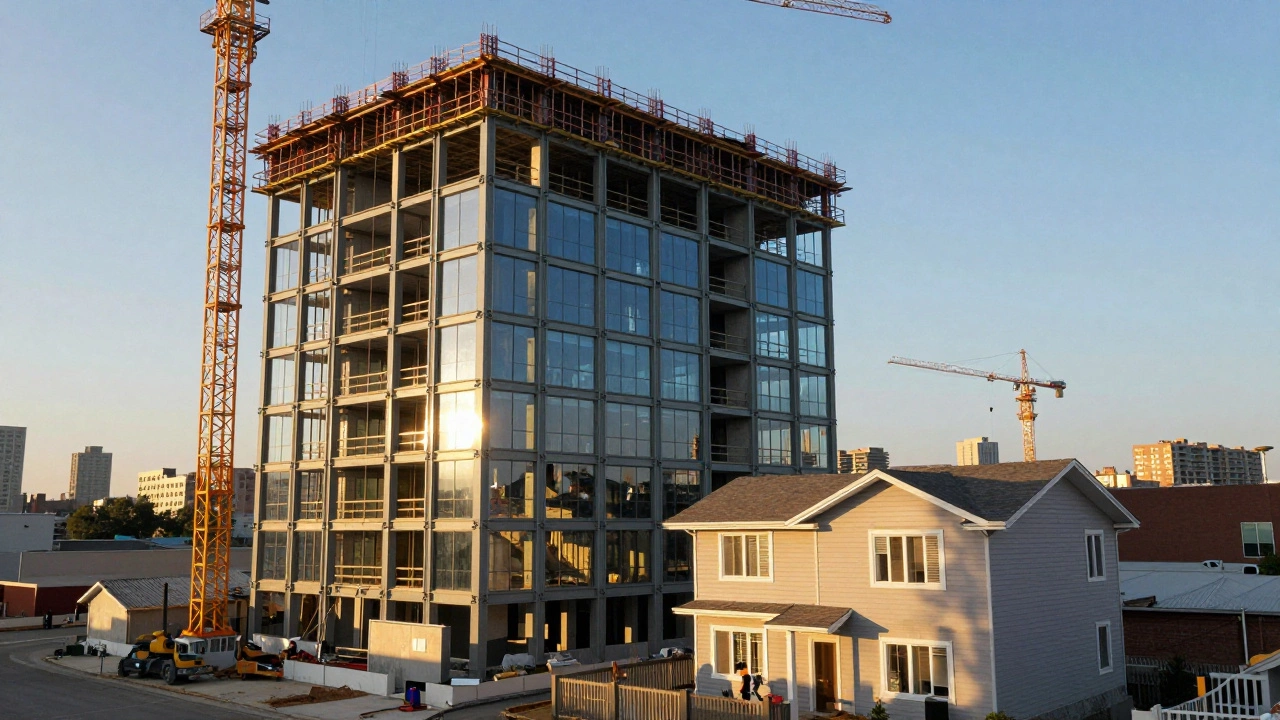
When you see a new building going up, how do you know if it’s meant for offices, stores, or homes? The answer isn’t just in the look-it’s in the bones. Commercial and residential construction are built for completely different purposes, and that changes everything: from the materials used to the permits needed, the timelines, and even who’s on-site each day.
Scale and Design Complexity
Residential projects are usually one to four stories tall. Even large custom homes rarely go beyond five. Commercial buildings? They often start at five stories and climb to 20, 30, or more. A single office tower can hold thousands of people. That kind of scale means commercial projects need stronger structural systems-steel frames, reinforced concrete slabs, and deeper foundations to handle heavier loads and wind forces.
Design complexity also spikes. A house might have three bedrooms, a kitchen, and a garage. A commercial building has elevators, fire alarm systems, HVAC units sized for hundreds of occupants, ADA-compliant restrooms, emergency exits on every floor, and specialized zones like server rooms, retail displays, or lab spaces. These aren’t optional add-ons-they’re required by code. And each one adds layers of engineering that residential projects simply don’t need.
Building Codes and Regulations
Both types of construction follow building codes, but the rules for commercial buildings are far stricter and more detailed. The International Building Code (IBC) governs commercial projects, while residential work usually follows the less complex International Residential Code (IRC). That means commercial projects must meet fire safety standards that require sprinkler systems in almost every space, fire-rated walls between tenants, and exit signage that stays lit during power outages.
Commercial buildings also need accessibility compliance under the Americans with Disabilities Act (ADA). That’s not just a ramp at the front door-it’s wide hallways, accessible restrooms on every level, lowered countertops in break rooms, and tactile signage for the visually impaired. Residential projects only need basic ADA features if they’re federally funded or part of a multi-family complex with five or more units.
Permitting alone can take months longer for commercial projects. You’re dealing with multiple agencies: fire marshal, zoning board, environmental review, transportation department if the site affects traffic flow. A single-family home might get approved in two weeks. A retail center? Six to eight months is common.
Materials and Construction Methods
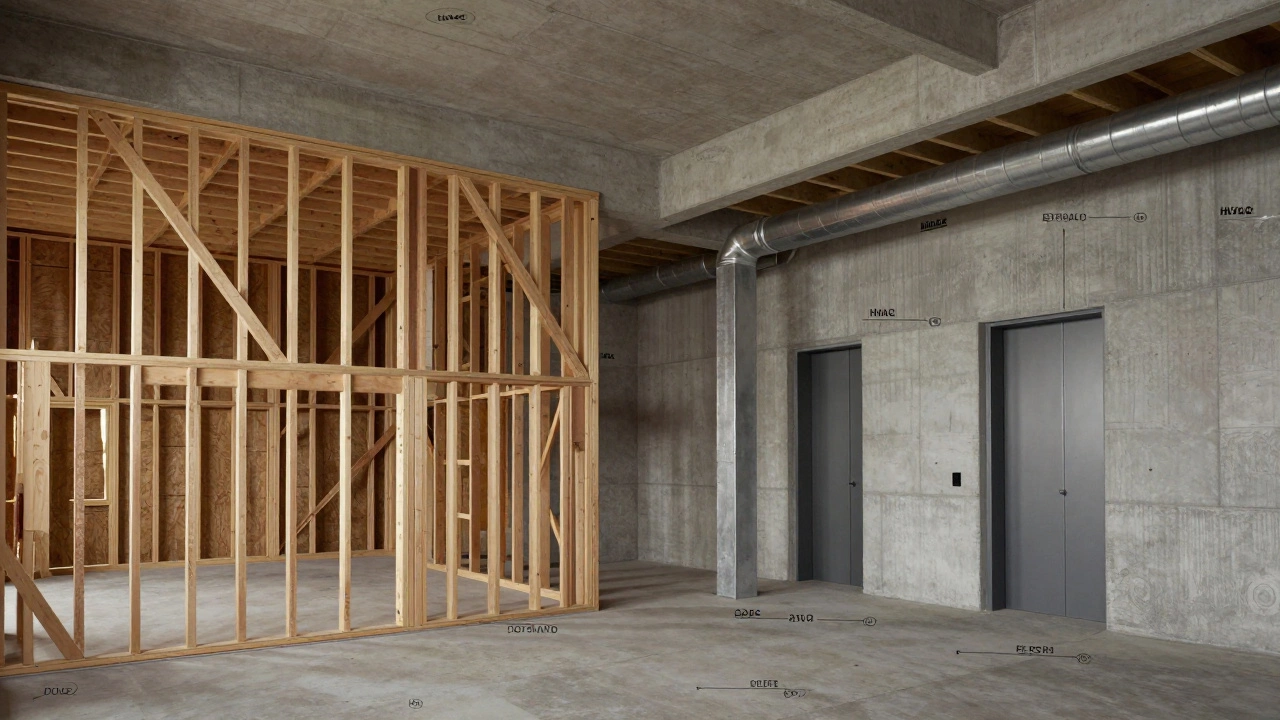
Residential construction leans on wood framing. It’s fast, affordable, and familiar to most contractors. A typical house uses 2x4s and 2x6s for walls, trusses for roofs, and plywood sheathing. Commercial buildings? They’re mostly steel and concrete. Steel beams support heavy floors and long spans without interior columns. Concrete slabs handle high foot traffic and heavy equipment. Even the exterior walls are different-commercial buildings use curtain walls, metal panels, or stone veneer over steel frames, not vinyl or wood siding.
Windows are another big difference. Residential homes use double-pane, operable windows for ventilation and natural light. Commercial buildings often use sealed, insulated glazing units designed for energy efficiency over decades, not seasonal changes. You won’t find many windows you can open in a high-rise office building-they’re fixed to control climate and reduce maintenance.
Timeline and Labor
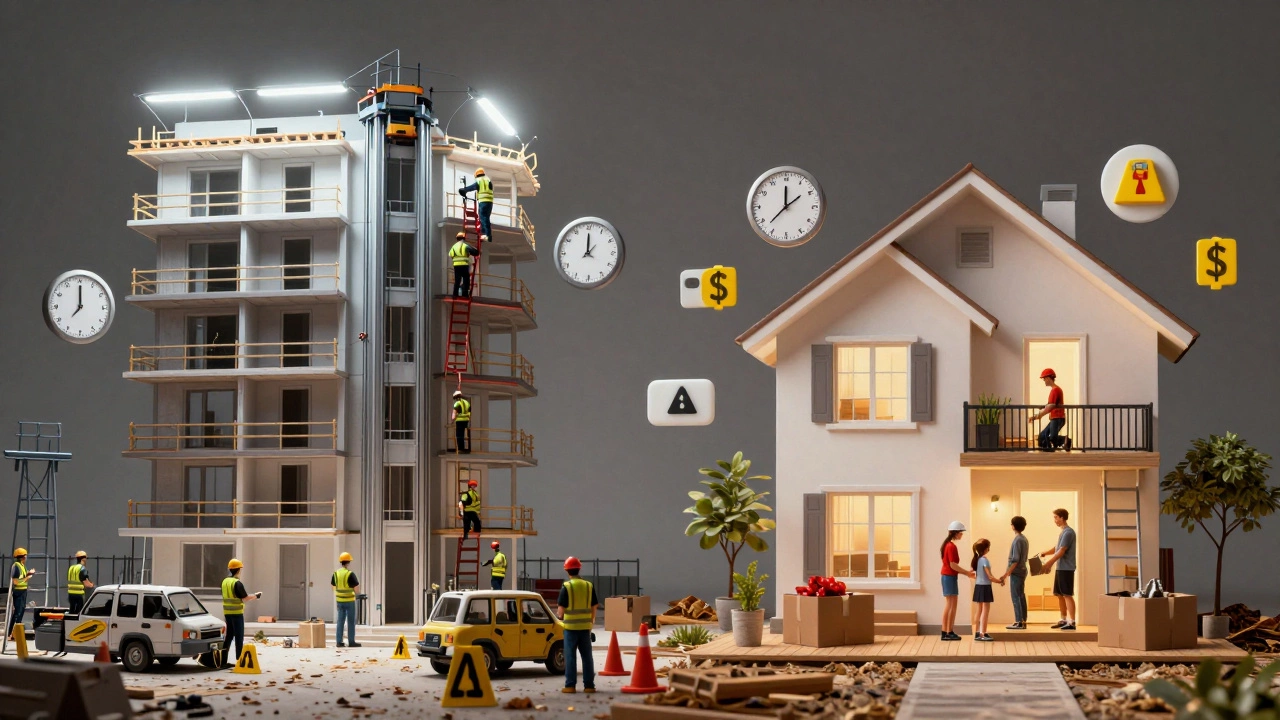
A new home might take four to six months from groundbreaking to move-in. A small retail building? Eight to twelve months. A medical center or hotel? Two years or more. Why? Commercial projects have more phases. Site prep alone can take months if you’re dealing with underground utilities, soil remediation, or traffic rerouting.
The labor force is also different. Residential crews are smaller-maybe a foreman, three carpenters, an electrician, and a plumber. Commercial jobs bring in specialized teams: structural engineers, HVAC specialists, fire protection contractors, elevator installers, and security system integrators. You’re managing dozens of subcontractors, not just a few trades. Coordination becomes a full-time job.
Delays hit commercial projects harder. A rainstorm might delay a house by a day. In a commercial build, it can stall an entire schedule because steel deliveries are timed to the week, crane rentals are booked months ahead, and every day over budget costs thousands.
Financing and Risk
Residential projects are usually paid for by the homeowner using a mortgage or cash. Commercial projects rely on commercial loans, investors, or developers who need to see a return before breaking ground. That means the design has to be market-ready from day one. You can’t just build what you like-you have to build what tenants or buyers want.
Risk is higher too. A homeowner might be upset if the kitchen tile doesn’t match their vision. A commercial tenant might walk away if the HVAC system can’t handle peak heat in July. That’s why commercial projects require detailed contracts, performance bonds, and strict quality control. One mistake can cost hundreds of thousands in lost rent or lawsuits.
Long-Term Use and Maintenance
Residential buildings are designed for families. They’re built to last 50-100 years with moderate upkeep. Commercial buildings? They’re designed for efficiency and cost control over 30-50 years. Maintenance schedules are strict: HVAC filters changed monthly, fire extinguishers inspected quarterly, elevators serviced weekly. Downtime isn’t an option. If the lights go out in an office building at 5 p.m., it’s a crisis. If they go out in a house? You light a candle.
Commercial properties also have to adapt faster. A retail space might go from a coffee shop to a pharmacy in six months. The infrastructure needs to be flexible-easier to rewire, re-plumb, and reconfigure. Residential spaces rarely change function. A bedroom stays a bedroom.
Who’s Responsible?
In residential construction, the homeowner often picks the architect, contractor, and finishes. They’re emotionally involved. In commercial projects, the owner is usually a corporation, real estate fund, or government agency. Their team includes project managers, facility directors, and legal advisors. Decisions are made by committee, based on budgets, ROI, and risk assessments-not personal taste.
This affects communication. On a house build, you talk to your contractor weekly. On a commercial site, you get weekly progress reports, monthly meetings, and formal change orders. There’s no casual chat at the end of the driveway.
Why It Matters
Understanding these differences isn’t just for contractors or architects. If you’re investing in property, managing a business, or even just curious about the buildings around you, knowing how commercial and residential projects differ helps you make smarter decisions. You’ll see why a new apartment complex takes longer than a single home. You’ll understand why a small business can’t just rent out a warehouse without major upgrades. And you’ll recognize the hidden engineering that keeps a 20-story office tower running safely every day.
At the end of the day, both types of construction build shelter. But one is built for life. The other is built for business-and that changes everything.
Can a residential contractor build a commercial project?
Most residential contractors can’t legally or safely handle commercial projects. Commercial work requires specialized licenses, insurance, and experience with complex codes like the IBC and ADA. Even if a residential contractor has the skills, they likely don’t carry the higher liability insurance or bonding required for commercial jobs. Attempting to convert a residential team to commercial work often leads to delays, code violations, or costly rework.
Is commercial construction more expensive than residential?
Yes, per square foot, commercial construction typically costs 20-40% more than residential. A custom home might run $200-$300 per square foot. A basic office building starts at $250-$350. But the real cost difference comes from hidden factors: permits, engineering, fire systems, elevators, and specialized HVAC. A 10,000-square-foot office building isn’t just ten homes-it’s a complex system requiring dozens of coordinated trades and ongoing compliance checks.
Do commercial buildings use the same materials as homes?
Only in rare cases. Residential buildings use wood framing, vinyl siding, and standard windows. Commercial buildings use steel, concrete, metal panels, and sealed glazing. Even insulation differs-commercial projects use rigid foam boards and spray foam for higher R-values and fire resistance. You won’t find drywall in a warehouse ceiling; it’s usually exposed ductwork and fire-rated ceilings designed for easy maintenance.
Why do commercial projects take so much longer to permit?
Because they affect more people. A single-family home only impacts its neighbors. A commercial building might change traffic patterns, increase water usage, or require new public infrastructure. Cities review these projects for environmental impact, emergency access, parking requirements, and zoning compliance. Multiple departments must sign off-fire, health, transportation, planning-each with their own review timeline. A residential permit might take 2-4 weeks. A commercial permit can take 6-12 months.
Can you convert a commercial building into a home?
Yes, but it’s expensive and complex. Converting an old office or retail space into housing requires adding kitchens, bathrooms, bedrooms, and meeting residential fire codes. You may need to install sprinklers, rewire for lower amperage, add egress windows, and upgrade insulation. Structural changes are often needed to support residential loads. Many conversions fail because the building’s layout doesn’t suit living spaces-long corridors, low ceilings, or lack of natural light make them impractical.