
How Long Should a New Building Last? Realistic Expectations for Modern Construction
 Jan, 8 2026
Building Material Lifespan Calculator
Estimate the expected lifespan and key risks for common building materials based on New Zealand conditions. Select materials to see how they compare and what maintenance they require.
Select Building Materials
Estimated Results
Key Risks
Pro Tip: Regular maintenance is crucial for extending material lifespan. Cleaning gutters, repainting timber, and fixing leaks early can add 20-30 years to your building's life.
Select at least one material to see results
When you buy a new house or commission a new office building, you expect it to last. Not just for a few years, but for decades. But how long should it really last? The answer isn’t simple. It depends on what you’re building, where you’re building it, and how well it’s built - not just on the price tag or the glossy brochures.
What’s the Standard Lifespan for a New Building?
In New Zealand, the legal minimum for a new residential building is 50 years under the Building Code. That’s not a target - it’s the bare minimum. Most builders aim higher. Reputable builders design homes to last 75 to 100 years with proper maintenance. Commercial buildings? They’re built to last 100 to 150 years. Think about old bank buildings in Wellington’s CBD - many were built in the 1890s and still stand today. They weren’t fancy, but they were solid.
The difference between a building that lasts and one that doesn’t isn’t always about expensive materials. It’s about details: how the roof is flashed, how the foundation drains, how the walls breathe. A $1.2 million home with poor detailing can start leaking within 15 years. A $800,000 home built right can outlast it by 40 years.
What Actually Determines How Long a Building Lasts?
It’s not the brand of tiles or the type of kitchen bench. It’s the invisible stuff:
- Water management - 80% of building failures start with water getting where it shouldn’t. Poor roof overhangs, clogged gutters, or missing damp-proof membranes turn small leaks into rot, mold, and structural damage.
- Foundation design - In Wellington, we deal with seismic activity and steep slopes. A building on a poorly compacted fill or without proper piers will shift, crack, and settle unevenly. That’s not a warranty issue - it’s a design flaw.
- Material quality - Not all timber is equal. Kiln-dried, treated pine lasts longer than green, untreated timber. Steel framing doesn’t rot, but if it’s not coated properly, it rusts from the inside out. Concrete needs the right mix ratio - too much water, and it cracks.
- Construction quality - A builder rushing to meet deadlines will skip nailing patterns, use undersized fasteners, or ignore flashing details. These shortcuts show up in year 5, not year 1.
There’s a reason why homes built in the 1950s and 60s still stand strong in many parts of New Zealand. They used thicker timber, heavier roofing, and simpler designs. Modern homes are lighter, faster to build, and often cheaper - but they’re not always more durable.
Warranties Don’t Tell the Whole Story
Most new builds come with a 10-year builder’s warranty. That sounds good, right? But here’s what it doesn’t cover:
- Normal wear and tear
- Damage from poor maintenance (like clogged gutters or untrimmed trees)
- Issues caused by modifications (homeowners adding decks or knocking down walls)
- Problems that show up after year 10
That 10-year warranty is a safety net, not a guarantee of longevity. If your roof leaks at year 11, you’re on your own. If your walls start cracking because the foundation shifted, you’ll need to pay for an engineer’s report and repairs - unless you can prove the builder broke the code.
Some builders offer extended warranties. But read the fine print. Many exclude weather-related damage, which is exactly what you’re most likely to face in New Zealand’s wet climate.
Climate and Location Change Everything
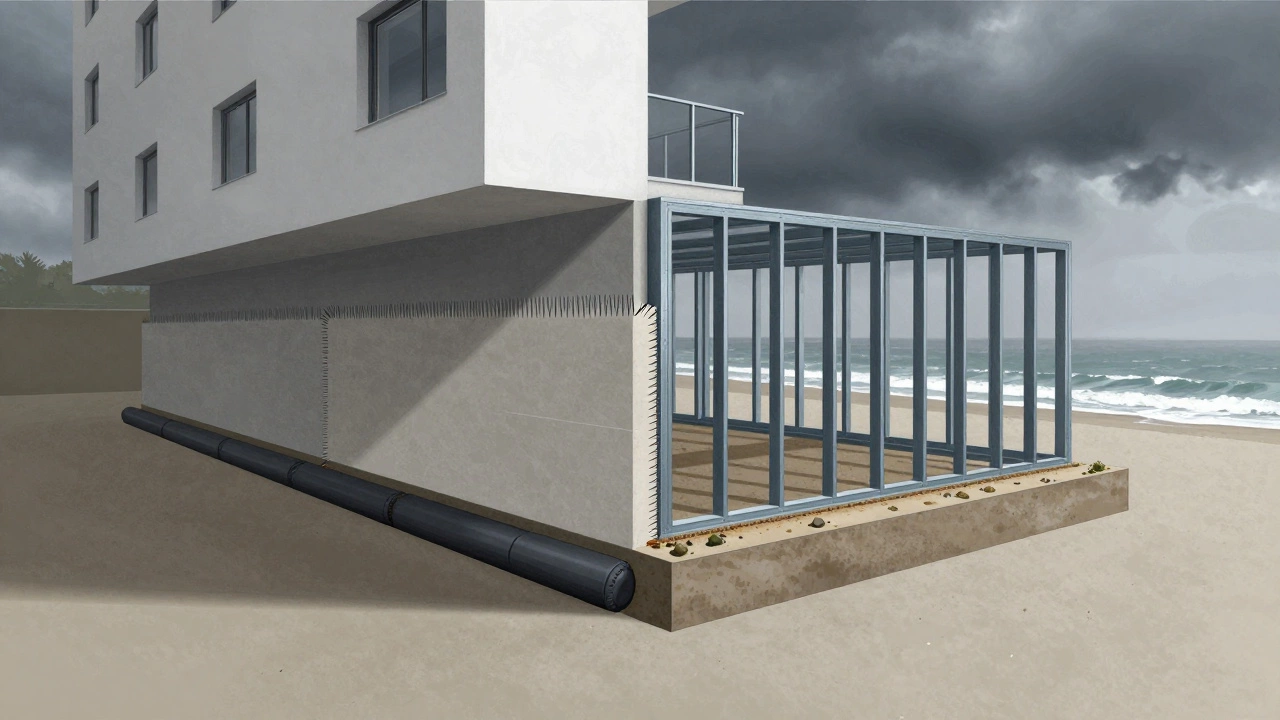
Building in Auckland? You’re dealing with high rainfall and salty air near the coast. That eats through steel, corrodes fasteners, and accelerates timber decay. Building in Central Otago? You’ve got freeze-thaw cycles that crack concrete and push foundations apart. Building in Wellington? Wind-driven rain and seismic movement demand stronger connections and better drainage.
A house designed for the dry plains of Canterbury won’t last 20 years in the West Coast’s rainforest conditions. That’s not a defect - it’s a mismatch. Builders who use the same plans everywhere are cutting corners. A good builder adapts the design to the site.
Look at the building’s orientation. A house with large windows facing west in Wellington gets hammered by afternoon sun and rain. That’s asking for trouble. A well-designed home uses overhangs, shading, and material choices to reduce weather stress.
What Materials Actually Last?
Not all materials are created equal. Here’s what holds up - and what doesn’t:
| Material | Expected Lifespan | Key Risks |
|---|---|---|
| Timber framing (kitchen-dried, treated) | 80-120 years | Moisture exposure, termites if untreated |
| Steel framing | 100+ years | Rust if coating is damaged or poor ventilation |
| Concrete slab foundation | 100+ years | Cracking from poor mix, settlement, or seismic movement |
| Clay tile roof | 80-100 years | Broken tiles, poor underlayment, moss buildup |
| Colorsteel roof | 40-60 years | Corrosion at cut edges, salt spray damage |
| Weatherboard (timber) | 50-70 years | Paint failure, water ingress behind boards |
| Brick veneer | 100+ years | Mortar deterioration, lack of weep holes |
| Urethane foam insulation | 50-80 years | Settling, moisture trapping, rodent damage |
Notice a pattern? The longest-lasting materials are simple, traditional, and well-installed. Modern synthetics look good on paper but often fail faster when exposed to real-world conditions.
What You Can Do to Make Your Building Last
You don’t need to spend more - you need to build smarter. Here’s what works:
- Choose a builder with a 15+ year track record - Ask for references from homes they built 10+ years ago. Go see them. Ask owners if they’ve had leaks, cracks, or rot.
- Insist on detailed plans - Make sure the builder shows you how the roof meets the wall, how the foundation drains, and where the vapor barrier goes. If they can’t explain it, walk away.
- Don’t skip the site inspection - If the ground is wet, muddy, or full of tree roots, the foundation will suffer. A good builder will grade the site properly, even if it costs extra.
- Maintain it like a car - Clean gutters twice a year. Repaint exposed timber every 5-7 years. Fix small leaks immediately. A $200 repair now prevents a $20,000 repair later.
- Avoid cheap upgrades - That $5,000 “premium” vinyl cladding might look nice, but it traps moisture. Timber or fiber cement lasts longer and holds value better.
What Happens When Buildings Don’t Last?
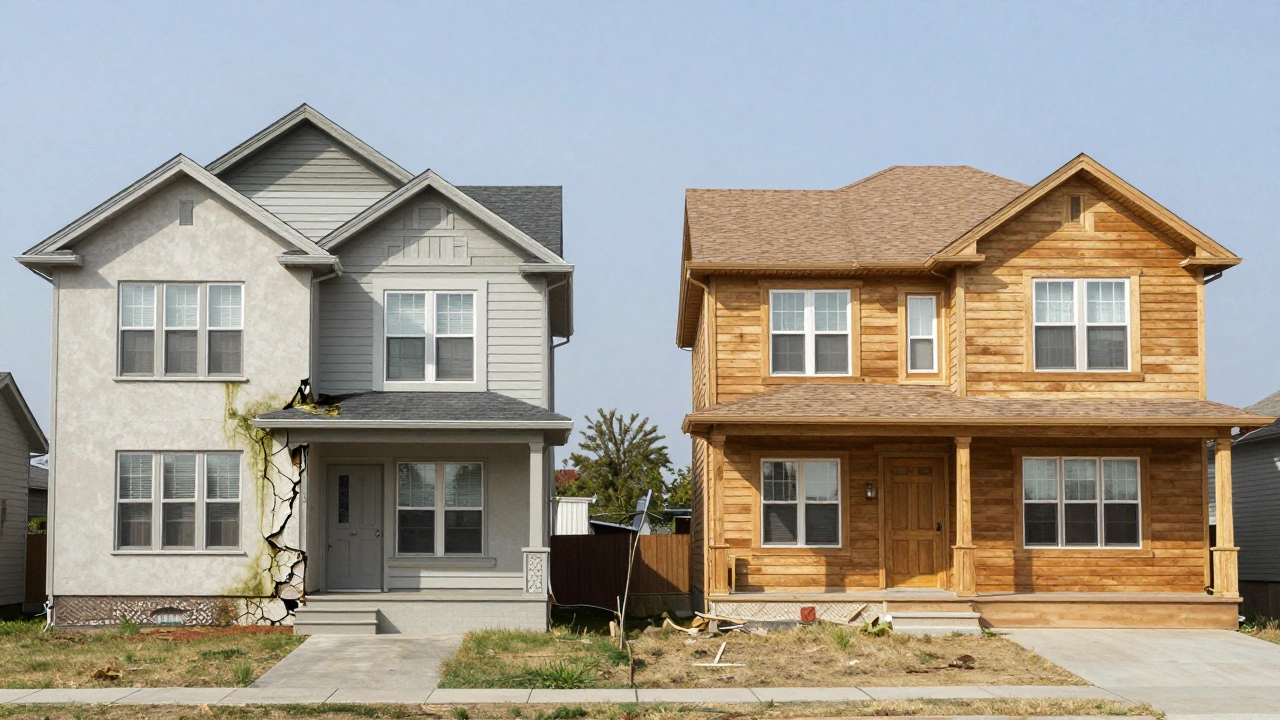
Buildings that fail early aren’t just expensive to fix - they’re a financial trap. A home that needs major repairs at year 12 loses 30-40% of its value. Buyers walk away. Insurers refuse coverage. Banks won’t lend against it.
And it’s not just money. A leaking house breeds mold. That affects health - especially for kids and the elderly. A house that shakes in a minor quake isn’t just inconvenient - it’s dangerous.
There’s a growing movement in New Zealand to ban low-quality, fast-built housing. The government is tightening building codes, especially around weathertightness. But that doesn’t help homeowners whose houses were built before the rules changed.
Bottom Line: Build for the Long Haul
A new building should last at least 75 years. That’s not a luxury - it’s the baseline for responsible construction. If your builder says 50 years is enough, they’re telling you the bare minimum. If they say 100 years is guaranteed, they’re lying. Nothing lasts forever.
What you should expect: a building that doesn’t leak, doesn’t crack, and doesn’t need constant patching. One that feels solid underfoot, stays dry in winter storms, and holds its value over time. That’s not magic. It’s good design, quality materials, and honest workmanship.
Don’t buy a house because it’s new. Buy it because it was built to last.
How long should a new house last in New Zealand?
A well-built new house in New Zealand should last 75 to 100 years with proper maintenance. The legal minimum under the Building Code is 50 years, but that’s just a baseline - not a goal. Homes built with quality materials, good drainage, and attention to detail can easily outlast that.
Do new builds come with a lifetime warranty?
No, there’s no such thing as a lifetime warranty on new builds. Most builders offer a 10-year warranty covering structural defects, but it doesn’t cover normal wear, weather damage, or maintenance issues. Anything beyond that is usually an optional add-on and often comes with strict conditions.
Is steel framing better than timber for longevity?
Steel framing doesn’t rot, warp, or get termites, so it has advantages in durability. But if the coating is damaged or ventilation is poor, it can rust from the inside. Timber, when properly treated and kept dry, lasts just as long - and is easier to repair. The key isn’t the material, it’s how it’s installed and protected.
What’s the biggest cause of early building failure?
Water. Whether it’s from poor roof flashing, clogged gutters, or missing damp-proof membranes, water is responsible for over 80% of major building failures. It causes rot, mold, structural damage, and health issues. A building can look perfect on the outside and still be failing inside because of hidden moisture.
Can I extend the life of my new build after moving in?
Yes - and you should. Clean gutters twice a year, repaint exposed timber every 5-7 years, fix leaks immediately, and keep vegetation trimmed away from walls. Regular maintenance is the single biggest factor in extending a building’s life. A $300 gutter cleaning every year saves you $30,000 in repairs down the road.
Are new builds more expensive to maintain than older homes?
Not necessarily - but they can be if they’re poorly built. Modern homes often have more complex systems (HVAC, insulation, smart wiring) that can fail faster if not maintained. Older homes, if kept in good condition, tend to have simpler, more repairable systems. The difference isn’t age - it’s quality of construction.