
How Long Should a Small Bathroom Renovation Take? Realistic Timelines for New Zealand Homes
 Dec, 11 2025
Bathroom Renovation Timeline Calculator
Estimate Your Renovation Timeline
Based on Wellington, New Zealand conditions and industry standards
Estimated Timeline
When you’re planning a small bathroom renovation in Wellington, you don’t just want to know what tiles to pick or which faucet looks nice-you want to know when you’ll be able to use your bathroom again. A 10-day renovation sounds great on Instagram. Reality? It’s rarely that simple.
What Counts as a ‘Small’ Bathroom Renovation?
A small bathroom renovation usually means a space under 5 square meters-think a toilet, sink, and shower or bathtub, no extra storage or double vanity. If you’re keeping the layout the same and just swapping out fixtures, flooring, and paint, that’s a basic refresh. But if you’re moving plumbing, adding a window, or changing the layout, you’re stepping into a more complex job.
Most homeowners in New Zealand think they’re doing a simple update. Then they find out the subfloor is rotten from a 20-year-old leak, or the wall behind the shower has no waterproofing. That’s when timelines stretch. Be honest with yourself: are you just changing the look, or fixing hidden problems?
Typical Timeline Breakdown
For a straightforward bathroom refresh in a well-prepared space, here’s what you can expect:
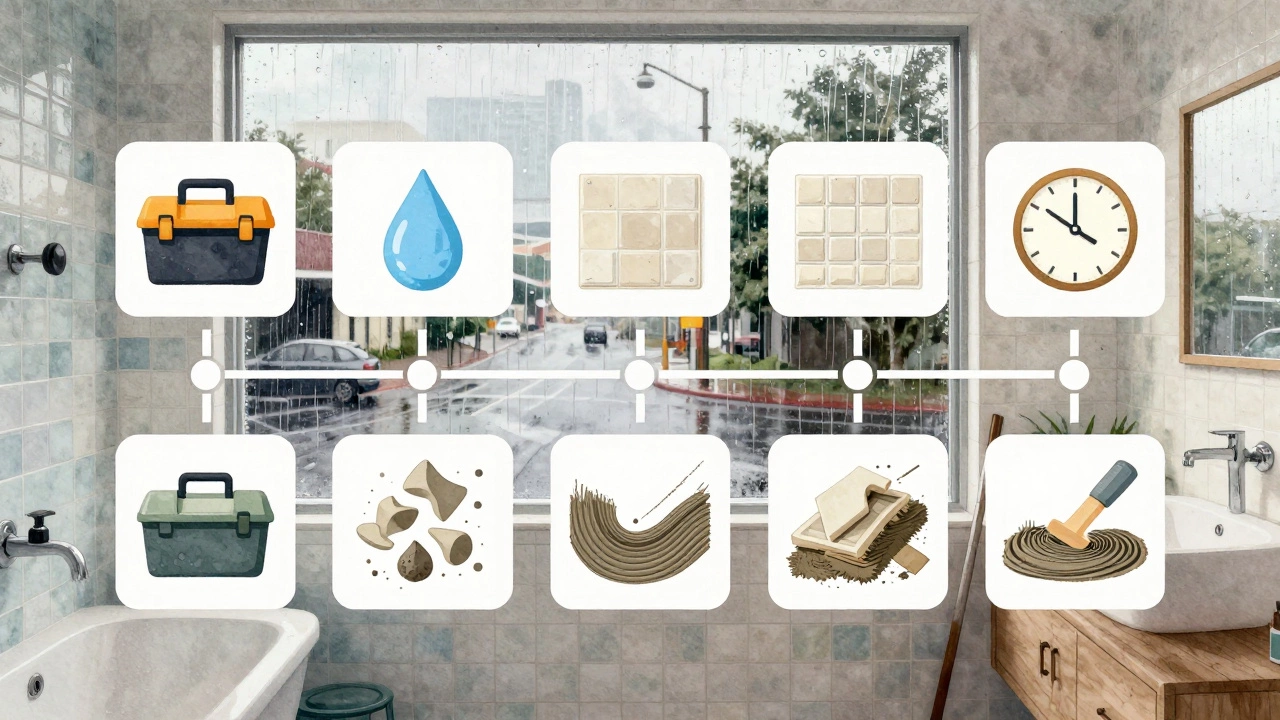
- Demolition and removal - 1 to 2 days. This includes pulling out the old vanity, toilet, tiles, and shower tray. If there’s asbestos (common in homes built before 1990), you’ll need a licensed remover, which adds 1-3 days.
- Plumbing and electrical rough-ins - 1 to 3 days. If you’re moving pipes or outlets, this takes longer. Reusing existing lines? You’re looking at the shorter end.
- Waterproofing and membrane installation - 1 day to apply, then 24-48 hours to cure. This step is non-negotiable in New Zealand’s damp climate. Skip it, and you’ll be re-doing this job in 5 years.
- Tile installation - 2 to 4 days. Setting tiles takes time, and grout needs 24-72 hours to set before you can use the shower.
- Vanity, toilet, and fixtures installation - 1 day. This includes mounting the sink, connecting the toilet, and hanging mirrors or lights.
- Finishing touches and cleanup - 1 day. Caulking, sealing, cleaning up debris, and final inspections.
That’s 8 to 14 days for a clean, no-surprises job. But that’s only if everything goes right.
What Slows Things Down?
Here’s what actually happens in most small bathroom renovations in New Zealand:
- Hidden damage - Wet rot, mold, or crumbling subfloor behind tiles. This isn’t rare. In older homes, it’s the norm. Fixing this adds 3-7 days.
- Delivery delays - Custom tiles, specialty fixtures, or even shower screens can sit in a warehouse for weeks. In 2025, lead times for imported bathroom items are still 2-4 weeks after ordering.
- Permits and inspections - If you’re moving plumbing or electrical, you need a building consent in New Zealand. Processing can take 10-20 working days, depending on your local council. Wellington City Council is slower than smaller districts.
- Weather - Even indoors, humidity affects drying times. In winter, grout and waterproofing membranes take longer to cure. Don’t rush it.
- Contractor availability - Good bathroom tradespeople are booked out 4-6 weeks in advance. If you wait until the last minute to hire someone, you’re already behind.
Realistically, if you’re not prepared for delays, your 2-week project could easily stretch to 6 weeks.
How to Keep Your Timeline on Track
You can’t control everything, but you can control these things:
- Order materials early - Pick your tiles, vanity, and fixtures before you even start demolition. Have them delivered to a dry storage area. Don’t wait until day 5 to choose your showerhead.
- Get your building consent ready - Talk to your local council before you hire a contractor. Know what’s needed. Some councils let you submit plans online, which speeds things up.
- Choose a contractor with bathroom experience - Not every handyman knows how to properly waterproof a shower. Ask for photos of their last three bathroom jobs. Look for clean grout lines and no visible gaps around the tub.
- Plan for a temporary bathroom - If you have another bathroom, great. If not, rent a portable toilet. You’ll save yourself stress and avoid rushing the job.
- Build in a 20% buffer - If you think it’ll take 10 days, plan for 12. That way, if the plumber gets sick or the tiles arrive late, you’re not panicking.
When Can You Use the Bathroom Again?
You might be tempted to jump in after the last tile is laid. Don’t. Here’s what you need to wait for:
- Grout - Wait at least 48 hours before using the shower. Some high-performance grouts need 72 hours.
- Waterproofing - If the membrane was tested with a flood test (which it should be), you’ll need to wait until the inspector signs off. That’s usually 24 hours after the test.
- Caulking - Silicone around the tub and sink needs 24 hours to cure before it gets wet.
So even after the crew leaves, you’re looking at 3-5 days before you can take a proper shower. Plan accordingly.
What’s the Fastest Possible Timeline?
If you’re lucky - and prepared - you can finish a small bathroom in 10 days. Here’s how:
- You’re keeping the exact same layout
- No plumbing or electrical changes
- All materials are already ordered and delivered
- You have no hidden damage
- Your contractor has a clear schedule and no delays
That’s rare. In 8 out of 10 cases, something unexpected comes up. That’s why most professionals say: plan for 3 weeks to be safe.
What to Avoid
Don’t fall for these traps:
- ‘Quick-fix’ prefab showers - They seem fast, but they often leak or look cheap. In New Zealand’s humidity, they fail faster than traditional tiled showers.
- Doing it yourself without waterproofing experience - One mistake with the membrane and you’ll be dealing with mold for years. It’s not worth the risk.
- Skipping the building consent - If you sell your house later, unapproved renovations can kill the sale or force you to pay for expensive rework.
It’s not about being cheap. It’s about not repeating the job in 5 years.
Final Thoughts
A small bathroom renovation isn’t a weekend project. It’s a carefully timed sequence of trades, materials, and inspections. In Wellington’s climate, patience isn’t optional - it’s necessary.
Most people think they’re saving money by rushing. In reality, they’re paying more later - in repairs, mold remediation, or lost home value.
Set realistic expectations. Plan ahead. Choose quality over speed. Your future self will thank you when you step into a dry, clean, perfectly functioning bathroom without worrying about the next leak.
How long does a small bathroom renovation take in New Zealand?
A small bathroom renovation in New Zealand typically takes 3 to 6 weeks from start to finish. A simple refresh with no layout changes can be done in 10 to 14 days if everything goes smoothly. But most projects hit delays like hidden damage, material delays, or council inspections, which extend the timeline. Plan for at least 3 weeks to avoid stress.
Can I do a bathroom renovation in 2 weeks?
Yes, but only under perfect conditions: no changes to plumbing or layout, all materials ordered and delivered ahead of time, no hidden damage, and a skilled contractor with an open schedule. In practice, this happens in fewer than 2 out of 10 cases. Most homeowners who aim for 2 weeks end up waiting 4 to 6 weeks.
Do I need a building consent for a small bathroom renovation?
Yes, if you’re moving plumbing, electrical, or changing the structure - even in a small bathroom. In New Zealand, any work involving water or drainage requires a building consent. Skipping this can cause problems when you sell your home or if there’s a leak. Always check with your local council before starting.
Why do bathroom renovations take so long?
Bathroom renovations take time because they involve multiple trades - demolition, plumbing, electrical, waterproofing, tiling, and fixtures - and each step needs drying or curing time. Water-related work can’t be rushed. Also, delays from material deliveries, inspections, or discovering hidden damage are common. In damp climates like New Zealand, waterproofing and grout need extra time to cure properly.
What’s the most common mistake people make with bathroom renovations?
The most common mistake is rushing the waterproofing. Many people skip proper membrane installation or don’t allow enough curing time. Others choose cheap prefab showers that leak in humid conditions. The second biggest mistake is not ordering materials early - waiting until demolition is done means you’ll be stuck without a bathroom for weeks longer than expected.