
How to Spot Dangerous Foundation Cracks: A Homeowner's Guide
 Apr, 20 2026
Assessment Results
Analysis results will appear here.
RECOMMENDED NEXT STEPS:
Adjust the settings and click "Analyze" to see the risk level and recommendations.
You walk into your basement or look at your exterior wall and see a line splitting the concrete. Your first thought is usually: "Is my house falling down?" The truth is that almost every home has some level of cracking. Concrete shrinks as it dries, and the ground beneath your home is constantly shifting. But there is a massive difference between a hairline fracture that you can ignore and a structural failure that could cost you tens of thousands of dollars if left alone. Knowing which one you're looking at can save you from a total nightmare.
Key Takeaways for Homeowners
- Hairline cracks (under 1/8 inch) are usually shrinkage and aren't urgent.
- Horizontal cracks are almost always a sign of structural failure.
- Stair-step cracks in brick or block often mean your foundation is settling unevenly.
- Water seeping through a crack is a red flag, regardless of the crack's size.
- Wide gaps (over 1/4 inch) require immediate professional inspection.
Understanding the Foundation
Before we look at the damage, we need to understand what we're dealing with. A Foundation is the lowest part of a building that transfers the weight of the structure to the earth. Most modern homes use a Concrete Slab or a basement wall made of poured concrete or concrete blocks. Because Concrete is incredibly strong under compression but brittle under tension, it cracks when the soil beneath it moves or compresses unevenly.
The "Safe" Cracks: Shrinkage and Settling
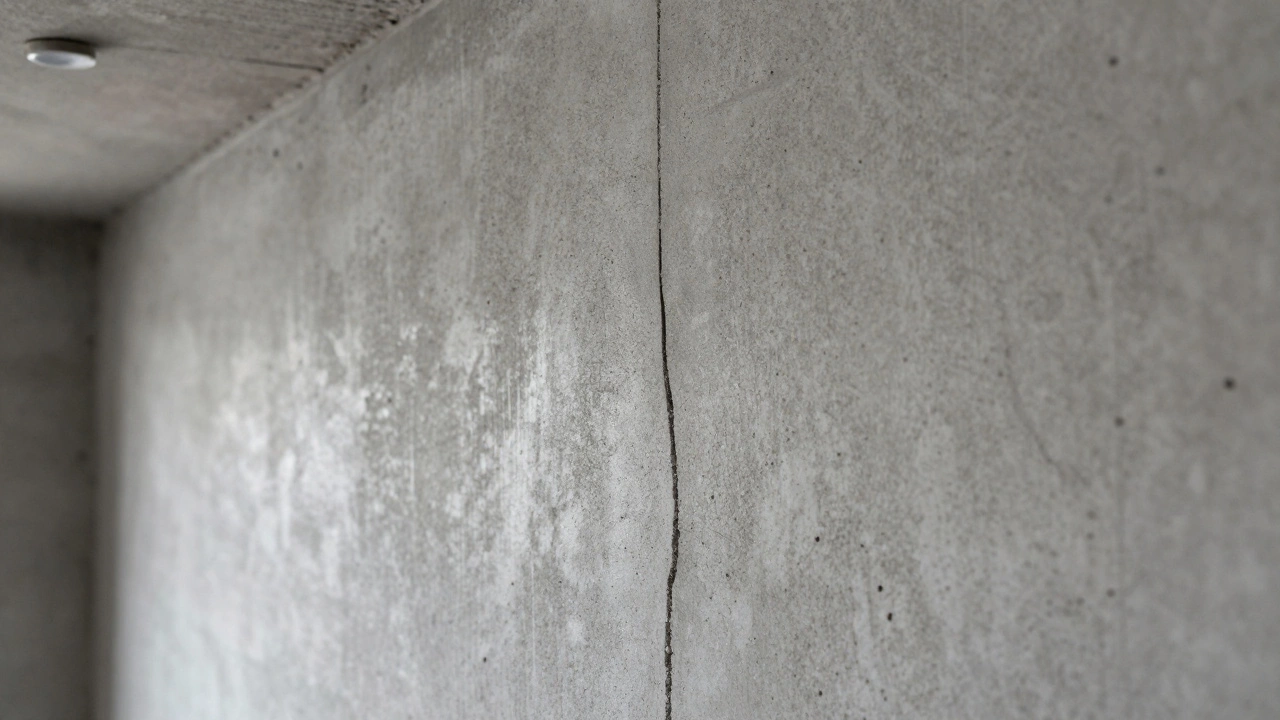
Not every crack is a disaster. In fact, most of them aren't. When concrete is poured, it goes through a curing process where it loses water. This causes it to shrink slightly, leading to what we call shrinkage cracks. These are typically thin, vertical, and look like a spiderweb or a single straight line. If the crack is thinner than a dime (roughly 1/16 to 1/8 of an inch) and isn't growing, you can usually just seal it and move on.
Then there is minor settling. Every house settles into the dirt over the first few years. You might see a small vertical crack near the corner of a window or a door. As long as the crack is consistent in width from top to bottom, it's usually just the house finding its natural seat in the soil.
The Red Flags: When a Crack is "Bad"
When we talk about a bad foundation crack, we are talking about structural instability. Here is exactly what you need to look for to determine if your home is in trouble.
Horizontal Cracks
If you see a crack running sideways across your basement wall, stop what you're doing and call an expert. Horizontal cracks are the gold standard of "bad." They usually happen because of Hydrostatic Pressure, which is the pressure exerted by fluids (usually groundwater) against the foundation walls. When the soil outside your home gets saturated, it pushes inward. If the wall can't handle the pressure, it bows and eventually snaps horizontally. This isn't just a leak; it's a wall that is physically failing.
Stair-Step Cracks
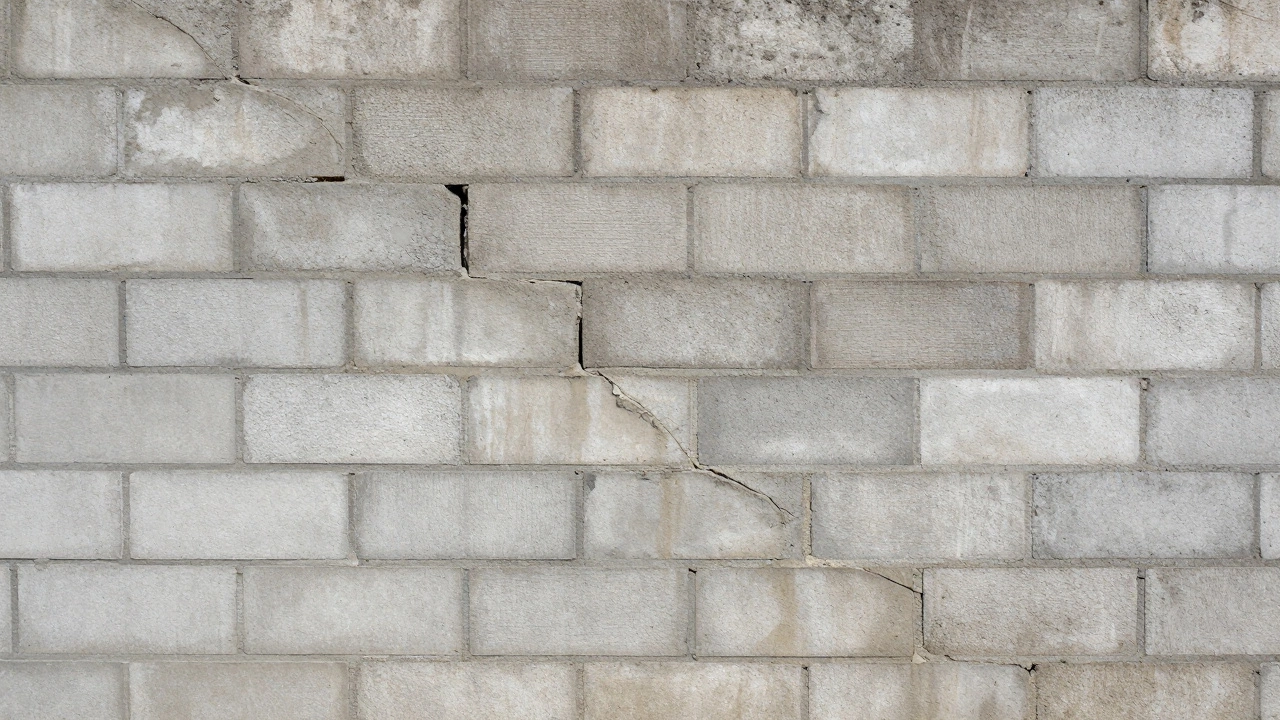
If your home is built with concrete blocks or bricks, you might see cracks that follow the mortar joints in a zig-zag pattern, resembling a set of stairs. These are classic signs of Differential Settlement. This happens when one part of the house sinks faster than another-perhaps because the soil under the porch is softer than the soil under the main living room. The tension pulls the blocks apart along the weakest point: the mortar.
Wide Gaps and Offsets
Look at the edges of the crack. Are they flush? If you run your finger across the crack and one side is higher than the other (this is called an "offset"), you have a serious problem. This means the foundation hasn't just cracked; it has shifted. Any gap wider than 1/4 inch (about the thickness of a pencil) is generally considered a structural concern that needs more than just a patch kit.
| Crack Direction | Typical Width | Likely Cause | Risk Level |
|---|---|---|---|
| Vertical | < 1/8" | Shrinkage / Minor Settling | Low |
| Vertical/Diagonal | 1/8" - 1/4" | Moderate Settlement | Medium |
| Horizontal | Any width | Hydrostatic Pressure | High |
| Stair-Step | Varies | Differential Settlement | High |
Secondary Signs of Structural Failure
Cracks don't always happen in a vacuum. If you're worried about a crack, look at the rest of your house. Structural failure usually leaves a trail of breadcrumbs throughout the home. Check your interior walls for diagonal cracks radiating from the corners of door frames or windows. These are often the first signs that the foundation is tilting.
Next, check your doors and windows. Do they suddenly stick? If a bedroom door that used to swing open easily now requires a hard shove to close, your house is likely out of level. You can also look at your floors. If you notice a slope in a room where the floor used to be flat, or if your tiles are cracking in a specific area, the foundation underneath is likely sinking.
How to Fix Bad Cracks
Once you've identified a bad crack, the solution depends on the cause. You cannot simply "glue" a structural crack back together with sealant. That's like putting a band-aid on a broken leg; it hides the wound but doesn't fix the bone.
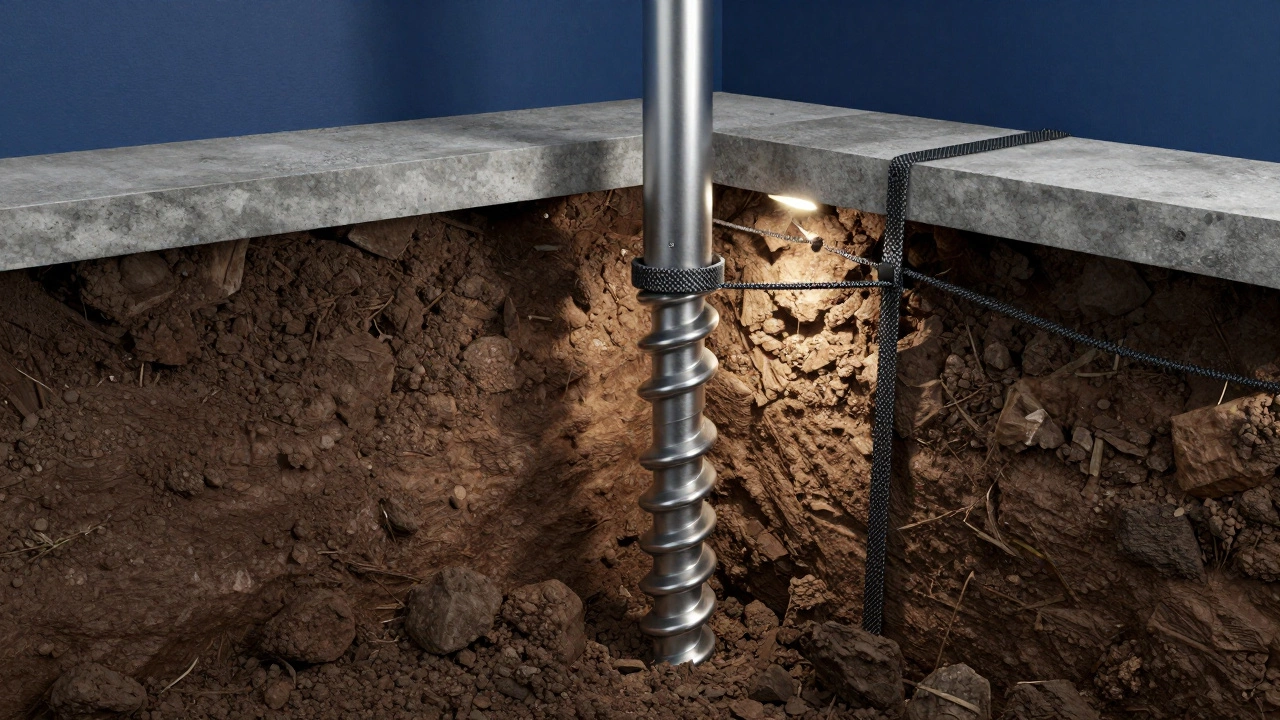
- Piering: If the house is sinking, professionals use Push Piers or Helical Piers. These are steel poles driven deep into the earth until they hit bedrock or stable soil, which then supports and lifts the house back to level.
- Wall Anchors/Braces: For bowing walls with horizontal cracks, carbon fiber straps or steel I-beams are installed to stop the wall from pushing further into the house.
- Underpinning: This involves deepening the existing foundation to reach more stable soil, effectively creating a new, deeper base for the home.
- Injection Grouting: For non-structural but leaking cracks, epoxy or polyurethane injections can seal the gap and prevent water ingress.
Common Pitfalls to Avoid
The biggest mistake homeowners make is trying to fix a structural crack themselves using a tube of concrete caulk from a hardware store. While this stops the water from coming in for a few months, it masks the symptom without treating the disease. If the house is still sinking, the crack will simply open back up or a new one will form right next to the repair.
Another mistake is ignoring the exterior. Most foundation problems start with water. If your gutters are clogged or your downspouts dump water right against the base of your house, you are essentially feeding the problem. Diverting water at least five to ten feet away from the foundation is the single best way to prevent a small crack from becoming a "bad" crack.
How do I know if a crack is getting worse?
The best way to track a crack is to mark it. Use a pencil to draw a small line at the very end of the crack and write the date next to it. You can also use a "crack monitor" (a small plastic gauge) that you glue over the crack. Check it every few months. If the crack has grown past your mark or the gauge shows movement, the foundation is still shifting and needs professional attention.
Can a horizontal crack be ignored if it's not leaking?
No. A horizontal crack is a sign of structural failure, not just a plumbing issue. Even if it's dry, it means the wall is bowing under pressure. If left alone, the wall can eventually collapse inward, which is a catastrophic failure that can lead to the partial collapse of the upper floors.
Is it normal for new homes to have foundation cracks?
Yes, minor shrinkage cracks are very common in new construction as the concrete cures and the house settles into the soil during the first 2-5 years. However, stair-step cracks or wide gaps in a brand new home are not normal and may indicate a failure in the soil compaction or the pouring process.
Does a foundation crack always mean I need to replace the whole thing?
Almost never. Full foundation replacement is extremely rare and expensive. Most issues can be solved with localized repairs like piers, carbon fiber straps, or underpinning. Even severe bowing can be corrected without tearing down the walls.
What is the first thing I should do if I find a large crack?
First, document it with photos. Then, check your gutters and grading to ensure water isn't pooling against the house. Finally, hire a structural engineer rather than a repair contractor for the first visit. An engineer is an unbiased third party who will tell you what is actually wrong without trying to sell you a specific repair package.