
What Is a Major Structural Defect in a House? Signs You Can't Ignore in New Builds
 Dec, 1 2025
Buying a new house should feel exciting, not worrying. But too many homeowners discover serious problems months-or years-after moving in. A major structural defect isn’t a cracked tile or a sticky door. It’s something that threatens the safety, stability, or long-term value of the entire home. In new builds, these defects are often hidden behind drywall, under flooring, or buried in backfill soil. And because the house is new, people assume everything’s fine. That’s exactly when the damage gets worse.
What Counts as a Major Structural Defect?
A major structural defect is a flaw in the load-bearing parts of a house that compromises its ability to support weight safely. This includes the foundation, load-bearing walls, roof trusses, floor joists, and major beams. If any of these fail, the house can shift, crack, or even collapse over time.
It’s not about cosmetic issues. A crooked cabinet? That’s a nuisance. A 1/4-inch crack in the foundation that’s widening? That’s a red flag. A sagging roofline? Not normal. A door that won’t close because the frame is twisted? That’s often a symptom of something far deeper.
According to the National Association of Home Builders, nearly 1 in 5 new homes in the U.S. have at least one structural issue that wasn’t caught during inspections. Most of these are tied to poor soil conditions, rushed construction, or substandard materials.
Top 5 Major Structural Defects in New Builds
- Foundation cracks that grow - Small hairline cracks are normal as concrete cures. But if you see cracks wider than 1/8 inch, especially if they’re diagonal, stair-stepped, or running through multiple floors, that’s a sign of settling or shifting. In new homes, this often happens because the soil wasn’t properly compacted before pouring the slab.
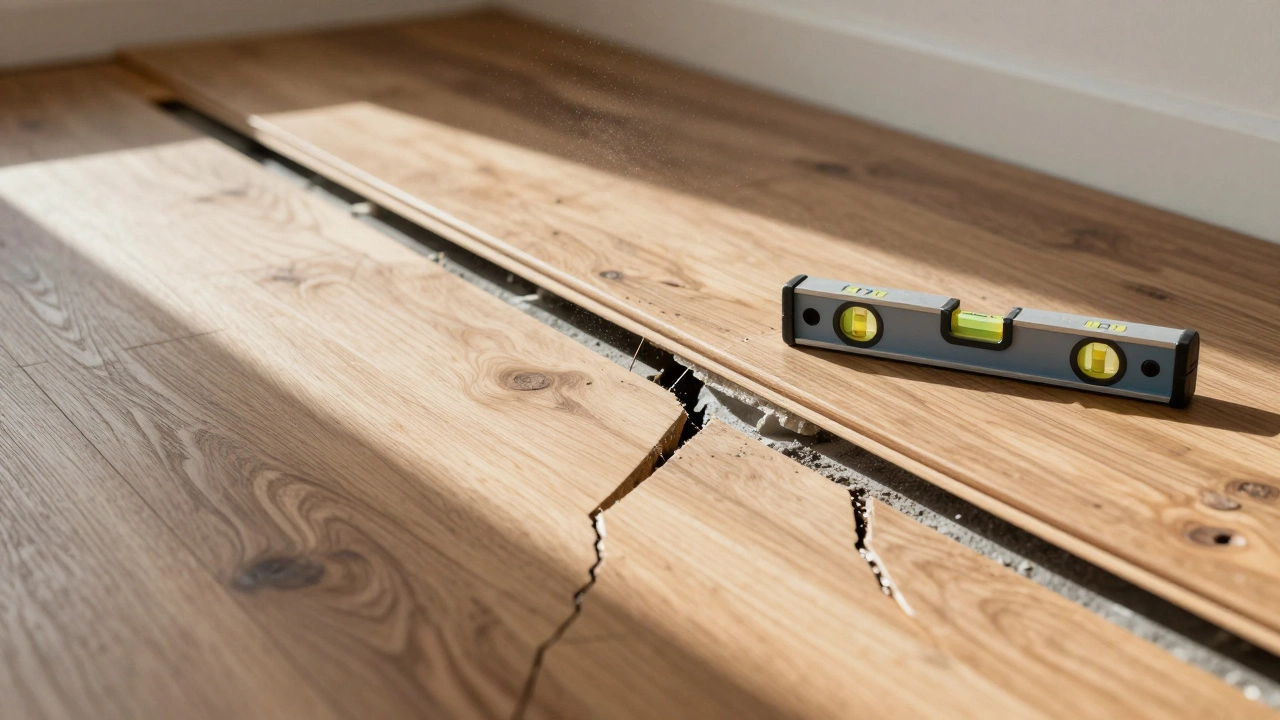
- Uneven floors - If your hardwood floors slope noticeably, or tiles are cracking in a pattern, the subfloor or joists underneath are under stress. In new builds, this usually means joists were spaced too far apart, undersized, or installed over weak or wet subsoil.
- Sticking doors and windows - When doors won’t close or windows jam shut, it’s rarely just swelling wood. It’s the frame of the house twisting. This happens when one side of the foundation settles more than the other. In new homes, it’s often due to uneven backfill or poor drainage around the perimeter.
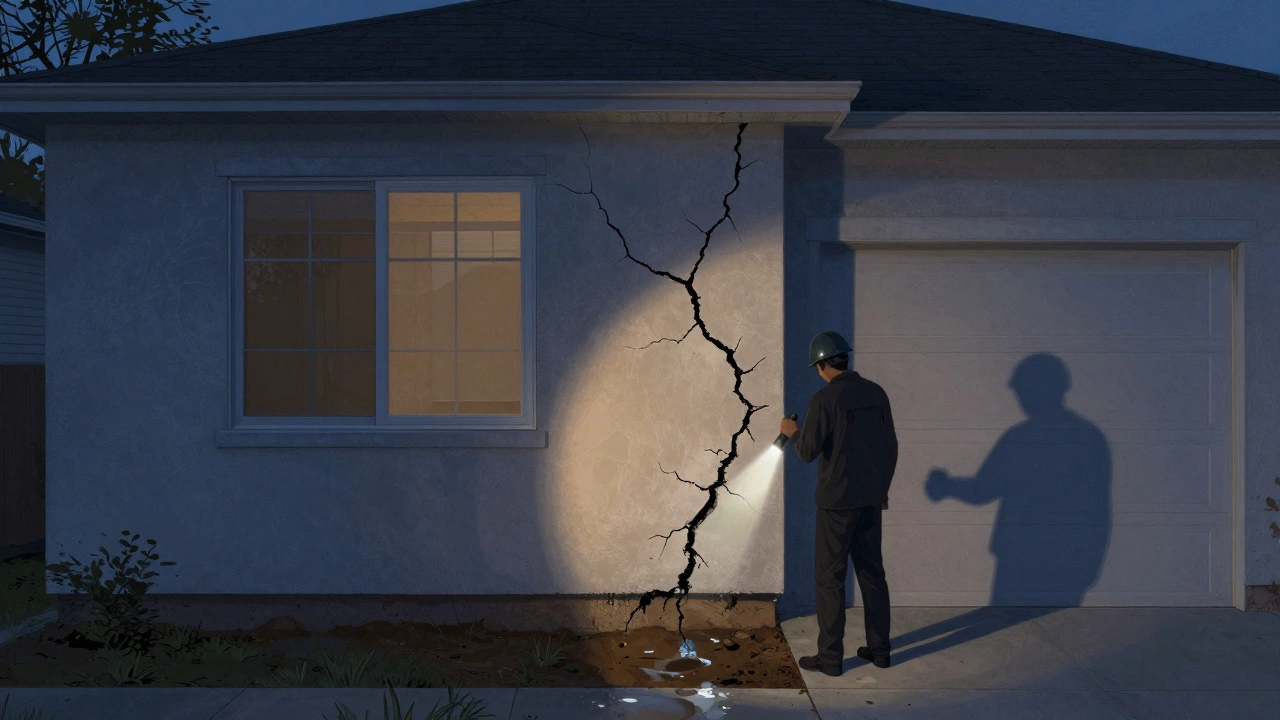
- Cracks in brick or stucco exteriors - Vertical cracks above windows or along corners are common in older homes. But in new construction, large cracks (over 1/4 inch) in the exterior cladding often point to foundation movement. If the cracks go all the way through the wall, not just the surface finish, it’s structural.
- Sagging or dipping roofline - A roof that looks like it’s slumping in the middle isn’t just an aesthetic problem. It means the roof trusses or supporting beams are overloaded or improperly installed. In new homes, this can happen when builders use cheaper, engineered trusses that don’t match the actual load requirements of the design.
Why Do These Problems Happen in New Homes?
You’d think new means better. But in construction, speed often beats quality. Many builders are under pressure to deliver homes fast to meet demand. That leads to shortcuts:
- Skipping soil tests - Some builders skip geotechnical surveys to save $500. But if the soil is clay-heavy, expansive, or poorly drained, the foundation will move.
- Using substandard lumber - Pressure-treated wood that’s not properly dried can warp. Lumber with knots or splits used in load-bearing spots can snap under weight.
- Overworked crews - One crew might pour the foundation on Monday, frame the walls on Tuesday, and install the roof on Wednesday. No time for curing, no time for inspections.
- Inexperienced subcontractors - Too many new builds rely on crews who’ve never built a home from scratch. They follow templates, not blueprints.
And here’s the kicker: most of these defects aren’t caught during the builder’s final walkthrough. Inspectors are often hired by the builder. Their job isn’t to find every flaw-it’s to make sure the house passes minimum code. That’s not the same as being safe or sound long-term.
How to Spot These Problems Before You Buy
If you’re buying a new build, don’t rely on the builder’s inspection. Hire an independent structural engineer-not a general home inspector. Here’s what to ask for:
- Request a copy of the soil report and foundation design specs. If they don’t have one, walk away.
- Look for signs of moisture damage under the slab. Wet spots, mold, or rusted rebar mean water was trapped during construction.
- Check the basement or crawlspace for crooked beams, bowed walls, or improperly nailed joists.
- Measure floor slopes with a laser level. Even a 1/2-inch drop over 10 feet is abnormal in a new home.
- Open all doors and windows. If any stick, don’t just chalk it up to humidity-ask why.
Also, look at the neighborhood. If nearby new homes have the same foundation cracks or leaning driveways, it’s not a coincidence. It’s a pattern. Talk to neighbors. Ask them what they’ve noticed since moving in.
What Happens If You Ignore It?
Structural defects don’t fix themselves. They get worse. A small crack becomes a gap. A slight slope becomes a dangerous incline. Water leaks through cracks, rot sets in, mold grows, and the value of your home plummets.
In extreme cases, insurance companies will deny claims for structural damage if they determine it was pre-existing or due to poor construction. And because it’s a new home, you’re often stuck with the builder’s warranty-which typically covers only 1 to 2 years for major structural issues. After that? You’re on your own.
One homeowner in Texas spent $87,000 to underpin her foundation two years after moving in. The builder’s warranty had expired. She had no recourse.
What Should You Do If You Find a Defect?
Document everything. Take photos. Date them. Keep records of all communication with the builder. Then, get a written assessment from a licensed structural engineer. Don’t accept verbal assurances.
If the defect is confirmed, send a certified letter to the builder demanding repairs. Most states have new home warranty laws that require builders to fix major structural issues-even after the warranty expires-if the defect was caused by negligence.
If the builder refuses, contact your state’s contractor licensing board. Many have dispute resolution programs. In some cases, you may be able to file a claim under the builder’s surety bond.
Don’t wait. The longer you wait, the more expensive-and dangerous-it becomes.