
What Is the Most Expensive Part of a Loft Conversion?
 Jan, 26 2026
Loft Conversion Cost Calculator
Calculate Your Loft Conversion Costs
Estimate costs based on your specific project requirements
Key Cost Factors
The article highlights that structural work is typically the most expensive part of a loft conversion, often making up 25-35% of total costs.
What to Expect
Why This Matters
Skipping structural work may save money initially but can lead to costly repairs, insurance issues, or failed inspections.
Estimated Costs
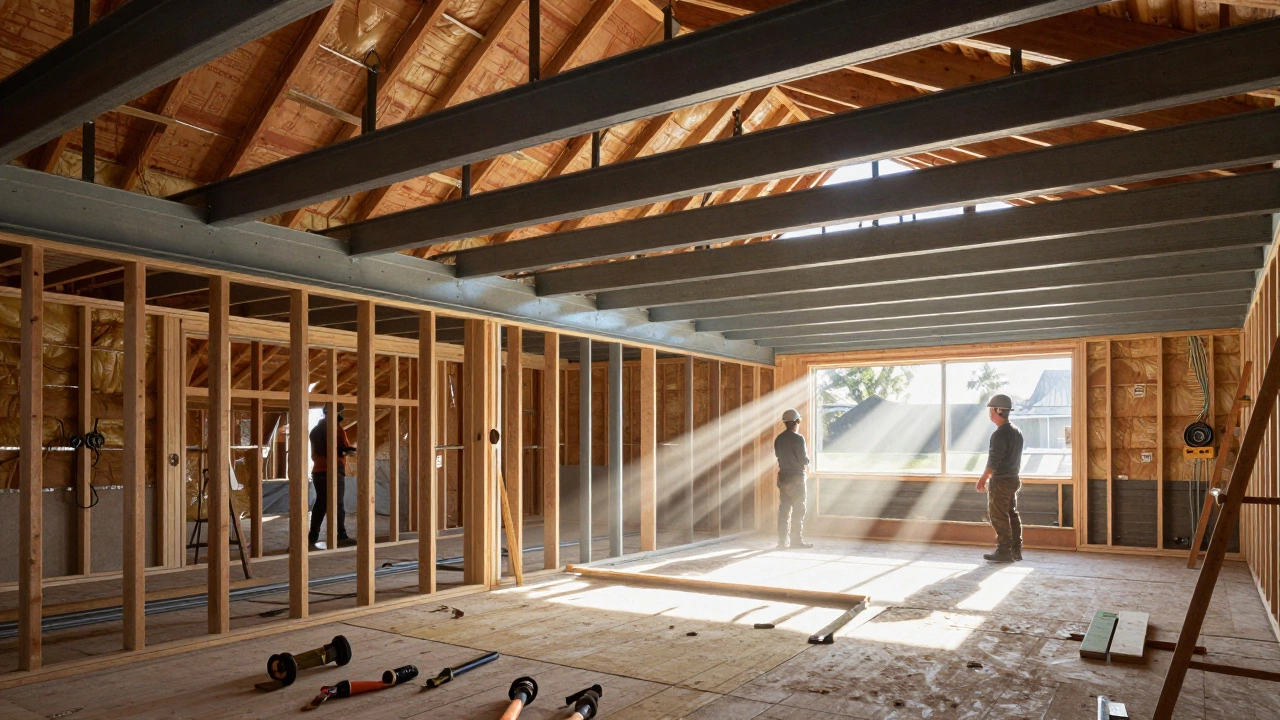
When you’re thinking about turning your attic into a usable space, the dream looks simple: more room, more value, no moving. But the reality? It’s rarely as cheap as you hope. And if you’re wondering where the big money goes, it’s not the drywall or the paint. It’s not even the stairs. The most expensive part of a loft conversion is almost always the structural work - especially reinforcing the floor and roof to handle new loads.
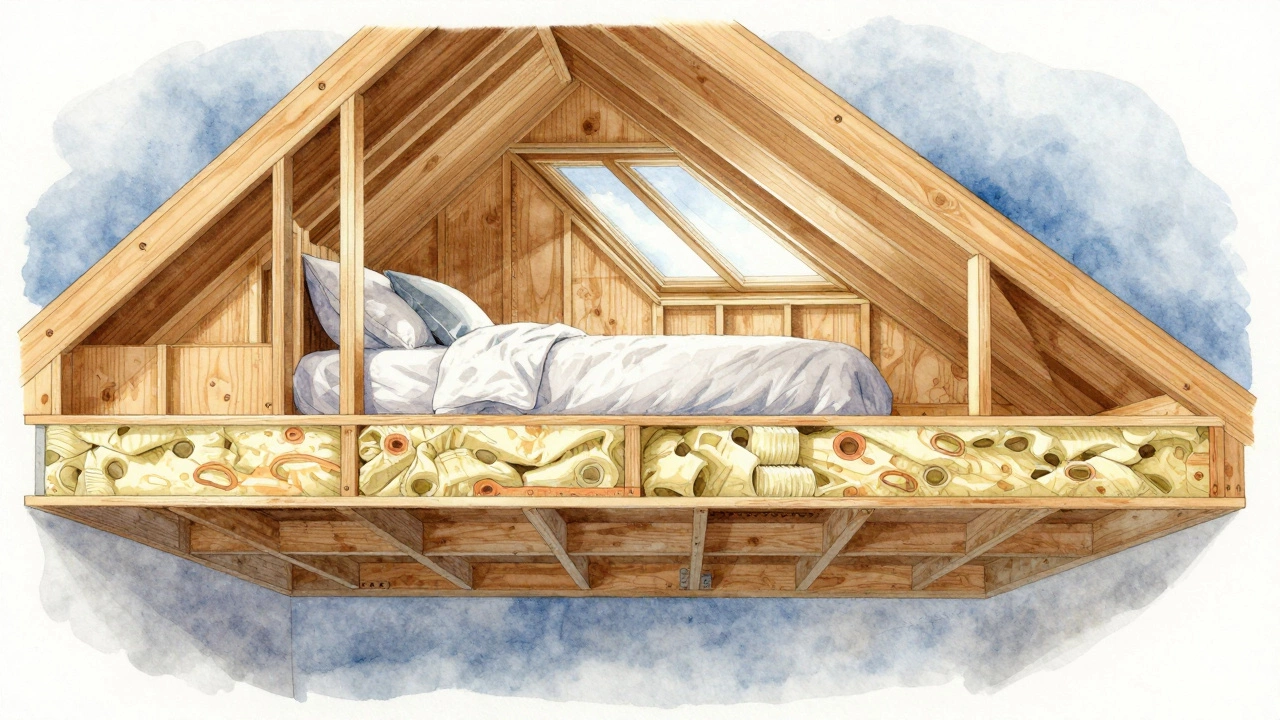
Think about it this way: your attic wasn’t built to hold a bedroom, a bathroom, or a home office. It was built to store boxes and seasonal decorations. The floor joists? They’re usually 2x4s spaced 16 or 24 inches apart, meant for light loads. A full room with furniture, people, and water pipes? That’s five to ten times the weight. So before you even think about wallpaper, you need to upgrade the structure. That means installing steel beams, adding new joists, or even replacing the entire floor system. In New Zealand, this alone can run $15,000 to $30,000 depending on your house size and roof type.
Why so much? Because structural changes aren’t just about adding wood. They require engineering sign-off, permits, and often temporary supports while the work is done. If your roof has a complex shape - like a trussed roof common in 1980s homes - you might need to replace the entire truss system with a new one designed for live loads. That’s not a weekend job. It’s a job for structural engineers, licensed builders, and heavy machinery. And you can’t skip it. Building inspectors won’t approve a loft conversion without proof the structure can handle it.
After structural work, the next biggest cost is the staircase. People often assume stairs are just a nice-to-have, but they’re mandatory for safety and compliance. In Wellington, building codes require a fixed staircase with a minimum width of 800mm, a maximum rise of 190mm per step, and a minimum headroom of 2,000mm. That means you can’t just stick in a pull-down ladder or a narrow spiral staircase. You need a proper, code-compliant stair that takes up real floor space - usually 2 to 3 square meters of your existing living area. Custom-built stairs with hardwood treads, handrails, and under-stair storage? That’s another $8,000 to $15,000.
Then there’s the roof. If you’re planning to add dormers or skylights to bring in light, you’re looking at more than just glass. You need to cut into the roof structure, waterproof the new openings, and install proper flashing and insulation. A single dormer can add $10,000 to $20,000 to your budget, especially if you’re using high-end materials like timber frames or triple-glazed windows. And don’t forget the roof insulation. New Zealand’s building code requires R-values of at least R-3.6 for ceilings, but for a habitable loft, you’ll want R-5.0 or higher. That means thick layers of mineral wool or spray foam - and it all needs to be installed correctly to avoid condensation and mold.
Plumbing and electrical upgrades also add up fast. If you’re adding a bathroom - and most people do - you’re dealing with waste lines that need to run down through floors and walls. In older homes, the original drainage might not be sized for a second bathroom. You might need to re-route pipes, install a macerator pump, or even connect to a new sewer line. That’s $5,000 to $12,000 right there. Electrical work isn’t cheap either. You’ll need new circuits for lighting, outlets, heating, and maybe even underfloor heating. A licensed electrician will charge $80 to $120 an hour, and a full loft conversion often takes 40 to 60 hours of labor.
Windows are another surprise cost. You can’t just pop in any old window. For a loft, you need windows that meet safety standards - like easy escape routes in case of fire. That means either large roof windows or side-facing windows with proper egress. Double-glazed, thermally broken, and UV-resistant windows in New Zealand’s climate cost $1,500 to $3,000 each. Three windows? That’s $5,000 to $9,000 before installation.
And then there’s the hidden stuff: ventilation, fire safety, soundproofing, and insulation around the edges. You need a mechanical ventilation system with heat recovery (MVHR) if you’re sealing up the space tightly - and that’s $4,000 to $7,000. Fire-rated doors, smoke alarms, and fire-stopping materials around pipes and ducts add another $2,000 to $4,000. Soundproofing between the loft and the floor below? That’s extra insulation, resilient bars, and acoustic plasterboard - another $3,000 to $6,000.
So what’s the total? A basic loft conversion in Wellington - just a bedroom with a small bathroom - starts around $80,000. A mid-range conversion with a proper bathroom, dormer windows, and high-end finishes? You’re looking at $120,000 to $160,000. A luxury conversion with underfloor heating, custom joinery, and designer lighting? That can hit $200,000 or more.
People often compare loft conversions to building an extension. But here’s the truth: a loft conversion is usually more expensive per square meter than a ground-floor addition. Why? Because you’re working in a confined, awkward space with existing structure to work around. You can’t just dig a hole and pour a slab. You’re working above a live home, dealing with access issues, and fighting against old materials that don’t play nice with modern standards.
Some contractors try to cut corners - they’ll say, “We can just sister the joists” or “We’ll use a cheaper window.” But those shortcuts often come back as leaks, creaking floors, or failed inspections. And in New Zealand, where building standards are strictly enforced, you don’t want to risk a code violation. That could mean redoing work, losing value, or even being forced to remove the conversion.
Here’s what works: get three detailed quotes. Not just estimates - real quotes that break down each line item. Ask for the engineering drawings and building consent paperwork. Check if the contractor has done at least three similar projects in your area. Look at their past work. Ask for photos of the structural work they’ve done. And don’t be afraid to ask: “Where will the biggest cost be?” If they say “the windows” or “the stairs,” walk away. The real cost is always in the bones of the house - the structure.
And if you’re thinking about doing it yourself? Save your money. Even the most skilled DIYers can’t legally do structural work without a licensed engineer and builder signing off. The risks - structural failure, fire hazards, insurance voids - aren’t worth it. This isn’t a shelf or a shed. It’s your home.
Loft conversions can add serious value - up to 20% to your home’s worth, according to real estate data from Wellington. But that value only shows up if the work is done right. The most expensive part isn’t the fancy fixtures. It’s the invisible work that keeps your family safe. And that’s the part you should never skimp on.
What’s the average cost breakdown for a loft conversion in New Zealand?
Here’s what a typical $140,000 loft conversion breaks down into:
- Structural reinforcement (beams, joists, roof modifications): $25,000-$35,000
- Staircase (custom, code-compliant): $10,000-$15,000
- Windows and skylights (3-4 units, double-glazed): $8,000-$12,000
- Plumbing (bathroom, drainage, pumps): $8,000-$12,000
- Electrical (wiring, lighting, circuits): $7,000-$10,000
- Insulation and ventilation (MVHR, thermal barriers): $10,000-$15,000
- Fire safety (doors, alarms, fire-stopping): $3,000-$5,000
- Finishes (flooring, plastering, paint, joinery): $25,000-$35,000
- Permits, engineering, and contractor fees: $10,000-$15,000
Notice how the non-visible work - structure, insulation, fire safety, plumbing - makes up nearly 60% of the total? That’s where the money goes. The finishes? They’re the cherry on top.
Can you reduce the cost of a loft conversion?
Yes - but not by cutting corners on safety. Here’s how to save smart:
- Keep the bathroom layout simple. Avoid moving waste pipes far from existing stacks.
- Use standard-sized windows instead of custom dormers.
- Choose engineered timber beams over steel - they’re often cheaper and easier to install.
- Do your own painting and minor finishing work if you’re handy.
- Time your project for off-season (winter) when contractors are more flexible on pricing.
- Get your building consent approved before starting - delays cost more than permits.
Don’t try to save on structural work, insulation, or fire safety. Those are non-negotiable. Save on finishes, not fundamentals.
How long does a loft conversion take?
Most conversions take 8 to 12 weeks from start to finish. But that depends on:
- How complex the structure is
- Weather delays (especially in Wellington’s rainy climate)
- How quickly permits are approved
- Whether you’re adding a bathroom
Structural work alone can take 3 to 4 weeks. Then you’ve got 2 weeks for windows and roofing, 2 weeks for plumbing and electrical, and another 2 to 3 weeks for finishes. Don’t expect to live in the house during the worst of it - dust, noise, and access issues make it nearly impossible.
Do loft conversions add value to your home?
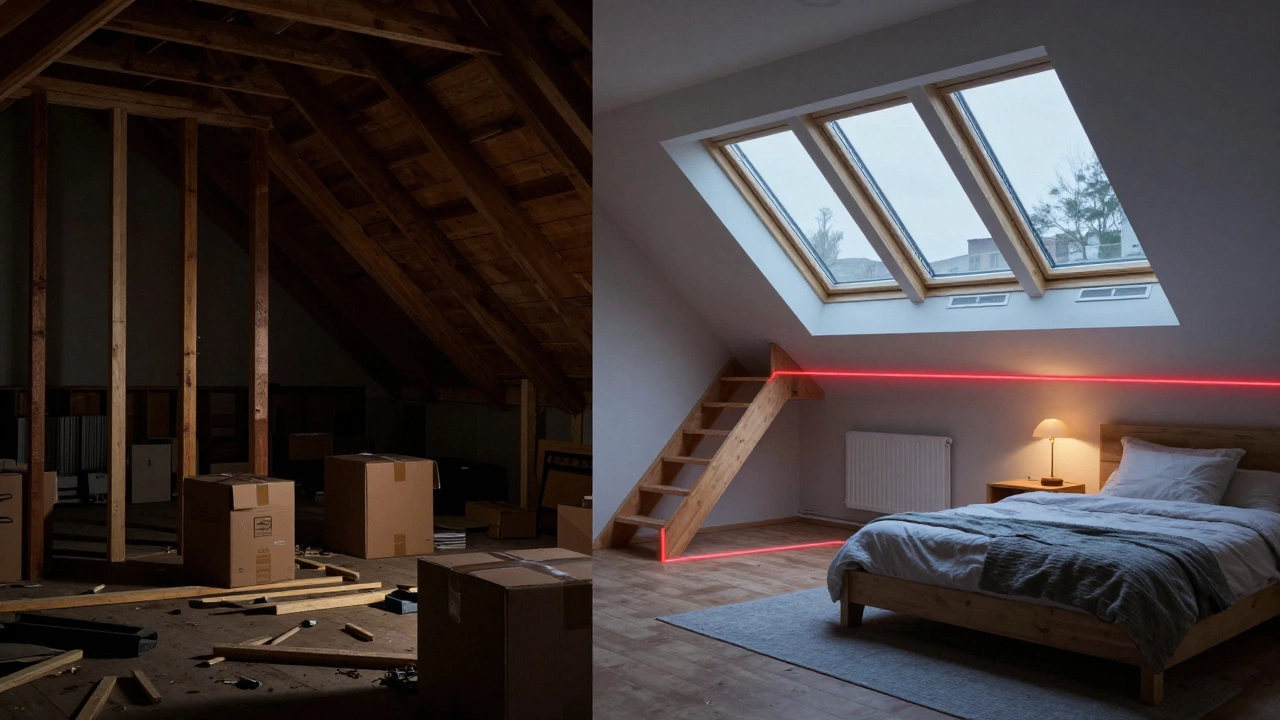
A well-built loft conversion can add 15% to 20% to your home’s market value in Wellington. For a $700,000 house, that’s $105,000 to $140,000 in added value. But only if:
- The work has full building consent
- The conversion is finished to a high standard
- The new space feels like part of the home, not an afterthought
A poorly done conversion - with exposed beams, bad insulation, or a cramped staircase - can actually hurt your resale value. Buyers see it as a liability, not an asset.
What are the biggest mistakes people make with loft conversions?
- Underestimating structural needs - thinking the attic can handle the load without upgrades
- Choosing the cheapest contractor without checking credentials or past work
- Skipping building consent - thinking they can get away with it
- Adding a bathroom without checking drainage capacity
- Forgetting about ventilation - leading to condensation and mold
- Not planning for access - ending up with stairs that are too steep or narrow
These aren’t minor oversights. They’re costly errors that can cost tens of thousands to fix later - or worse, make the space unsafe.