
What to Do If Your House Has Foundation Problems? Step-by-Step Guide
 Dec, 1 2025
Foundation Crack Assessment Tool
Foundation Crack Assessment
Use this tool to quickly assess whether your foundation cracks are minor or potentially serious. Based on article guidelines from "What to Do If Your House Has Foundation Problems?".
When you notice cracks in your walls, doors that stick, or floors that slope, it’s easy to panic. But foundation problems aren’t always a sign of imminent collapse. They’re often slow-moving issues that give you time to act-if you know what to look for and what to do next. The key isn’t to fix everything at once. It’s to diagnose accurately, avoid costly mistakes, and get the right help before things get worse.
First, figure out what kind of damage you’re dealing with
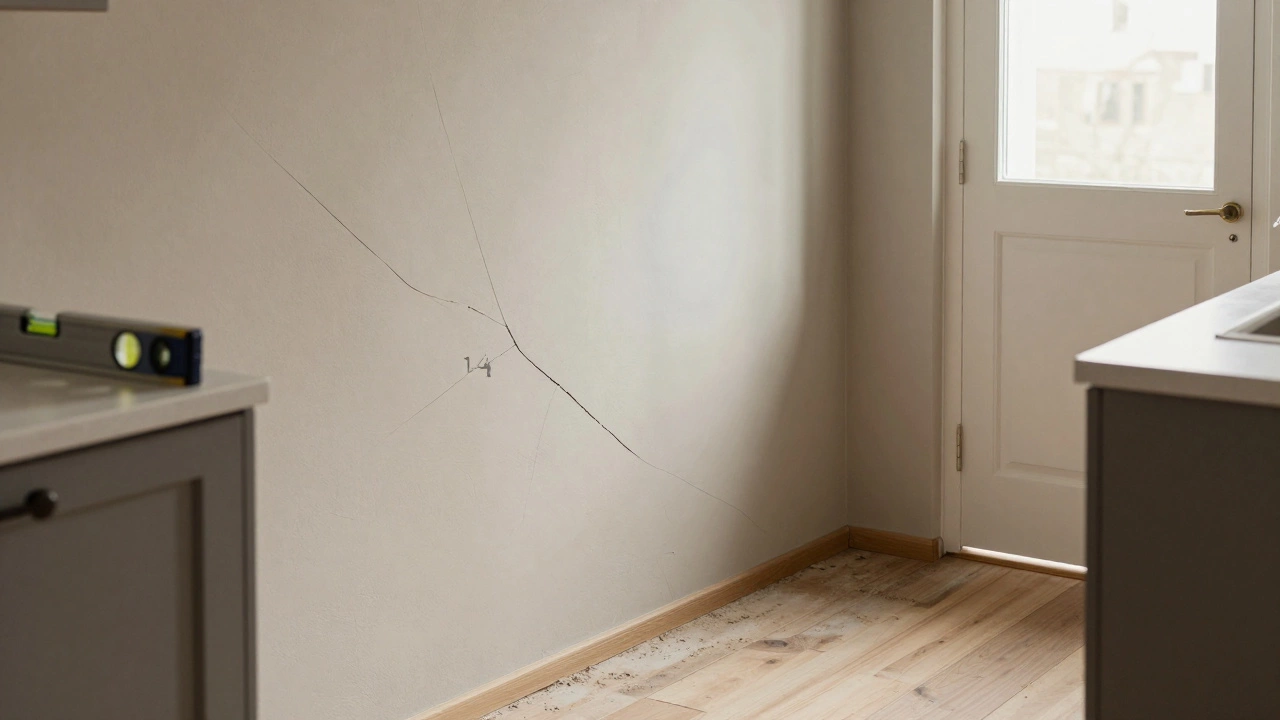
Not all cracks are the same. Hairline cracks less than 1/8 inch wide are usually harmless. They happen as concrete cures or as the house settles slightly over time. But if you see cracks wider than 1/4 inch, especially if they’re diagonal, stair-stepped, or running through brickwork, that’s a red flag. Look for gaps between the foundation and the walls, or doors that won’t close properly. If your windows are stuck or the frame is visibly crooked, the foundation is shifting.Another sign? Uneven floors. Walk through your home barefoot. Do you feel a slope? Use a level on your kitchen counter or bathroom vanity. If the bubble isn’t centered, the floor isn’t level. That’s not just annoying-it’s a signal that the soil under your foundation is moving.
Check the outside, too. Is the ground sloping toward your house? That’s a recipe for water pooling. Water is the #1 cause of foundation damage. Even a few inches of standing water near the foundation can soften the soil, causing it to sink or expand. You’ll often see this in homes built on clay soil, which swells when wet and shrinks when dry.
Don’t panic-but don’t ignore it either
Many homeowners make the mistake of waiting too long. They think, “It’s just a crack,” or “It’s been like that for years.” But foundation issues rarely get better on their own. They usually get worse. A small crack today can turn into a 2-inch gap in two years if water keeps seeping in or the soil keeps shifting.On the flip side, don’t rush into a full foundation replacement. That’s expensive-often $20,000 to $50,000-and rarely necessary. Most homes can be stabilized with targeted repairs. The goal isn’t to make your house perfect again. It’s to stop the movement and prevent further damage.
Call a licensed foundation inspector, not just a contractor
Not all contractors know how to read foundation damage. Some will push you into the most expensive fix just to make a sale. Look for someone certified by the Foundation Repair Association (A national organization that certifies foundation repair professionals and sets industry standards) or the International Association of Certified Home Inspectors (A professional group that trains inspectors to evaluate structural issues accurately). Ask for references, check reviews, and make sure they’re licensed and insured.Ask them to do a full assessment. That means checking the soil type, drainage around the house, moisture levels, and the exact location and pattern of cracks. A good inspector will use tools like a laser level, moisture meter, and crack gauge to measure movement over time. Don’t accept a quote based on a 10-minute walk-through.
Know the common repair methods-and what they cost
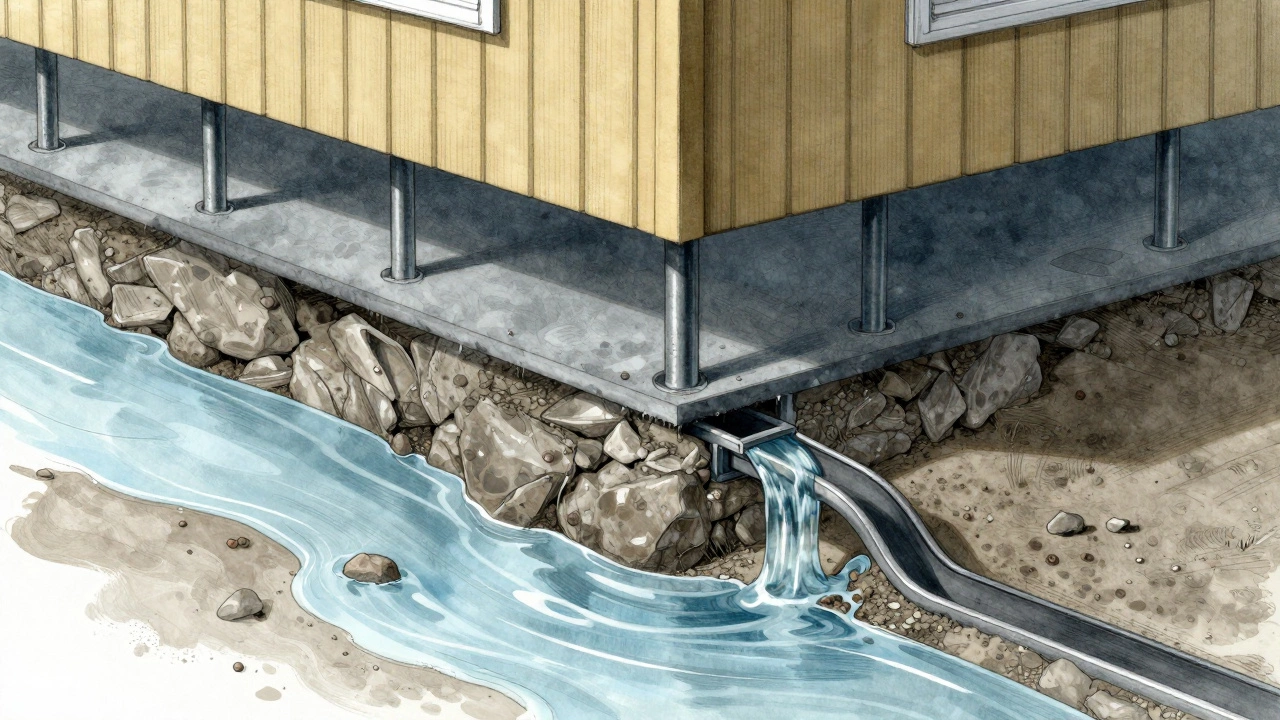
There are three main ways to fix foundation problems, and each fits a different situation:- Underpinning with steel piers: This is the most common fix for serious settling. Steel piers are driven deep into stable soil or bedrock beneath your foundation. Hydraulic jacks lift the house back up and hold it in place. Costs range from $1,000 to $3,000 per pier, with most homes needing 6 to 12 piers. It’s durable and lasts 50+ years.
- Concrete slabjacking: If your garage or porch slab has sunk, this method injects a grout mixture under the concrete to lift it back up. It’s cheaper than replacing the slab-usually $500 to $1,500 per area-and doesn’t require demolition.
- Soil stabilization with polyurethane foam: A newer option. Foam is injected into the soil under the foundation to fill voids and compact loose dirt. It’s less invasive than piers and works well for minor settling. Costs $800 to $2,500 per section. But it’s not ideal for homes with major structural shifts.
Some companies push “lifetime warranties.” Be careful. A warranty is only as good as the company behind it. Ask: Is the company still in business? Do they have a physical office? Will you get a transferable warranty if you sell the house?
Fix the root cause: water management
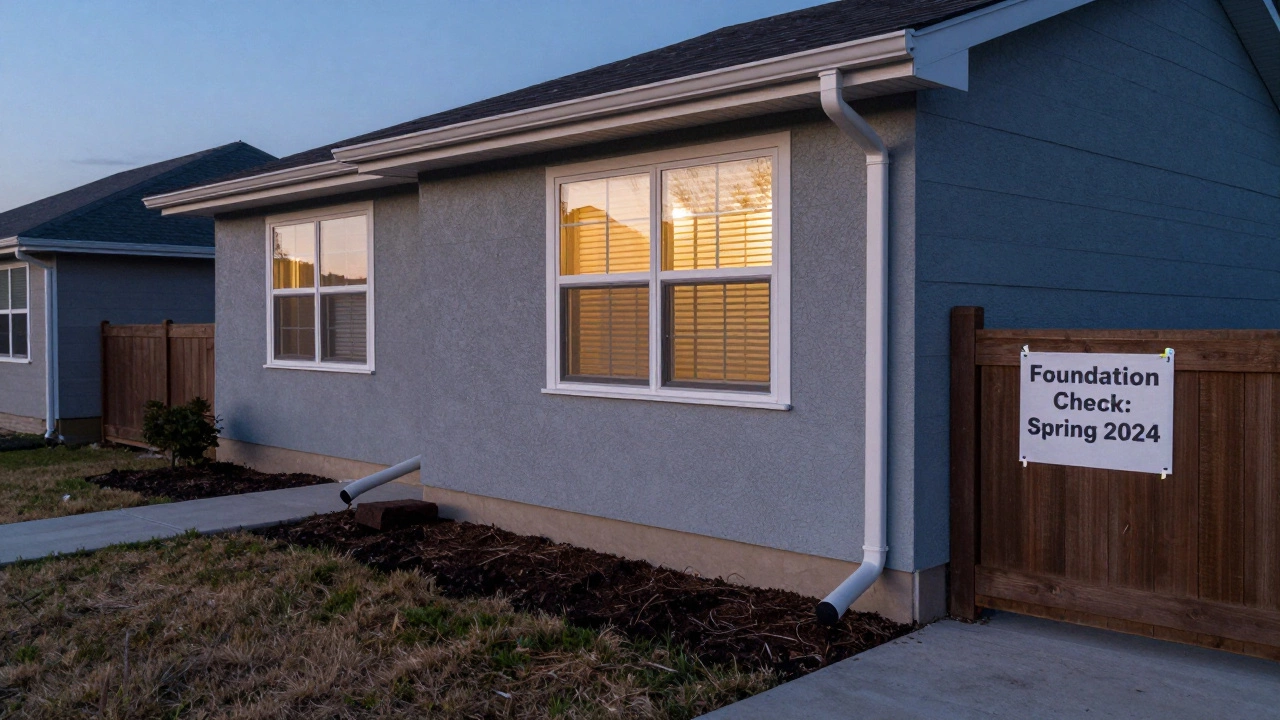
No repair will last if water keeps attacking your foundation. That’s why the most important step isn’t the repair-it’s the prevention.- Make sure gutters are clean and downspouts extend at least 5 feet from the house.
- Grade the soil around your home so it slopes away from the foundation. You need at least a 1-inch drop per foot for the first 6 feet.
- Install French drains if your yard holds water after rain. These are trenches filled with gravel and a perforated pipe that redirect water away.
- Check for leaking pipes, especially under slabs. A slow drip can erode soil for years without you noticing.
One homeowner in Texas noticed her foundation was sinking. She spent $18,000 on piers. But six months later, the problem returned. Why? Her sprinkler system was spraying water directly against the foundation wall. Fixing the sprinklers cost $200. That’s what saved her house.
What not to do
Avoid these common mistakes:- Don’t seal cracks with caulk or epoxy alone. That’s a temporary patch. It hides the problem, but the movement continues underneath.
- Don’t try to lift your house yourself. Foundation jacks are dangerous without training. One wrong move can crack walls, break pipes, or collapse floors.
- Don’t wait for insurance to cover it. Most homeowners policies don’t cover foundation damage unless it’s from a sudden event like a burst pipe. Normal settling, soil movement, or poor drainage? That’s your responsibility.
- Don’t hire the cheapest bid. Low prices often mean shortcuts-shallow piers, weak materials, or unlicensed crews.
When to consider selling instead of repairing
Not every foundation problem is fixable. If your home has:- Cracks wider than 1 inch
- Significant tilting (more than 5 degrees)
- Structural beams that are cracked or rusted
- Multiple repair attempts that failed
then the cost to fix it may exceed the home’s value. In those cases, selling and walking away might be the smartest move. Get an appraisal from a real estate agent who specializes in distressed properties. They can tell you if repair costs outweigh potential resale value.
Prevention is the best long-term strategy
Even if your foundation is fine today, take steps now to keep it that way:- Inspect your foundation twice a year-spring and fall.
- Keep trees and large shrubs at least 10 feet from the foundation. Roots can dry out soil and cause uneven settling.
- Monitor your water bill. A sudden spike could mean a hidden leak under the slab.
- Keep a photo log of any new cracks. Take a picture every six months. It helps track progress and proves damage occurred after you bought the house.
Foundations last decades. But they need attention. The difference between a $5,000 repair and a $50,000 rebuild is often just one phone call-and knowing what to ask for.
How do I know if my foundation crack is serious?
A crack is serious if it’s wider than 1/4 inch, runs diagonally or in a stair-step pattern, or is growing over time. If you can fit a credit card into the crack, it’s likely structural. Also watch for accompanying signs: doors that won’t close, uneven floors, or gaps between walls and ceilings.
Can I fix foundation problems myself?
You can handle minor cosmetic fixes like sealing hairline cracks with epoxy. But lifting or stabilizing a foundation requires heavy equipment and engineering knowledge. DIY attempts often make things worse. Even small mistakes can crack walls, break plumbing, or cause uneven settling. Leave structural repairs to licensed professionals.
Will foundation repair increase my home’s value?
Yes, but not always by much. A properly repaired foundation restores marketability and prevents further depreciation. Buyers will feel more confident, and appraisals will reflect a structurally sound home. But you won’t get back the full repair cost in resale value. The benefit is avoiding a steep discount when you sell.
How long does foundation repair last?
Steel piers and proper drainage can last 50 to 100 years. Polyurethane foam repairs typically last 20 to 30 years. The longevity depends on whether the root cause-like poor drainage or soil expansion-is fully addressed. Without fixing water issues, even the best repair can fail in a few years.
Does homeowners insurance cover foundation repair?
Almost never. Most policies exclude damage from settling, soil movement, or water seepage. They only cover sudden events like a burst pipe or fire. Some insurers offer optional endorsements for foundation issues, but they’re expensive and have strict conditions. Assume you’ll pay out of pocket unless the damage was caused by a covered peril.
What’s the average cost to fix a foundation?
Costs vary by method and home size. Minor repairs like slabjacking or foam injection run $500 to $3,000. Major underpinning with steel piers averages $10,000 to $30,000. Homes with extensive damage or multiple issues can cost $40,000 to $60,000. Always get at least three detailed quotes before deciding.
Next steps: what to do right now
1. Take clear photos of every crack, gap, or uneven floor. Date them.2. Check your gutters and downspouts. Make sure water is flowing at least 5 feet away from the house.
3. Call three licensed foundation inspectors. Ask for a written report, not just a verbal estimate.
4. Don’t sign anything on the spot. Take the quotes home. Compare methods, warranties, and company reviews.
5. If you’re planning to sell, get a pre-listing inspection. A clean report can help you command a better price.
Foundation problems don’t have to be a disaster. With the right information and timely action, most homes can be stabilized safely and affordably. The goal isn’t perfection. It’s peace of mind-and a house that lasts.